

Achieving a natural and professional final presentation requires careful attention to every stage of preparation. Cosmetic restoration is not simply about applying products to the skin; it begins with creating a clean and suitable surface for cosmetic work. Proper skin preparation can improve how products are applied, blended, and maintained throughout the viewing period, making it an important part of professional restorative care.
Professionals working with mortuary cosmetics understand that the condition of the skin can significantly affect the final appearance. Cleansing, moisturising when appropriate, correcting surface concerns, and preparing the skin before applying colour or covering products can create a more controlled foundation for restorative work. A thoughtful preparation process also allows cosmetic products to perform more consistently.
Why Skin Preparation Matters
After embalming, the skin may have changes in moisture, texture, tone, or surface appearance. These differences can influence how cosmetic products interact with the skin. Applying products without addressing the underlying surface may make blending more difficult or produce an uneven finish.
Proper preparation provides a more consistent starting point. It allows professionals to identify areas that may require additional attention before moving to colour correction, coverage, or finishing.
Begin With Thorough Cleansing
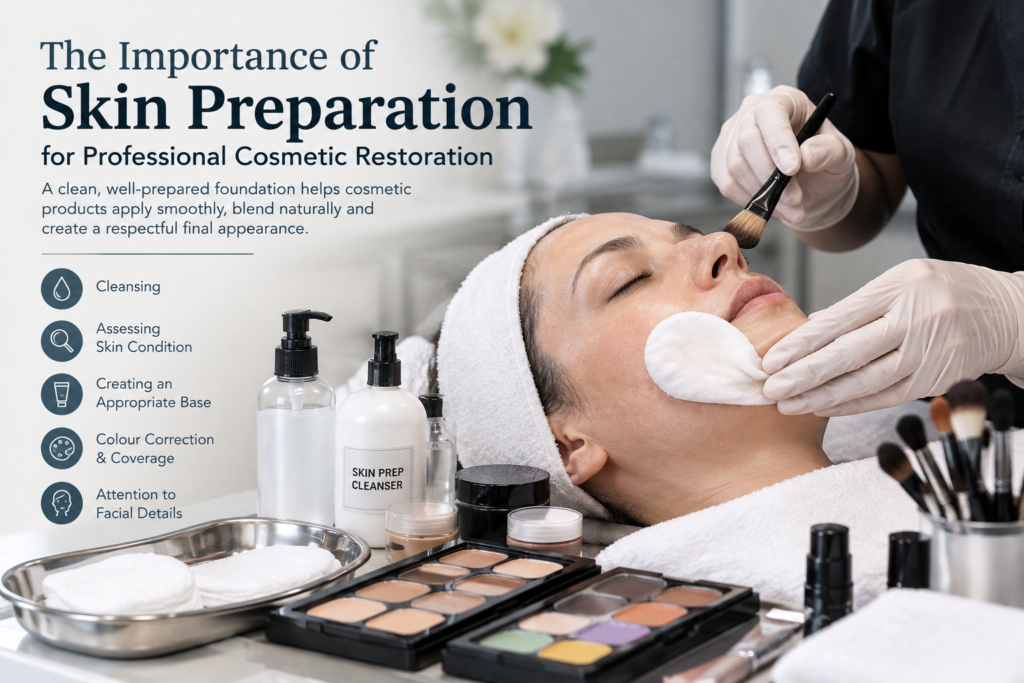
Cleansing is one of the first steps in preparing the skin for cosmetic restoration. Any remaining residue, oils, or other surface contaminants can interfere with the application of cosmetic products.
A suitable cleansing process should be performed according to professional preparation procedures and the condition of the skin. The objective is to create a clean surface without causing unnecessary irritation or excessive dryness.
Attention should also be given to areas such as the hairline, eyebrows, lips, and other detailed regions. These areas can influence the overall presentation and may require careful cleaning before cosmetic work begins.
Assess Skin Condition
Before selecting cosmetic products, professionals should evaluate the condition and appearance of the skin. Different areas may require different approaches depending on discolouration, dryness, texture, or other visible characteristics.
A thorough assessment helps determine whether the focus should be on coverage, colour correction, moisture balance, or another restorative technique. It also helps prevent unnecessary application of products where they are not required.
This assessment is particularly useful when aiming for a natural appearance. Rather than applying the same product uniformly across the face, professionals can adjust their approach according to individual areas.
Establishing an Appropriate Base
A well-prepared base can make cosmetic application more predictable. Depending on the case, professionals may use suitable preparation products before applying covering creams, colour products, or other restorative cosmetics.
The objective is to create an even surface while maintaining an appearance that remains natural under viewing conditions. Heavy application is not always necessary; controlled layering and careful blending can often provide better results.
Professionals should always follow product instructions and established preparation practices when determining which products are appropriate for a particular case.
Colour Correction and Coverage
Discolouration can be one of the more noticeable challenges during restorative preparation. Different areas of the face may show variations in tone, requiring careful colour selection and blending.
Colour correction should be approached gradually. Applying a suitable corrective shade in a controlled manner can help balance an area before additional coverage is applied. This can reduce the need for excessive product and support a more natural result.
Covering products should also be blended carefully around transitions between treated and untreated areas. Visible edges can make cosmetic work appear less natural, so gradual blending is an important part of the process.
Preparing Different Facial Areas
Not every part of the face requires the same cosmetic technique. The lips, cheeks, forehead, eyelids, and surrounding areas can differ in texture and colour.
The lips may require carefully selected colour products, while other areas may need controlled coverage or subtle correction. Attention to these individual areas helps create greater consistency across the overall presentation.
Small details can have a noticeable impact. Properly shaped eyebrows, balanced lip colour, and carefully blended facial coverage can contribute to a cohesive final appearance without making the cosmetic application look excessive.
The Role of Product Selection
Choosing suitable products is another important part of successful cosmetic preparation. Professional cosmetic ranges can include covering creams, colour products, primers, finishing products, and specialised restoration materials.
The right selection depends on the condition of the skin and the desired result. Professionals should consider coverage level, texture, colour, blending characteristics, and compatibility with the preparation process.
Keeping a well-organised cosmetic collection can also make it easier to respond to different restoration requirements without interrupting the workflow.
Final Presentation
After cosmetic application, the overall appearance should be evaluated under appropriate viewing conditions. Professionals can check for uneven areas, excessive coverage, visible transitions, or colour differences that may need refinement.
A final review provides an opportunity to make subtle adjustments rather than adding unnecessary layers. The goal is to maintain balance and create a presentation that respects the individual’s natural appearance.
Conclusion
Proper skin preparation is an essential foundation for professional cosmetic restoration. Cleansing, assessing the skin, establishing an appropriate base, correcting colour differences, and carefully selecting products can all contribute to a more controlled application process.
When each stage is approached methodically, cosmetic restoration becomes more consistent and adaptable to the requirements of individual cases. Careful preparation ultimately supports the professional goal of creating a respectful, balanced, and natural-looking final presentation.