

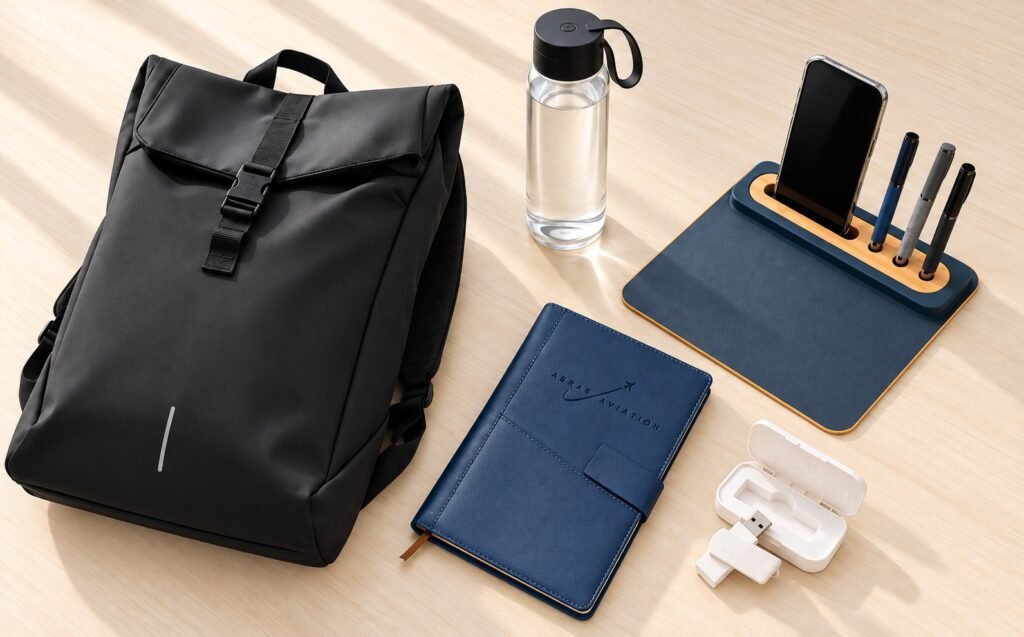

Corporate gifting sounds straightforward until a business has to manage different recipients, budgets, occasions, branding requirements, and delivery schedules at the same time.
A company may select a product that looks excellent in a catalogue, only to discover that the quality is disappointing. Another may spend heavily on gifts that recipients never use. Some businesses leave customization until the last minute, while others put so much branding on a gift that it feels more like an advertisement than a gesture of appreciation.
These mistakes are avoidable.
For companies planning corporate gifts Dubai campaigns, the key is to treat gifting as a business process rather than a simple bulk purchase. The objective is not to find the most expensive product. It is to select something appropriate, useful, and well presented for the people receiving it.
Mistake 1: Choosing the Product Before Defining the Purpose
One of the biggest mistakes is starting with the product.
A business sees a particular gift set, likes its appearance, and immediately decides to order it. Only afterward does the team consider who will receive it and why.
This reverses the logical order.
The company should first define the purpose:
- Client appreciation
- Employee recognition
- New customer welcome
- Business anniversary
- Conference giveaway
- Partner appreciation
- Employee onboarding
- Seasonal gifting
The purpose determines the appropriate product, budget, presentation, and branding.
A product that works perfectly for an exhibition may be completely unsuitable for a senior client.
Mistake 2: Giving Everyone the Same Gift
Standardization can simplify purchasing, but it can also make gifting feel impersonal.
A company might have employees, clients, suppliers, and business partners all receiving gifts during the same period. Giving everyone exactly the same product ignores the different relationships involved.
The solution is not to create a unique gift for every individual.
Instead, businesses can establish a few categories.
For example, event attendees can receive practical promotional products, employees can receive appreciation-focused gifts, and strategic clients can receive more personalized options.
This provides consistency without treating every recipient identically.
Mistake 3: Assuming Expensive Means Better
Price is an easy way to compare gifts, but it is a poor measure of usefulness.
A costly product that remains unused has little practical value.
Meanwhile, a moderately priced item that becomes part of someone’s daily routine may create a stronger impression.
Businesses should therefore evaluate gifts based on:
- Usefulness
- Quality
- Relevance
- Presentation
- Durability
- Recipient expectations
The question should be, “What value does this gift provide?” rather than simply, “How much does it cost?”
Mistake 4: Choosing Cheap Products to Reduce the Budget
The opposite mistake is focusing too heavily on price.
There is nothing wrong with managing a corporate gifting budget carefully. The problem begins when cost reduction results in poor-quality products.
A defective or flimsy gift can create an impression that the company did not care enough to choose properly.
This is especially risky when gifting to important clients or partners.
Businesses should establish a minimum acceptable quality level and then find products within their budget.
Reducing quantity can sometimes be better than reducing quality.
Instead of giving 500 poor-quality gifts, a business might give 300 useful ones to a more carefully selected audience.
Mistake 5: Overbranding the Gift
Corporate gifting naturally involves branding, but too much branding can work against the company.
Imagine receiving a high-quality product with a small logo on the side. It still feels like a useful personal item.
Now imagine the same product covered with logos, slogans, phone numbers, and promotional messages.
The second version feels more like advertising merchandise.
For client and relationship-focused gifts, restrained branding is usually more appropriate.
For trade shows and promotional events, stronger branding can be justified because visibility is part of the objective.
The level of branding should match the purpose.
Mistake 6: Ignoring the Recipient
A product may be excellent but still wrong for a particular recipient.
Businesses sometimes select gifts based entirely on what is easy to purchase in bulk.
This can result in products that recipients do not need or cannot use.
Before selecting a gift, companies should consider:
- The recipient’s role
- Professional environment
- Relationship with the business
- Likely product usage
- Practicality
- Cultural considerations
The more important the recipient, the more attention should be given to these factors.
Mistake 7: Ignoring Cultural Sensitivity
Dubai’s business environment includes people from many cultural backgrounds.
This makes cultural awareness important when selecting gifts.
Companies should be careful with products involving food, personal preferences, religious considerations, or culturally specific meanings.
When the recipient’s preferences are unknown, broadly useful and professionally appropriate products are generally safer.
The objective is to create a positive experience rather than accidentally create an uncomfortable one.
Mistake 8: Treating Packaging as an Afterthought
Packaging is sometimes treated as a secondary issue.
That is a mistake.
The recipient sees the packaging before they see the product.
A well-selected gift presented in damaged, poorly fitted, or inconsistent packaging immediately loses some of its perceived value.
Packaging should match the gift.
A simple event giveaway can use straightforward packaging. A premium client gift may require a more refined presentation.
Businesses should also consider whether the packaging itself is practical and easy to transport.
Mistake 9: Skipping the Sample
Ordering a large quantity without testing the product first is risky.
Digital product images can hide important details.
A physical sample allows the business to inspect:
- Product quality
- Size
- Material
- Finish
- Branding
- Packaging
- Functionality
It is particularly important to test customized products.
A logo that looks clear on a digital proof may appear too small, distorted, or poorly positioned on the actual product.
A sample is a relatively small investment compared with the cost of correcting an unsuitable bulk order.
Mistake 10: Leaving Orders Until the Last Minute
Late ordering creates unnecessary problems.
Corporate gifts may require customization, packaging, quality checks, and delivery. Each stage needs time.
If an event is approaching and the business has not yet confirmed the product, the available options may become limited.
A better approach is to work backward from the required delivery date.
For example:
Delivery date → packaging → customization → production → sample approval → product selection
This gives the business a clear timeline.
Mistake 11: Forgetting Delivery Logistics
A company can select an excellent product and still deliver a poor experience if the gift arrives late or at the wrong location.
This becomes more complicated when recipients are spread across several offices or work remotely.
Businesses should confirm:
- Recipient addresses
- Number of locations
- Delivery dates
- Individual labeling
- Tracking requirements
- Packaging
- Backup arrangements
For large gifting campaigns, delivery should be planned at the same time as product selection rather than treated as a final administrative task.
Mistake 12: Focusing Only on the Logo
A corporate gift should not be evaluated only by how prominently the company logo appears.
The recipient cares about the product itself.
If the item is useful, durable, and well designed, the branding becomes a reminder of who provided it.
If the item is poor quality, a larger logo only makes the negative impression more visible.
Brand visibility should therefore support product value rather than replace it.
Mistake 13: Buying Products That Will Be Thrown Away
Novelty products can generate attention, but attention is not the same as value.
If a recipient uses a product once and discards it, the company has gained very little long-term visibility.
This does not mean every corporate gift needs to be highly practical. Creative products can work when they are relevant to the audience.
However, businesses should ask whether the product has a reasonable chance of being kept.
Reusable and durable products can often provide greater long-term value.
Mistake 14: Ignoring Sustainability
Businesses are increasingly considering the environmental impact of promotional and corporate merchandise.
Excessive packaging, disposable products, and unnecessary items can create waste without providing meaningful value.
Companies can consider:
- Reusable products
- Durable materials
- Minimal packaging
- Practical products
- Responsible packaging choices
But sustainability should be genuine.
Calling a product “eco-friendly” without understanding its materials or manufacturing process is not a strategy. It is simply a marketing claim.
Mistake 15: Not Matching the Gift to the Relationship
The relationship between the business and recipient should influence the gift.
A new customer, long-term client, supplier, employee, and strategic partner do not necessarily require the same type of gift.
For example, a small welcome gift may be suitable for a new customer. A major business milestone with a long-term partner may justify a more considered gift.
Businesses can create relationship-based gifting tiers to maintain consistency.
This makes purchasing easier while avoiding inappropriate one-size-fits-all decisions.
Mistake 16: Choosing Trends Over Practicality
A product can become popular quickly because it is fashionable or heavily promoted.
That does not mean it will remain useful.
Trends can disappear within months.
Businesses should therefore ask whether the product has lasting practical value.
A simple item that remains useful for several years can provide better brand exposure than a trendy product that becomes irrelevant quickly.
The objective should be longevity rather than novelty.
Mistake 17: Not Checking Personalization Details
Personalization adds value only when the information is correct.
A misspelled name, incorrect company name, or wrong title can turn a thoughtful gift into an embarrassing mistake.
Before production, businesses should establish a final approval process.
A spreadsheet or approved recipient list can help manage:
- Names
- Job titles
- Company names
- Quantities
- Delivery locations
- Personalization details
This becomes essential for large orders.
Mistake 18: Comparing Suppliers Only on Price
Businesses looking for corporate gifts in Dubai often compare quotations first.
Price matters, but it should not be the only consideration.
A supplier should also be evaluated on:
- Product quality
- Customization options
- Lead times
- Sample availability
- Packaging
- Delivery reliability
- Communication
- Bulk-order experience
A supplier that is slightly more expensive but significantly more reliable may ultimately provide better value.
A low quotation means little if the final products arrive late or fail quality checks.
Mistake 19: Failing to Learn From Previous Campaigns
Some companies repeat the same gifting strategy every year without reviewing the results.
That wastes useful information.
After each campaign, businesses can ask:
- Which products were well received?
- Which products were actually used?
- Were there complaints?
- Did delivery run smoothly?
- Was the budget sufficient?
- Did personalization add value?
- Was the packaging appropriate?
Even basic feedback can improve future decisions.
If recipients consistently ignore one type of product and repeatedly use another, the company already has evidence about what to change.
A Better Corporate Gifting Process
Avoiding mistakes becomes easier when businesses follow a repeatable process.
Start by defining the purpose and recipient group.
Next, establish the budget and minimum quality requirements.
Then shortlist products based on usefulness and relevance.
After that, assess customization, branding, packaging, and delivery requirements.
For important orders, request a sample before approving production.
Finally, confirm the recipient information and delivery schedule.
This process may seem slower at the beginning, but it reduces expensive mistakes later.
Final Thoughts
Corporate gifting does not fail because businesses lack product choices. It usually fails because the selection process is poorly planned.
Choosing a gift based only on price, appearance, or logo visibility is not enough.
For companies planning corporate gifts Dubai campaigns, the better approach is to consider the recipient, purpose, relationship, quality, branding, presentation, cultural context, sustainability, and logistics together.
The best gift is rarely the one that looks most impressive in a catalogue.
It is the one that makes sense when it reaches the recipient.
A useful product, thoughtful presentation, accurate personalization, and reliable delivery can create a stronger impression than an expensive gift chosen without a clear reason.
Corporate gifting is ultimately about judgment. Businesses that make deliberate choices will get more value from the money they spend and are far less likely to turn a positive gesture into an avoidable mistake.