
RO Membrane Replacement: Cost, Performance and Buying Guide
A domestic water purifier may start producing water more slowly or show changes in filtration performance after months of regular use. Sometimes the cause is a clogged filter or a pressure problem. In other cases, the RO membrane may need attention. Understanding these differences can help you make a better replacement decision.
If you are researching the RO membrane price in India, consider more than the purchase cost. Membrane capacity, purifier compatibility, incoming water quality, and the condition of the other components all influence your choice.
RO Service & Sales provides an online category where homeowners, RO technicians, and dealers can explore domestic RO membranes and related spare parts.
Understanding the Role of an RO Membrane
An RO membrane is a key component in a reverse osmosis water purifier. It uses a semipermeable layer to separate many dissolved substances from water. The purified water passes through the membrane, while a concentrate stream carries away a portion of the rejected substances.
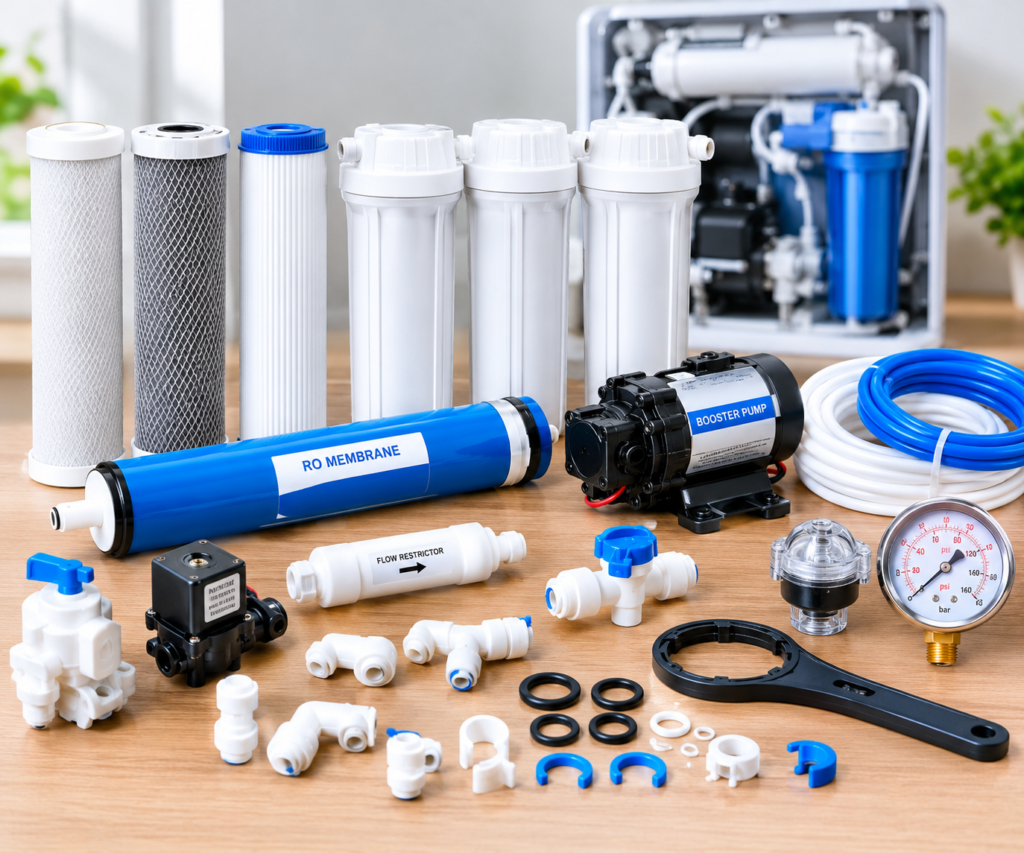
The membrane does not work alone. Sediment filters help remove suspended particles, carbon filters reduce certain contaminants such as chlorine when appropriately specified, and a booster pump may provide the pressure required for reverse osmosis.
When one component stops working correctly, the overall system may perform poorly. That is why checking the complete purifier is important before deciding to replace the membrane.
What Affects RO Membrane Performance?
Several conditions can influence how effectively a domestic RO membrane works.
Incoming Water Quality
Feed water containing scaling minerals or suspended particles can contribute to membrane fouling or scaling. The extent of the problem depends on the water composition, pretreatment, and system operating conditions.
Regularly checking the source water and maintaining the recommended pretreatment can help protect the membrane.
Operating Pressure
Reverse osmosis requires suitable feed pressure. If the pressure is too low, water production may fall even when the membrane is still usable.
A technician may need to inspect the booster pump, tubing, valves, and other pressure-related components before recommending a replacement.
Prefilter Condition
Sediment and carbon filters help protect the RO membrane. When these filters become clogged or ineffective, the membrane may be exposed to conditions that affect its performance.
Follow the purifier manufacturer’s filter replacement schedule rather than waiting for a major performance issue.
Usage and Maintenance
A purifier used frequently may experience different operating demands from one used occasionally. Water quality and maintenance practices also influence membrane service life, so there is no single replacement interval that applies to every household.
RO Membrane Price: What Should You Compare?
The RO membrane price varies according to product specifications, rated capacity, manufacturer, and supplier. Comparing these factors helps you identify a suitable product instead of choosing solely on price.
1. Membrane Capacity
Domestic RO membranes are available in capacities such as 75 GPD, 80 GPD, and 100 GPD. The correct option depends on the purifier’s original specifications.
A higher nominal capacity does not automatically make a membrane suitable for a particular system. The pump, housing, operating conditions, and manufacturer’s recommendations must also be considered.
2. Product Specifications
Review the stated capacity, physical dimensions, connection requirements, and intended application. If the manufacturer provides performance data or installation instructions, use them to confirm suitability.
3. Brand and Seller Information
Compare available manufacturer information, product condition, seller details, and warranty terms where applicable. These details provide a more useful basis for comparison than price alone.
4. Shipping and Installation Costs
The total replacement cost may include delivery charges, labour, and any additional parts required during servicing. If you are buying for a repair business, include these expenses when comparing suppliers.
For the latest available options, visit the domestic RO membrane category at RO Service & Sales.
Which Domestic RO Membrane Should You Choose?
75 GPD RO Membrane
A 75 GPD membrane may be suitable for a domestic purifier designed around that capacity. Before purchasing, check the original model specification and confirm that the replacement meets its requirements.
80 GPD RO Membrane
Some domestic systems use 80 GPD membranes. Compatibility should be verified using the manufacturer’s documentation, dimensions, fittings, and operating specifications.
100 GPD RO Membrane
A 100 GPD membrane has a nominal capacity rating of 100 gallons per day under specified test conditions. Actual production can vary with water temperature, feed pressure, incoming TDS, and system condition.
If you are searching for a 100 GPD RO membrane price, compare compatible listings and check whether the membrane is recommended for your purifier.
Remember that GPD is a rated capacity, not a promise of the exact daily output in every household.
Signs Your RO Membrane May Need Replacement
A membrane can lose performance over time, but common purifier symptoms can have several causes. Consider a proper inspection when you notice the following.
Slow tank filling: The purifier takes longer than usual to produce enough water. This may result from a clogged filter, low pressure, or membrane fouling.
Changes in product-water quality: Unexpected changes in measured TDS or other water-quality parameters may require investigation. A TDS reading alone does not establish that water is safe or unsafe.
Persistent low production: If output remains low after routine filter checks, a technician may need to inspect the membrane and pressure conditions.
Evidence of scaling or fouling: Deposits on the membrane can reduce performance. Appropriate diagnosis can help determine whether cleaning or replacement is suitable.
Repeated maintenance problems: If the system continues to perform poorly after other likely causes have been addressed, membrane condition should be evaluated.
Do not replace a membrane solely because one symptom appears. Accurate diagnosis can prevent unnecessary spending on a part that may still be functional.
How to Replace an RO Membrane Correctly
Replacing a membrane requires attention to compatibility, hygiene, connections, and system operation. If you are unfamiliar with RO servicing, it is advisable to use a qualified technician.
A typical replacement process involves:
- Switching off the purifier’s electrical supply and closing the water supply.
- Relieving system pressure according to the manufacturer’s procedure.
- Opening the membrane housing carefully and removing the old membrane.
- Inspecting the housing, seals, and connections for damage or contamination.
- Installing the compatible replacement in the correct orientation.
- Reassembling the housing and checking all connections for leaks.
- Flushing and operating the system according to the manufacturer’s instructions.
- Checking water production and relevant water-quality parameters after installation.
The exact process varies by purifier model. Follow the manufacturer’s instructions and avoid forcing components into place.
Why RO Technicians and Dealers Should Check Compatibility
For RO dealers and technicians, recommending a suitable replacement is important for customer satisfaction and efficient servicing. An incompatible membrane can lead to installation difficulties, poor performance, and repeat visits.
Before sourcing a membrane, identify the purifier model, original capacity, housing dimensions, and operating requirements. Then compare product specifications, availability, delivery terms, and the total purchase cost.
Maintaining accurate product information also helps service professionals respond more effectively when customers ask about membrane replacement and pricing.
Explore RO Membranes Online at RO Service & Sales
Whether you need a replacement for a home purifier or source domestic spare parts for repair work, reviewing the available product details is a practical first step.
RO Service & Sales provides a dedicated online category for domestic RO membranes. Visit the page to explore current listings and check the information available for each product.
Browse domestic RO membranes:
https://roservice.romegamart.com/product/domestic-spares/membrane/
Check the latest listed price, specifications, and availability before placing your order.
Frequently Asked Questions
1. What is the RO membrane price in India?
The price depends on the membrane’s capacity, specifications, manufacturer, and supplier. Review current product listings to confirm the latest price.
2. How long does a domestic RO membrane last?
Its service life depends on feed-water quality, usage, pretreatment, maintenance, and operating conditions. Follow the purifier manufacturer’s recommendations and arrange an inspection if performance changes.
3. How do I know whether my RO membrane needs replacement?
Slow production or unexpected changes in product-water quality may indicate a problem. However, clogged filters, insufficient pressure, and other faults can cause similar symptoms. A proper diagnosis is recommended.
4. Can I install a 100 GPD membrane in a purifier designed for 75 GPD?
Not without confirming compatibility. Check the purifier manufacturer’s specifications, pump capacity, housing, and operating requirements before changing membrane capacity.
5. Does high TDS always mean the membrane needs replacement?
No. High feed-water TDS does not automatically mean the membrane has failed. Compare appropriate feed-water and product-water measurements, review operating conditions, and consult a technician when necessary.
6. Where can I find domestic RO membranes online?
You can explore domestic RO membrane listings at RO Service & Sales: https://roservice.romegamart.com/product/domestic-spares/membrane/
7. Is the cheapest RO membrane always the best option?
No. Compatibility, product specifications, manufacturing quality, and seller reliability should all be considered alongside price.
Conclusion
RO membrane replacement should be based on the purifier’s actual condition, not just a fixed schedule or the lowest available price. Understanding capacity, feed-water quality, pressure, pretreatment, and compatibility helps you make a more informed decision.
Whether you are comparing 75 GPD, 80 GPD, or 100 GPD options, verify the original purifier specifications before buying. Routine maintenance and accurate troubleshooting can also help reduce avoidable replacement costs.
Explore the domestic RO membrane category at RO Service & Sales to review available options for your water purifier.