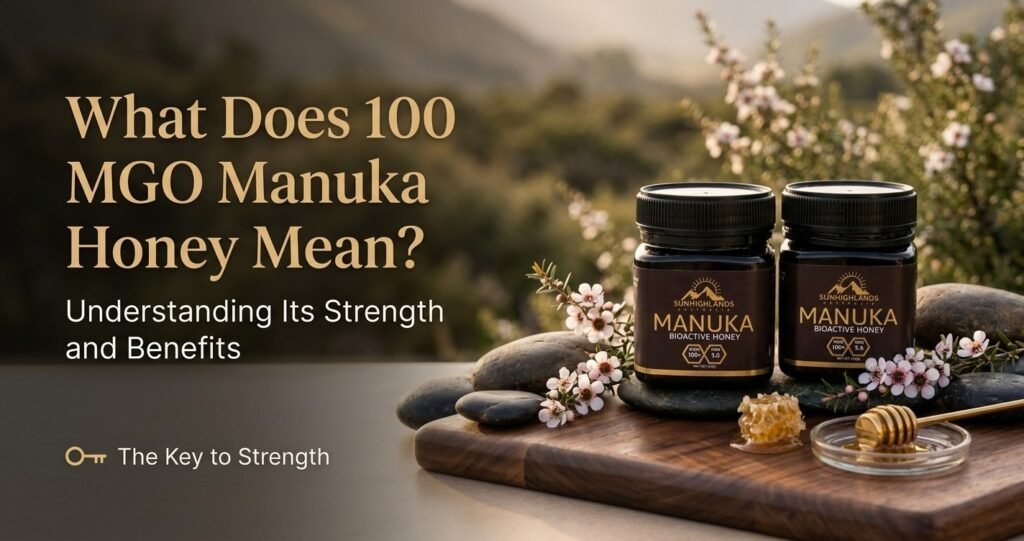

Manuka honey is known for its unique properties, distinctive taste, and natural origin. However, when shopping for this type of honey, you may notice labels displaying numbers such as 100 MGO, 250 MGO, or 500 MGO. These numbers indicate the concentration of methylglyoxal (MGO), a naturally occurring compound associated with manuka honey’s antibacterial activity.
Understanding what 100 mgo manuka honey means can help you choose a product that suits your preferences and intended use. Whether you are exploring manuka honey for the first time or comparing different strengths, knowing how MGO ratings work makes the decision easier.
What Does 100 MGO Mean in Manuka Honey?
MGO stands for methylglyoxal, a compound found in manuka honey. It develops from dihydroxyacetone, a naturally occurring substance present in the nectar of the manuka plant.
A rating of 100 MGO means the honey contains approximately 100 milligrams of methylglyoxal per kilogram of honey. This measurement provides an indication of its MGO concentration and helps consumers compare products with different ratings.
The number does not measure the total nutritional value of the honey. Instead, it identifies the amount of this particular compound within the product.
A 100 MGO rating is generally considered a lower MGO level compared with products rated 400, 850, or 1200 MGO. However, a lower rating does not automatically mean the honey is poor quality. Its suitability depends on individual preferences, product authenticity, and intended use.
What Are the Main Characteristics of 100 MGO Manuka Honey?
Manuka honey Australia has several characteristics that distinguish it from many conventional varieties.
Naturally Occurring Methylglyoxal
The MGO content is one of the most recognized features of manuka honey. Unlike ordinary honey, which generally contains much lower concentrations of methylglyoxal, manuka honey can develop higher levels through its natural chemical composition.
A 100 MGO product provides a measurable amount of this compound without having the higher concentration found in stronger varieties.
Distinctive Taste and Texture
Manuka honey often has a rich, earthy flavor with subtle caramel-like notes. Its texture can range from smooth and creamy to thicker and more granular, depending on processing, storage, and natural crystallization.
The MGO rating does not necessarily determine how sweet the honey tastes or whether it has a particular texture. These characteristics can vary between batches and products.
Versatile Everyday Use
Many people enjoy lower-MGO manuka honey as part of their regular food choices. It can be spread on toast, stirred into porridge, or added to yoghurt.
It can also be enjoyed directly from a spoon, according to personal preference. As with other types of honey, it contains natural sugars and should be consumed in moderation.
How Does 100 MGO Compare With Higher MGO Ratings?
Choosing between different MGO levels becomes easier when you understand what the numbers represent.
| MGO Rating | General Comparison |
|---|---|
| 100 MGO | Lower MGO concentration |
| 250 MGO | More MGO than a 100 rating |
| 400 MGO | Higher MGO concentration |
| 850 MGO | Significantly higher MGO concentration |
| 1200 MGO | Very high MGO concentration |
These ratings describe methylglyoxal concentration rather than an overall ranking of nutritional quality. A higher number does not automatically mean a product is better for every consumer.
When comparing products, consider the MGO rating alongside authenticity certification, ingredient information, country of origin, packaging, and the manufacturer’s quality standards.
What Are the Potential Benefits of 100 MGO Manuka Honey?
Manuka honey contains naturally occurring sugars, small amounts of other nutrients, and compounds that have attracted scientific interest. However, it is important to distinguish established properties from health claims that require further evidence.
Provides a Natural Sweetener
One practical benefit is its use as an alternative sweetener in foods and drinks. Its distinctive flavor can add sweetness to breakfast dishes, snacks, and homemade recipes.
However, manuka honey remains a source of sugar and calories. It should not be treated as a sugar-free food or consumed without considering overall dietary needs.
Contains Compounds Studied for Antibacterial Activity
Methylglyoxal contributes to the antibacterial activity associated with manuka honey. Researchers have studied this property in laboratory settings, and medical-grade honey products are used in certain wound-care applications under appropriate clinical guidance.
A food-grade 100 MGO product should not be assumed to provide the same effects as a regulated medical-grade dressing. It is also not a substitute for prescribed medication or professional medical care.
Offers an Alternative for Honey Enthusiasts
People who enjoy exploring different honey varieties may appreciate manuka honey for its flavour, origin, and measurable MGO content. A lower rating can be a reasonable starting point for consumers who want to experience its distinctive characteristics without selecting a product with a much higher MGO concentration.
How to Choose Quality 100 MGO Manuka Honey
Not every honey product labelled manuka offers the same level of transparency. Before purchasing, consider the following factors.
- Check the MGO rating: Look for clear labelling that identifies the product’s methylglyoxal concentration.
- Review the origin: Read the packaging to understand where the honey was produced and sourced.
- Look for authenticity information: Independent testing or recognized certification can provide additional confidence in a product’s identity and quality.
- Read the ingredients: Ideally, the label should clearly identify the honey and disclose any additional ingredients.
- Compare packaging and storage guidance: Follow the manufacturer’s recommendations to help maintain the product’s quality.
You can also review product specifications before purchasing manuka honey online. Clear information about weight, ingredients, origin, and MGO content makes it easier to compare available options.
Who Might Prefer 100 MGO Manuka Honey?
A lower-MGO variety may appeal to people who want to explore manuka honey as a food, enjoy its distinctive taste, or compare it with other honey varieties.
It can be suitable for everyday culinary uses, including breakfast foods and homemade recipes. However, the best choice depends on personal taste, budget, and product preferences rather than the MGO number alone.
Honey must not be given to children under 12 months because of the risk of infant botulism. People managing diabetes should also consider its sugar content and follow appropriate dietary guidance.
Conclusion
Understanding what 100 MGO manuka means helps consumers make informed decisions when comparing honey products. The rating indicates approximately 100 milligrams of methylglyoxal per kilogram, providing a useful measure of one of manuka honey’s distinctive compounds.
Although higher MGO ratings indicate greater methylglyoxal concentrations, they do not automatically make a product the right choice for everyone. By considering authenticity, origin, ingredients, taste, and intended use, you can select manuka honey that matches your preferences and enjoy it as part of a balanced diet.