


I used to think tawang beer salt was a gimmick — something invented to sell novelty shakers at the checkout counter of a liquor store. Then I watched a friend rim his glass, take one sip, and say, almost involuntarily, “this tastes better.” Not saltier. Better. That small, involuntary reaction is what sent me down a rabbit hole into food science, and it’s the reason I think beer salt deserves a more serious hearing than it usually gets in America’s craft beer conversation, where it’s still treated as a novelty rim garnish rather than a genuine flavor tool.
Let’s get one thing out of the way first: beer salt is not about making beer taste salty. If you can taste the salt itself, you’ve already used too much. Its actual job is quieter and, frankly, more interesting than that.
What the Science Actually Says
Sodium’s relationship with bitterness has been documented in food science literature for over two decades. A widely cited 2001 study on bitterness suppression found that sodium salts reduced the bitterness of certain bitter compounds dramatically — in the case of urea, by more than 70 percent — while the same effect did not hold for every kind of salt. Potassium chloride, for instance, showed none of this suppressing power. The researchers concluded that the sodium ion itself, not saltiness as a general sensation, was doing the work.
Later research pushed this further, right down to the receptor level. A 2024 study published in the Journal of Agricultural and Food Chemistry examined how sodium chloride interacts with human bitter-taste receptors directly, rather than relying only on subjective tasting panels. The researchers found that sodium didn’t blanket-suppress every kind of bitterness uniformly; it selectively dampened the response of specific receptor-compound combinations, acting almost like a molecular brake on some receptors while leaving others unaffected. This matters for beer specifically, because different styles carry different bittering compounds from different hop varieties, which may explain why beer salt seems to transform a pilsner more noticeably than it transforms, say, a resinous double IPA.
There’s a second layer to this. Sensory researchers have also shown that when sodium suppresses bitterness in a bitter-sweet mixture, it doesn’t just mute one taste — it makes the other taste more prominent by comparison. Apply that to beer, and you start to understand why a beer salted correctly doesn’t taste “less bitter” so much as it tastes “more citrus,” “more grain,” or “more mineral.” The malt and hop character doesn’t change. Your perception of the balance between them does.
This is, incidentally, exactly what good chefs already know about seasoning food. Salt is rarely there to taste like salt. It’s there to make the tomato taste more like a tomato.
Why This Tradition Comes From the Bar, Not the Lab
None of this science was discovered because someone wanted a better beer. It emerged from thrift and practicality. Long before beer salt existed as a packaged product, Mexican drinkers were wiping rust residue off metal beer-bottle caps with a wedge of lime, then dropping that same lime into the bottle out of habit. Salt followed the same informal logic: it was a way to make cheap, often warm, mass-produced lager taste more drinkable in hot climates, long before anyone had a receptor-level explanation for why it worked.
Out of that culture came the chelada — simply beer, lime, and salt — and its more elaborate cousin, the michelada, built up over decades in cantinas and sports clubs in cities like San Luis Potosí. There are competing origin stories about exactly who first asked a bartender for beer with lime and salt in the 1940s, 60s, or 70s, but the throughline across all the versions is the same: this wasn’t invented as a delicate flavour-enhancement technique. It was invented by people trying to make an ordinary beer feel a little more special on a hot afternoon, and the technique survived because it worked, science or no science.
That history is worth remembering the next time someone dismisses beer salt as inauthentic or “not real beer appreciation.” It has as much lineage as any cocktail garnish, and considerably more than most of what passes for mixology innovation today.
The Discipline Restraint Actually Requires
Here is where I’ll depart from pure celebration and offer some pushback, because I think this is where most people, myself included at one point, get it wrong.
The instinct with any seasoning is to assume more is better. With beer salt, the opposite is almost always true. Once you can identify the drink as “salty” rather than simply “brighter,” you’ve overshot. A light dusting on part of the rim — not the whole rim, and certainly not a spoonful stirred directly in — is usually the entire dose required. Salting only half the rim, a trick many experienced bartenders already use, is worth adopting deliberately: it lets you alternate between a seasoned sip and an unseasoned one within the same glass, so you can actually judge whether the salt is doing its job.
Beer style matters enormously here too. Clean, crisp lagers, pilsners, and citrus-forward wheat beers respond well because their profiles have room for a light lift. Heavily hopped IPAs are trickier — since salt tends to soften bitterness, adding it to a beer whose entire identity rests on aggressive hop character can undercut what the brewer was going for. And dark beers — stouts, porters — rarely benefit at all. Their roasted, chocolate, and coffee notes are already dense enough that seasoning adds little and can muddy more than it clarifies.
Temperature is the variable people forget entirely. Our ability to detect saltiness drops when a drink is cold and rises as it warms. That means a beer that tasted perfectly balanced with beer salt in the first five minutes can start to taste noticeably saltier by the twentieth, purely because the beer itself has warmed, not because anything about the seasoning changed. If you’re nursing a beer slowly on a warm evening, that’s worth factoring in before you reach for a second application.
Where This Leaves America’s Craft Beer Boom
American craft beer has spent the last two decades defining itself largely in opposition to the mass-market lager — bigger hop profiles, barrel aging, sour mashes, imperial everything. In that context, beer salt can look like exactly the kind of thing a “serious” craft drinker is trained to be suspicious of: a border-culture bar trick, associated with cheap Tecate and hungover afternoons rather than anything a brewer intended.
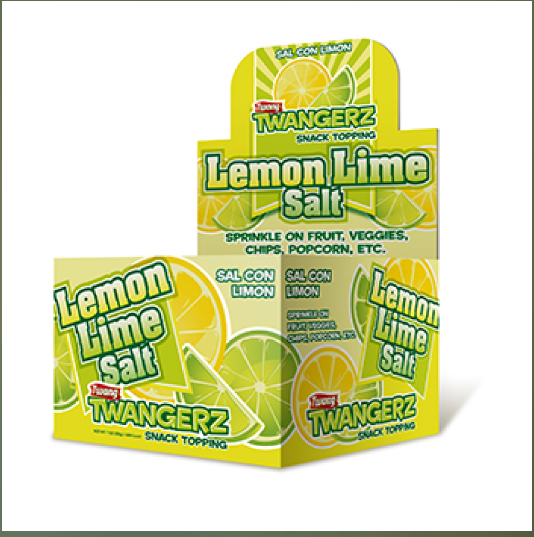
That reflex misses something. Beer salt has its own deep, entirely domestic lineage in the United States, particularly across Texas and the broader Southwest, where it crossed the border alongside the chelada and michelada decades ago and became a regional habit in its own right — companies like Twang, founded in San Antonio in the 1980s, built an entire category around flavored beer salts, well before “craft beer” was a marketing term at all. This isn’t an imported novelty tacked onto American drinking culture. It’s a homegrown Southwestern tradition that predates most of the breweries now treating it as beneath them.
What it needs, though, is the same discipline this piece has been arguing for throughout — not a heavy-handed rim coating that turns every lager into a salt lick, but a light touch reserved for the styles that actually benefit: crisp Mexican-style lagers, pilsners, and citrus-forward wheat beers, rather than the aggressively hopped IPAs and barrel-aged stouts that dominate the American craft shelf. Used indiscriminately, it reads as gimmicky. Used with restraint, on the right beer, it’s simply good seasoning — no more exotic than salting a rim of a margarita, and with a food-science explanation that holds up.
A Small Ritual Worth Keeping Around
There’s something quietly appealing about a technique this old surviving purely on word of mouth for decades before science caught up and explained why it works. It also fits neatly into a broader shift I’ve noticed in how people drink beer socially across the country — less about the label on the bottle, more about the small rituals around sharing it. Whether that’s someone passing round a six-pack at a backyard cookout or a bartender rimming a glass with lime salt before pouring, the instinct is the same: make a good beer a little more occasion-worthy without changing what it fundamentally is.
None of this is a case for treating beer salt as essential. Plenty of well-made beer needs nothing at all, and a brewer who has spent months dialling in a particular hop and malt balance deserves to have that work tasted honestly before anyone reaches for a shaker. But dismissing beer salt outright, as many self-styled beer purists do, ignores both the sensory science behind it and the long, resourceful tradition it comes from.
The right way to think about it isn’t as an additive. It’s as a question you ask the beer, one sip at a time: does this get brighter, or does it just get saltier? If the answer is the former, you’ve found the right amount. If it’s the latter, put the shaker down and let the beer speak for itself.