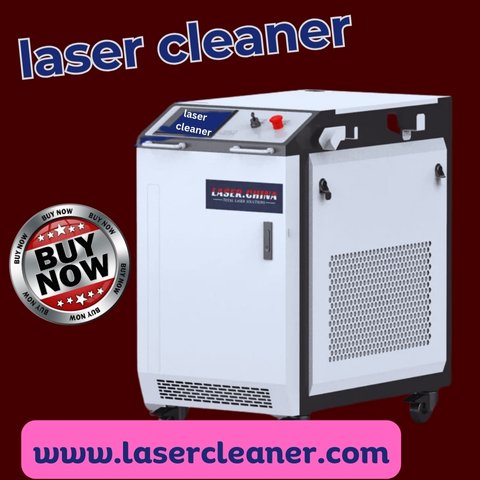

Industrial cleaning has evolved with the development of advanced laser technology. A laser cleaner is a modern solution designed to remove rust, paint, oil, grease, and other unwanted contaminants from different surfaces. It uses concentrated laser energy to clean materials without relying on traditional chemical treatments or abrasive methods.
As industries continue to focus on productivity, precision, and environmentally responsible manufacturing, laser cleaning technology is becoming an increasingly popular choice for professional applications.
What Is a Laser Cleaning Machine?
A laser cleaning machine is an industrial device that uses high-energy laser pulses or continuous laser beams to remove unwanted materials from a surface. The laser interacts with contaminants, causing them to separate from the underlying material through a process known as laser ablation.
This technology can be used on metals, machinery components, automotive parts, molds, and various industrial surfaces. Operators can adjust cleaning parameters according to the material, contamination level, and required cleaning results.
How Does Laser Cleaning Work?
Laser cleaning works by directing a controlled laser beam toward the surface that requires treatment. The energy is absorbed by the unwanted layer, which causes contaminants to break down and detach from the material.
The process can be adjusted by controlling laser power, scanning speed, pulse frequency, and beam width. These settings help operators achieve the desired cleaning effect while minimizing unnecessary impact on the base material.
Proper parameter selection is important, especially when working with delicate components or surfaces that require accurate treatment.
Different Types of Laser Cleaning Equipment
Several types of laser cleaning systems are available to meet different industrial requirements.
1. Handheld Laser Cleaning Machines
Handheld systems are designed for flexible cleaning operations. Their portable structure allows operators to reach different surfaces, machinery parts, and hard-to-access areas. They are commonly used for maintenance, rust removal, and workshop applications.
2. Pulsed Laser Cleaning Machines
Pulsed systems deliver laser energy in short bursts. They are suitable for applications requiring controlled cleaning and greater precision, particularly when treating sensitive materials or detailed components.
3. Continuous Wave Laser Cleaning Machines
Continuous wave systems produce a steady laser beam and are commonly selected for larger cleaning areas and demanding industrial operations. They are frequently used for removing rust, paint, and heavy surface contamination.
Industrial Applications of Laser Cleaning
Laser cleaning technology serves a wide range of industries:
- Automotive Industry: Removing rust, paint, and surface contaminants from automotive components.
- Manufacturing: Preparing metal surfaces before welding, coating, or other production processes.
- Aerospace: Cleaning selected metal components and precision parts.
- Shipbuilding: Removing corrosion, paint, and marine deposits from metal structures.
- Mold Maintenance: Cleaning residue from molds used in plastic and rubber manufacturing.
- Metal Fabrication: Preparing surfaces for further processing and finishing.
Its versatility makes it a practical solution for businesses that require consistent and controlled surface preparation.
How to Choose the Right Laser Cleaner
Selecting suitable equipment depends on the intended application. Buyers should consider the material being cleaned, the type of contamination, required cleaning speed, and the size of the working area.
Laser power is another important factor. Lower-power systems may be appropriate for delicate cleaning tasks, while higher-power machines can handle more demanding industrial applications.
It is also important to evaluate the laser source, cooling system, scanning head, control software, and available technical support. Before purchasing, request a sample cleaning test to confirm that the machine meets your production requirements.
Safety and Maintenance Considerations
Industrial laser equipment requires proper operation and maintenance. Operators should receive appropriate training and use laser-rated protective eyewear suitable for the machine’s wavelength.
A controlled working environment, suitable laser safety enclosure, extraction system, and proper ventilation should be considered according to the application and safety requirements.
Regular inspection of optical components, cooling systems, cables, and other machine parts helps maintain stable performance and extend equipment service life.
Final Thoughts
Laser cleaning technology is transforming industrial surface treatment by offering a precise and modern approach to removing rust, paint, oil, and other contaminants. From automotive manufacturing to heavy industrial maintenance, a laser cleaner can support a wide variety of production and restoration tasks.
Businesses planning to upgrade their cleaning processes should compare machine specifications, test cleaning results, and choose equipment that matches their operational needs. Investing in the right laser cleaning solution can help create a more controlled, efficient, and professional industrial workflow.