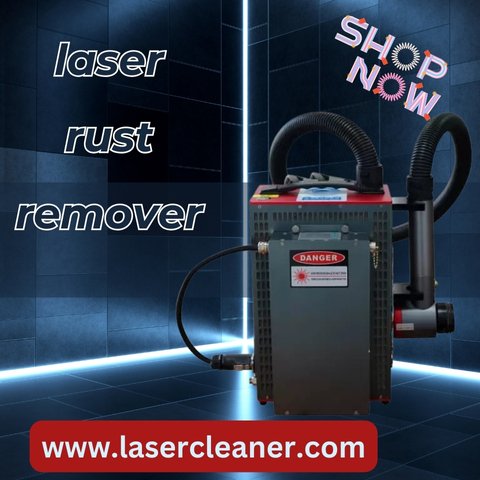

Rust is a common problem in manufacturing, automotive workshops, construction, and metal processing industries. Over time, moisture, oxygen, and environmental exposure create corrosion on metal surfaces, affecting their appearance and performance. Traditional rust removal methods often involve chemicals, abrasive materials, or manual scrubbing, which can require considerable time and effort. Modern laser technology offers a more advanced approach to handling these challenges.
A laser rust remover uses concentrated laser energy to remove rust, oxidation, and unwanted surface contaminants from different metal materials. This technology is becoming increasingly popular among industrial businesses looking for precise, efficient, and controlled surface cleaning solutions.
How Does Laser Rust Removal Work?
Laser rust cleaning works by directing a high-energy laser beam toward a contaminated metal surface. When the laser interacts with the rust layer, the unwanted material absorbs the energy and separates from the underlying surface through controlled ablation.
The process can be adjusted according to the thickness of the rust, the type of metal, and the cleaning requirements. Operators can select suitable power levels, scanning speeds, and other parameters to achieve the desired cleaning results.
This technology is commonly used on steel, iron, aluminum, and other compatible metal surfaces. Proper parameter selection is important to prevent unwanted effects on the base material.
Industrial Applications of Laser Rust Cleaning
Laser cleaning technology has applications across several industries where metal surface preparation is essential.
1. Automotive Industry
Automotive manufacturers and repair workshops use laser cleaning to remove corrosion from vehicle frames, engine components, metal panels, and other parts. It can also help prepare surfaces before welding, painting, and maintenance operations.
2. Manufacturing and Metal Processing
Metal fabrication facilities frequently deal with rust on stored materials, machine components, and production equipment. Laser cleaning provides a controlled process for preparing these surfaces before further manufacturing operations.
3. Shipbuilding and Marine Industry
Marine environments expose metal structures to moisture and salt, increasing the risk of corrosion. Laser cleaning equipment can be used for removing rust from compatible ship components, metal structures, and maintenance areas.
4. Industrial Equipment Maintenance
Factories depend on machinery that must remain in good working condition. Laser cleaning can help remove corrosion from machine parts, metal housings, and equipment surfaces during scheduled maintenance.
Types of Laser Rust Removal Machines
Different industrial requirements call for different laser cleaning configurations.
Portable Laser Cleaning Machines: These machines are designed for workshops, maintenance teams, and applications where operators need to move between different cleaning locations.
Handheld Laser Cleaners: Handheld systems allow operators to guide the laser cleaning head across metal surfaces. They are suitable for components with different shapes and sizes.
Continuous Wave Laser Cleaners: Continuous wave systems deliver laser energy continuously and are used in applications requiring consistent cleaning performance.
Pulsed Laser Cleaning Machines: Pulsed systems deliver energy in short bursts, allowing precise control over the cleaning process. They are particularly useful for applications involving delicate surfaces or controlled material removal.
What to Consider When Selecting a Laser Cleaning Machine
Choosing suitable equipment requires understanding the actual cleaning requirements of your business.
-
Laser Power: Select an appropriate power level according to rust thickness, material type, and cleaning speed requirements.
-
Cleaning Width: Consider the working area and surface dimensions of the components you regularly process.
-
Laser Source: Check the laser source quality, expected service life, and manufacturer specifications.
-
Cooling System: Make sure the cooling arrangement is appropriate for the machine’s operating conditions.
-
Safety Equipment: Look for proper protective housing, emergency stop functions, safety interlocks, and suitable laser protection.
-
Technical Support: Choose a manufacturer that provides installation guidance, operator training, spare parts, and after-sales assistance.
Why Businesses Are Moving Toward Laser Cleaning
Industrial companies are increasingly exploring laser-based surface preparation because production processes demand greater consistency and precision. Laser cleaning can reduce dependence on abrasive consumables and certain chemical cleaning processes.
It also allows operators to target specific areas without applying cleaning agents directly to the surface. However, results depend on material compatibility, machine settings, operator experience, and the condition of the workpiece.
Businesses should also consider appropriate fume extraction because removing rust, paint, and other coatings can generate hazardous airborne particles.
Final Thoughts
Laser technology is changing the way industries approach corrosion removal and metal surface preparation. From automotive workshops to large manufacturing facilities, modern laser cleaning equipment offers a practical solution for handling rust and surface contamination.
Before investing in a laser rust remover, evaluate your cleaning applications, required laser power, material types, and production requirements. Working with an experienced manufacturer can help you select suitable equipment and establish a reliable cleaning process for long-term industrial use.