


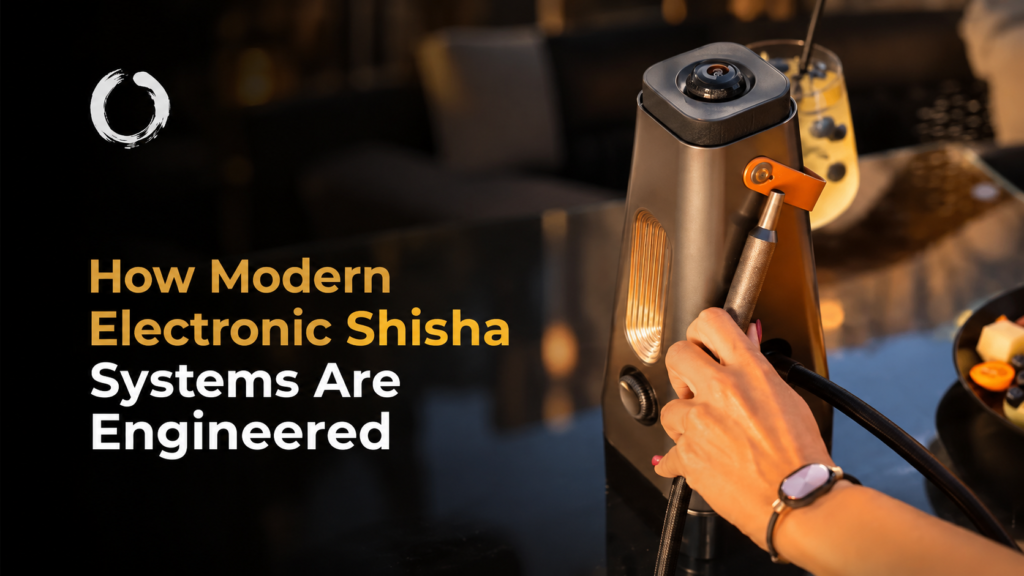

Electronic shisha technology is changing how traditional hookah systems are designed, heated, and operated. While conventional shisha setups rely on charcoal to generate heat, modern electronic shisha systems use electrical components, temperature controls, and rechargeable power sources to manage the heating process.
Behind the streamlined appearance of an electronic shisha device lies a combination of mechanical engineering, thermal management, electronics, and material selection. Each component plays a role in creating a controlled and practical experience.
From heating chambers and airflow pathways to battery systems and structural materials, modern electronic shisha engineering focuses on bringing several technologies together in one coordinated design.
Brands such as ENSŌ demonstrate this approach by combining electronic heating technology with familiar hookah elements, including water chambers, hoses, and carefully designed mouthpieces.
Understanding how these systems are engineered provides useful insight into the technology behind modern electric hookahs and the design decisions that influence their performance.
1. Electronic Heating Systems: The Foundation of Modern Shisha Engineering
The most significant engineering difference between traditional and electronic shisha systems is the method used to generate heat.
Traditional hookahs use burning charcoal positioned above the shisha material. Heat transfers from the charcoal toward the bowl, where it warms the prepared material.
The temperature depends on several factors, including charcoal placement, airflow, bowl construction, and the stage of charcoal combustion.
Electronic shisha systems approach this process differently.
Instead of relying on burning charcoal, they use electrically powered heating elements that generate heat when supplied with electrical energy.
How electronic heating works
A typical electronic shisha heating process involves several stages:
- Electrical power is supplied from a rechargeable battery or compatible external source.
- The heating element converts electrical energy into thermal energy.
- Heat transfers toward the chamber containing the shisha material.
- Electronic controls regulate the heating process according to the selected settings.
- The system adjusts its power delivery to manage temperature changes during operation.
This approach allows engineers to design systems with adjustable heating characteristics rather than depending entirely on manually positioned charcoal.
For example, the ENSŌ 2026 Edition features adjustable temperature settings from 180°C to 330°C in 5°C increments, according to its official product information.
These values describe the device’s heating settings and should not automatically be interpreted as the exact temperature of every part of the shisha material.
2. Temperature Regulation and Thermal Engineering
Generating heat is only one part of electronic shisha engineering. Managing that heat throughout a session is equally important.
When a user draws through a shisha system, incoming air and changing material conditions can affect the temperature inside the heating assembly.
Engineers must account for these changes when developing electronic temperature-control systems.
Why temperature stability matters
Temperature fluctuations can influence how consistently a prepared shisha blend is heated.
If heat delivery changes significantly during operation, the material may experience uneven heating.
Electronic systems can reduce the need for manual adjustments by regulating electrical power.
Depending on the design, temperature management may involve:
- Temperature-sensing components that monitor selected parts of the heating assembly.
- Electronic controllers that process temperature information.
- Heating algorithms that adjust electrical output.
- Thermal insulation that limits unwanted heat transfer.
- Heating chamber materials selected for their thermal properties.
The objective is to coordinate these components so the heating system responds predictably to changing conditions.
The ENSŌ approach to heating control
ENSŌ uses an electronically controlled heating process with adjustable settings and a preheating stage.
Its published operating information describes a five-minute preheating programme and different heating modes intended to manage the distribution of heat during use.
This demonstrates how electronic shisha engineering involves more than replacing charcoal with a heating element. It also requires software-controlled power management and careful consideration of thermal behaviour.
3. Heating Chamber Design and Material Selection
The heating chamber is another essential part of an electronic shisha system.
It holds the prepared material and provides the physical environment in which heat transfer takes place.
Because this component operates at elevated temperatures, its design requires attention to material properties, durability, and cleaning requirements.
Why ceramic materials are commonly used
Ceramic materials are frequently selected for heating-related applications because certain ceramic formulations offer useful thermal stability and resistance to high temperatures.
In electronic shisha systems, ceramic components can help provide a defined heating environment while separating the material from other internal structures.
However, not all ceramics behave identically. Thermal conductivity, heat capacity, surface finish, and resistance to thermal shock depend on the particular formulation and construction.
Engineering considerations for heating chambers
When designing a heating chamber, engineers must consider:
Heat distribution: The chamber’s shape and material influence how thermal energy reaches the prepared blend.
Material capacity: The available volume affects how much material can be accommodated without restricting the intended airflow.
Cleaning access: Removable chamber components can make routine maintenance more convenient.
Thermal durability: Components must tolerate repeated heating and cooling cycles under their intended operating conditions.
Compatibility: The chamber must fit correctly within the surrounding heating assembly.
ENSŌ uses a porcelain-based chamber in its integrated electric hookah design, reflecting the importance of material selection in the overall heating system.
4. Airflow Engineering: Designing the Path Through the System
Airflow is a fundamental part of any hookah system, whether traditional or electronic.
In a modern electronic shisha, the airflow pathway connects the heating chamber, internal passages, water tank, hose, and mouthpiece.
Each section contributes to the resistance encountered when air moves through the device.
How airflow pathways are engineered
Engineers evaluate several characteristics when designing these pathways.
Internal diameter: Narrow passages generally create greater resistance to airflow than wider passages under comparable conditions.
Path geometry: Sharp turns, sudden changes in diameter, and poorly aligned connections can increase pressure losses.
Sealing: Connections must be designed to limit unintended air leakage.
Surface condition: Residue and manufacturing irregularities can affect airflow and cleaning requirements.
Component compatibility: Hoses, adapters, and mouthpieces must connect securely while maintaining the intended flow path.
These factors influence the mechanical performance of the device and the amount of effort required to draw air through it.
ENSŌ’s airflow design
The ENSŌ 2026 Edition includes a wider, 1.5-metre hose and a redesigned 15-centimetre magnetic stainless-steel mouthpiece.
According to ENSŌ, these changes are intended to reduce draw resistance and improve airflow compared with the previous configuration.
This illustrates how relatively small design changes to external components can influence the overall operation of a shisha system.
5. Rechargeable Battery Engineering and Power Management
Modern electronic shisha systems require an electrical power source capable of supporting their heating elements.
For cordless designs, rechargeable batteries make it possible to operate without remaining connected to a wall outlet.
However, powering a heating element requires careful electrical engineering because heating systems can demand substantial energy.
Important battery design considerations
Battery engineering involves balancing several requirements.
Energy capacity: Determines how much electrical energy can be stored.
Power delivery: The battery must supply the electrical current required by the heating system.
Thermal management: Battery temperatures must remain within the manufacturer’s intended operating limits.
Charging compatibility: Charging circuitry must work with the specified power input.
Protection systems: Appropriate electronic safeguards are needed to manage conditions such as overcurrent, overcharging, and excessive temperature.
Mechanical integration: The battery must fit securely inside the device while remaining accessible where replacement is supported.
Removable battery systems
Some electronic shisha devices use removable batteries rather than permanently integrated power packs.
This approach allows a depleted battery to be exchanged for a charged compatible replacement.
The ENSŌ electric hookah uses a removable 5,000 mAh battery system. Its published specifications identify a nominal voltage of 11.1 V for the original configuration, while the newer edition includes an updated fast-charging battery option.
Actual operating time depends on factors such as heating temperature, operating mode, battery condition, and usage patterns.
A well-engineered battery system must therefore consider both electrical performance and the practical requirements of repeated use.
6. Electronic Controls and User Interface Engineering
The electronic controls form the connection between the user and the heating system.
Traditional hookah users adjust heat manually by changing charcoal placement or airflow conditions.
Electronic systems introduce interfaces that allow heating settings to be selected electronically.
These interfaces may include rotating controls, buttons, indicator lights, displays, or programmable settings.
Why interface design matters
A user interface should make important operating information understandable without requiring unnecessary steps.
Engineers and product designers must consider:
- How users select temperature settings.
- How the device communicates its heating status.
- How battery information is displayed.
- How accidental changes to settings can be limited.
- How the controls remain usable during normal operation.
ENSŌ uses a Thermodial control system that allows users to adjust temperature and access supported operating functions.
Its LED indicators communicate different operating states, including heating, temperature locking, and low battery conditions.
This combination of physical controls and electronic feedback illustrates how interface engineering contributes to the functionality of a modern electronic shisha.
7. Structural Engineering and Product Materials
Electronic shisha systems combine mechanical components with electrical and thermal assemblies.
The external structure must support these internal systems while maintaining stability, durability, and practical handling.
Material selection for different components
Different sections of a device may require different materials because their engineering functions vary.
| Component | Engineering consideration |
| Main body | Structural strength and component protection |
| Heating chamber | Thermal stability and cleaning |
| Airflow pathway | Durability and suitable internal geometry |
| Water tank | Liquid containment and visibility |
| Hose | Flexibility and secure connections |
| Mouthpiece | Comfortable handling and maintenance |
| Battery housing | Mechanical protection and electrical integration |
ENSŌ’s published construction details include a zinc-alloy body, stainless-steel air pathway, ceramic bowl, and glass water tank.
Using different materials for different functions allows engineers to address the specific requirements of each component rather than relying on a single material throughout the product.
8. Modular Construction and Maintenance Engineering
Maintenance is an important consideration in electronic shisha design.
During regular operation, moisture and residue can accumulate in components that come into contact with the shisha material or airflow.
Engineers must therefore consider how users will access, clean, and replace parts.
Why modular components matter
Modular construction allows selected components to be separated from the main device.
This can simplify cleaning and make certain replacements more practical.
Examples include removable heating cups, detachable hoses, replaceable mouthpieces, and accessible water tanks.
The ENSŌ 2026 Edition introduces a redesigned Glass ThermoCap intended to make cleaning easier, alongside updated hose and mouthpiece components.
However, modularity must be balanced against connection reliability. Every removable component requires suitable mechanical alignment, sealing, and material compatibility.
The engineering challenge is to make maintenance accessible without compromising the intended operation of the assembled system.
9. Engineering Different Types of Electronic Shisha Systems
Not every electronic shisha product follows the same design approach.
Some devices are complete systems that integrate the heating assembly, water tank, airflow pathway, and electrical power source.
Others are designed as electronic heating accessories for existing traditional hookahs.
Integrated electronic shisha systems
An integrated system brings the major functional components into a coordinated product.
This allows engineers to design the heating assembly, airflow path, power system, and external structure together.
The ENSŌ 2026 Edition follows this approach, combining electronic heating with a water tank, hose, removable battery, and adjustable temperature controls.
Electronic heating attachments
An alternative approach is to develop a heating system that works with a traditional hookah.
ENSŌ Diamond represents this category.
It uses an electronically controlled ceramic heating system intended to replace charcoal while retaining the user’s existing hookah structure.
ENSŌ describes Diamond as incorporating adjustable heating settings, a rechargeable quick-swap battery, and compatibility with traditional shisha setups.
Both approaches use electronic heating, but they present different engineering requirements.
Integrated systems allow broader coordination between components, while attachments must account for compatibility with equipment that may vary in dimensions and construction.
10. Safety Considerations in Electronic Shisha Engineering
Electronic shisha systems combine elevated temperatures, rechargeable batteries, electrical circuitry, and water-containing components.
This combination requires careful attention to operational safety.
Engineering considerations include electrical insulation, battery protection, thermal separation, mechanical stability, and resistance to unintended liquid exposure.
Manufacturers must also provide appropriate operating instructions, charging requirements, and maintenance guidance.
Importantly, eliminating burning charcoal does not make inhaled shisha aerosol harmless. Although electronic heating removes the charcoal combustion source, aerosol composition and exposure risks still depend on the heated material, operating conditions, and device design.
Electronic shisha products should therefore be evaluated on their specific construction, operating instructions, and applicable regulatory requirements rather than assumptions about safety.
11. The Future of Electronic Shisha Engineering
The development of electronic shisha technology reflects broader trends in consumer electronics and product engineering.
Manufacturers are increasingly exploring ways to combine precise controls, rechargeable power systems, modular components, and simplified physical interfaces.
Future engineering developments may focus on more responsive temperature management, improved battery efficiency, easier maintenance, and greater compatibility between components.
Material innovation may also influence how heating chambers, seals, and structural parts are designed.
At the same time, manufacturers must balance technological complexity with usability.
Adding more features does not automatically produce a better system. Successful engineering depends on how effectively the components work together.
ENSŌ’s approach illustrates this balance by preserving recognizable shisha elements while redesigning the methods used to generate and regulate heat.
Conclusion
Modern electronic shisha systems are the result of several engineering disciplines working together.
Electronic heating elements replace charcoal as the primary heat source, while temperature controls manage power delivery. Carefully designed chambers distribute heat, airflow pathways guide air through the device, and rechargeable batteries support cordless operation.
Structural materials, modular components, and user interfaces complete the system by addressing durability, maintenance, and everyday functionality.
The result is a different approach to shisha engineering, one that combines established hookah design principles with contemporary electrical and mechanical technology.
Through products such as the ENSŌ 2026 Edition and ENSŌ Diamond, ENSŌ Shisha EU demonstrates how modern engineering can introduce electronic temperature management while retaining important elements of the traditional shisha ritual.


