
Hair loss is a common problem that affects millions of people worldwide. It can occur due to genetics, hormonal changes, aging, stress, and certain medical conditions. Among the available hair loss treatments, Minoxidil and Finasteride are two of the most widely recognized options. Both medications are used to manage pattern hair loss, but they work differently and offer different benefits.
Understanding Minoxidil vs Finasteride can help you make a more informed decision about which treatment may be suitable for your hair restoration goals. From their mechanisms of action to potential side effects, each medication has advantages and limitations worth considering.
What Is Minoxidil?
Minoxidil is a medication commonly used to treat androgenetic alopecia, also known as male or female pattern hair loss. It is available in topical forms, including liquid solutions and foam, generally in 2% and 5% strengths.
Minoxidil works by supporting hair follicle activity and extending the anagen phase, which is the active growth phase of the hair cycle. It may also increase the size of miniaturized hair follicles, helping produce thicker and healthier-looking hair.
One of the main advantages of Minoxidil is that it is suitable for both men and women when used according to appropriate medical guidance. It is applied directly to the scalp, making it a convenient treatment for people experiencing hair thinning.
However, Minoxidil requires consistent application. Most users need at least three to six months to notice visible improvements. If the treatment is discontinued, newly maintained or regrown hair may gradually be lost.
What Is Finasteride?
Finasteride is an oral prescription medication primarily used to treat male pattern hair loss. It works by blocking the enzyme 5-alpha-reductase, which converts testosterone into dihydrotestosterone (DHT).
DHT is an important hormone involved in androgenetic alopecia. In genetically susceptible individuals, it can gradually shrink hair follicles, causing hair to become thinner and shorter over time.
By reducing DHT levels, Finasteride helps slow down hair follicle miniaturization and may support hair regrowth. It is generally prescribed as a once-daily tablet for men with male pattern hair loss.
Unlike Minoxidil, which supports the hair growth cycle, Finasteride addresses one of the hormonal factors responsible for pattern hair loss.
Minoxidil vs Finasteride: Key Differences
The biggest difference between these medications is how they work and how they are used.
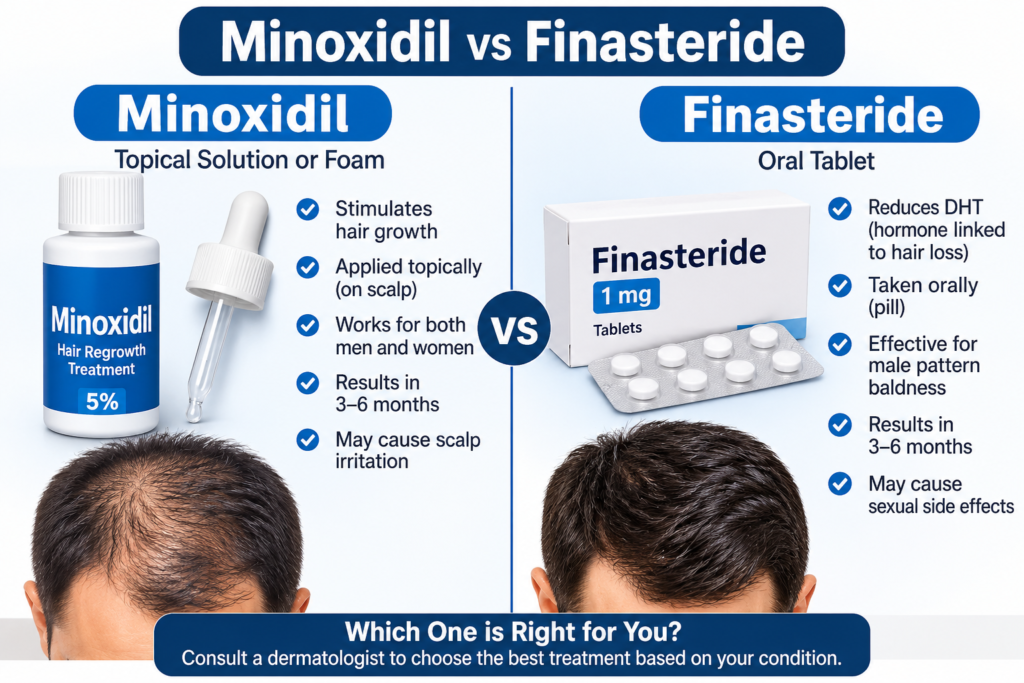
Minoxidil is a topical treatment that helps stimulate hair growth and improve hair density. Finasteride is generally an oral medication that reduces DHT levels to help protect hair follicles.
Here are the main differences:
| Feature | Minoxidil | Finasteride |
| Main purpose | Supports hair growth | Reduces DHT |
| Common form | Topical foam or liquid | Oral tablet |
| Main mechanism | Supports hair follicle activity | Blocks 5-alpha-reductase |
| Suitable for | Men and women | Primarily men |
| Results | Usually 3–6 months or longer | Usually 3–6 months or longer |
| Prescription | Often available without prescription | Requires prescription |
| Common side effects | Scalp irritation and dryness | Sexual side effects |
Both treatments can help manage androgenetic alopecia, but their effectiveness varies depending on individual circumstances.
Benefits of Minoxidil
Minoxidil offers several benefits for individuals experiencing hair thinning.
- Supports Hair Regrowth
Minoxidil can stimulate hair follicles and help improve hair density. It may be particularly useful in areas where hair has become thin but follicles remain active.
- Suitable for Men and Women
Unlike Finasteride, topical Minoxidil is commonly used by both men and women. Different strengths and formulations are available depending on individual needs.
- Easy Application
Minoxidil is applied directly to the scalp, allowing users to target areas affected by hair thinning.
- Non-Hormonal Treatment
Minoxidil does not work by reducing DHT levels. This makes it an option for individuals who prefer a treatment that does not directly target hormonal pathways.
- Helps Improve Hair Thickness
With consistent use, Minoxidil may help produce thicker hair and improve the overall appearance of thinning areas.
Despite these benefits, regular application is necessary to maintain results.
Benefits of Finasteride
Finasteride is particularly beneficial for men experiencing genetic hair loss.
- Reduces DHT Levels
Finasteride blocks the enzyme responsible for converting testosterone into DHT. Lower DHT levels can help reduce the hormonal effects that cause hair follicles to shrink.
- Slows Hair Loss
One of its major advantages is its ability to slow the progression of male pattern baldness. It can help preserve existing hair and reduce further thinning.
- Supports Hair Regrowth
Some men experience improved hair density and regrowth after several months of consistent treatment.
- Convenient Daily Treatment
Oral Finasteride is generally taken once daily, making it relatively easy to include in a treatment routine.
- Long-Term Hair Maintenance
When used consistently under medical supervision, Finasteride can help maintain hair for many years.
However, its suitability depends on individual health conditions and the potential risk of side effects.
Side Effects of Minoxidil
Although Minoxidil is generally well tolerated when used correctly, some individuals may experience side effects.
Common side effects include:
- Scalp irritation and itching
- Dryness and flaking
- Redness around the application area
- Unwanted facial hair growth
- Temporary increased hair shedding when starting treatment
Temporary shedding can occur as hair follicles transition through different growth phases.
In rare cases, Minoxidil may cause dizziness, rapid heartbeat, chest discomfort, or swelling. If these symptoms occur, stop using the medication and seek medical attention.
Applying more Minoxidil than recommended does not produce faster results and may increase the risk of adverse effects.
Side Effects of Finasteride
Finasteride can also cause side effects, although many people use it without experiencing significant problems.
Potential side effects include:
- Reduced sexual desire
- Erectile dysfunction
- Changes in ejaculation
- Breast tenderness or enlargement
- Mood changes or depression
Some individuals may experience persistent sexual symptoms after stopping Finasteride, although the frequency and relationship remain areas of medical research.
Finasteride has also been associated with mood-related adverse effects. Anyone experiencing depression, significant mood changes, or suicidal thoughts should seek medical help promptly.
Finasteride can affect prostate-specific antigen (PSA) levels, which are used in prostate health assessments. Always inform your healthcare professional if you take this medication.
It should not be used by women who are pregnant or may become pregnant because exposure can harm the development of a male fetus.
Can You Use Minoxidil and Finasteride Together?
Yes, Minoxidil and Finasteride are sometimes prescribed together to manage androgenetic alopecia.
The reason is simple: both medications work through different mechanisms. Minoxidil supports hair follicle activity and growth, while Finasteride reduces DHT levels to help protect susceptible follicles.
Using both treatments may provide complementary benefits, including:
- Improved hair density
- Reduced progression of hair loss
- Better maintenance of existing hair
- Increased potential for visible hair regrowth
However, combination treatment is not suitable or necessary for everyone. A dermatologist can evaluate your condition and recommend an appropriate treatment plan.
Which Treatment Works Faster?
When comparing Minoxidil vs Finasteride, neither medication provides immediate results.
Minoxidil may produce noticeable improvements after three to six months, although some individuals need longer.
Finasteride can begin slowing hair loss within the first few months, but visible improvements often take six to twelve months.
Individual results depend on genetics, age, the severity of hair loss, and treatment consistency.
Taking regular photographs can help you monitor progress and determine whether your treatment is producing noticeable changes.
Minoxidil vs Finasteride: Which One Should You Choose?
Choosing between Minoxidil and Finasteride depends on your hair loss pattern, health history, and personal preferences.
Minoxidil may be a suitable choice for men and women looking for a topical treatment to support hair growth. Finasteride may be more appropriate for men with androgenetic alopecia who want to reduce the hormonal effects of DHT.
For some men, using both treatments may provide better overall hair loss management than using either medication alone.
Before starting treatment, consult a qualified dermatologist. Hair loss can have several causes, including nutritional deficiencies, thyroid disorders, stress, and underlying medical conditions.
Final Thoughts
The comparison of Minoxidil vs Finasteride highlights two effective approaches to managing pattern hair loss. Minoxidil helps support hair growth and improve hair density, while Finasteride reduces DHT levels and helps protect hair follicles from hormonal damage.
Both medications have unique benefits and potential side effects. The best option depends on your individual needs, the cause of your hair loss, and your medical history.
With an accurate diagnosis, consistent treatment, and professional guidance, you can choose a suitable approach to managing hair loss and maintaining healthier-looking hair.