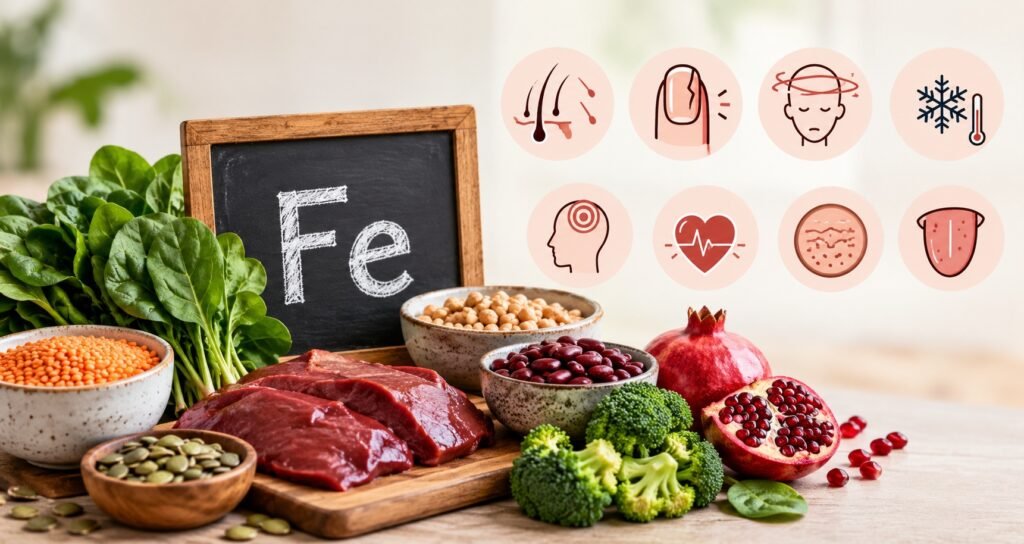

Feeling tired all the time is one of the best-known signs of iron deficiency. But did you know that low iron levels can also affect your hair, nails, skin, concentration, and even your desire to eat unusual things?
Iron helps your body make haemoglobin, a protein in red blood cells that carries oxygen to different parts of your body. When you do not get enough iron, your body may struggle to produce healthy red blood cells. If the deficiency becomes severe enough to cause anaemia, you may notice several changes in your everyday health.
The tricky part is that these symptoms can develop slowly. You might blame hair fall on the weather, headaches on work stress, or difficulty concentrating on poor sleep. Sometimes, though, these changes have a common cause.
Let’s look at eight important signs of iron deficiency beyond tiredness, what causes them, and when you should consider getting your iron levels checked.
What Is Iron Deficiency?
Iron deficiency occurs when your body does not have enough iron to meet its needs. Iron deficiency anaemia develops when the deficiency becomes severe enough to reduce the production of healthy red blood cells and haemoglobin.
Some common causes include:
- Not getting enough iron through your diet
- Heavy menstrual bleeding
- Pregnancy, when iron requirements increase
- Blood loss from the digestive tract
- Conditions that affect iron absorption, such as coeliac disease
- Certain chronic illnesses or repeated blood donation
Vegetarians and vegans can also develop iron deficiency if their diets do not provide enough absorbable iron. This does not mean that a vegetarian diet automatically causes low iron. Foods such as lentils, beans, chickpeas, tofu, seeds, and iron-fortified cereals can contribute to your daily intake.
Iron deficiency and iron deficiency anaemia are not the same. You can have low iron stores before your haemoglobin level falls below the normal range.
8 Important Signs of Iron Deficiency Beyond Tiredness
1. Pale Skin or Pale Inner Eyelids
Have you noticed that your skin looks paler than usual? Or that the inside of your lower eyelids appears less pink?
Pale skin can be a sign of iron deficiency anaemia. When your haemoglobin levels fall, your blood may carry less oxygen, and some areas of your skin or mucous membranes may look paler.
You might notice changes in your:
- Face or lips
- Gums
- Inner lower eyelids
- Nail beds
Paleness can be difficult to identify on its own, especially because natural skin tones vary. It can also occur with other medical conditions.
If you notice unusual paleness along with breathlessness, dizziness, or weakness, speak to a doctor. A blood test can help determine whether anaemia is present.
2. Hair Fall and Thinning Hair
Finding more hair than usual on your pillow, comb, or bathroom floor can be frustrating. If your hair seems thinner than before, iron deficiency may be one possible cause.
Iron supports several processes involved in normal cell function and hair growth. Low iron stores have been associated with hair loss in some people, particularly those experiencing diffuse hair shedding.
Still, hair fall does not automatically mean your iron levels are low. Thyroid problems, stress, recent illness, hormonal changes, and inadequate protein intake can also contribute.
What should you do?
- Notice whether the hair shedding is persistent or increasing.
- Include iron-rich foods in your regular meals.
- Ask your doctor whether a complete blood count and ferritin test are appropriate.
Avoid starting iron tablets just because you are experiencing hair fall. The right treatment depends on the cause.
3. Brittle Nails or Spoon-Shaped Nails
Your nails can sometimes reveal changes in your nutritional health.
Iron deficiency may cause nails to become weak, brittle, or more likely to split. In some cases, prolonged or significant iron deficiency can lead to koilonychia, a condition in which the nails become thin and develop a spoon-like shape.
You may notice that:
- Your nails break more easily than before.
- The nail surface looks thinner or uneven.
- The centre of a nail appears slightly sunken.
Spoon-shaped nails are not a common sign of mild iron deficiency, and brittle nails have several possible causes. Frequent exposure to water, cleaning products, and other nutritional problems can also affect nail health.
If your nail changes persist, especially alongside other symptoms, ask your doctor whether testing for iron deficiency would help.
4. Shortness of Breath During Everyday Activities
Do you get out of breath while climbing stairs or walking at your usual pace? If this happens more often than before, it deserves attention.
When iron deficiency leads to anaemia, your blood may not carry enough oxygen to meet your body’s needs. You may notice breathlessness during activities that previously felt easy.
Other symptoms can include:
- Getting breathless while walking or exercising
- Feeling unusually weak after physical activity
- Needing more breaks during everyday tasks
Shortness of breath can also result from asthma, heart conditions, and other health problems. Do not assume that low iron is the cause without getting checked.
If you experience sudden or severe breathlessness, chest pain, or fainting, seek emergency medical care.
5. Frequent Headaches and Dizziness
Headaches after a long day can happen for many reasons. But what if you keep experiencing them even when you have slept well and had enough water?
Iron deficiency anaemia can cause headaches and dizziness. You might feel light-headed when standing up, struggle to concentrate, or experience a sense of unsteadiness.
Some people also notice that their headaches occur alongside weakness, pale skin, or a racing heartbeat.
Try not to treat recurring headaches with painkillers alone without considering the cause. Your doctor can review your symptoms and decide whether a blood test or another investigation is needed.
Sudden severe headaches, fainting, or new neurological symptoms require urgent medical assessment.
6. Cracks at the Corners of Your Mouth or a Sore Tongue
Small cracks at the corners of your mouth may seem like a minor problem. Sometimes, they can be associated with iron deficiency.
You may notice:
- Painful cracks where your lips meet
- A sore or burning tongue
- A tongue that looks unusually smooth
- Discomfort while eating spicy or acidic foods
These changes can also occur due to vitamin B deficiencies, irritation, infections, or other conditions.
If mouth sores keep returning or your tongue remains sore, speak to a healthcare professional. They can help identify whether you need tests for iron, vitamin B12, folate, or another cause.
7. Cravings for Ice or Non-Food Items
This symptom surprises many people.
Some people with iron deficiency develop a condition called pica, which involves cravings for things that are not food. Examples include ice, paper, chalk, or clay.
A strong urge to chew ice is sometimes called pagophagia. It can occur alongside iron deficiency, even when a person has not noticed other clear symptoms.
If you regularly crave or chew ice, tell your doctor. The same applies if you feel an urge to eat non-food materials.
Do not eat non-food substances to satisfy these cravings. Some may cause poisoning, digestive problems, or other harm.
A blood test can help determine whether low iron is contributing to the problem.
8. Restless Legs That Disturb Your Sleep
Do you feel an uncomfortable urge to move your legs when you lie down at night?
Restless legs syndrome can cause sensations such as tingling, crawling, pulling, or discomfort in the legs. The feeling often becomes stronger when you are resting and may improve temporarily when you move.
Iron deficiency is one possible contributor to restless legs syndrome.
You may notice that the discomfort:
- Starts or worsens in the evening
- Makes it difficult to fall asleep
- Improves when you walk or stretch
- Returns when you sit or lie down again
Poor sleep can leave you feeling exhausted the next day, which makes the problem even more frustrating.
If these symptoms regularly disturb your sleep, consult a doctor. They may assess your iron status and look for other possible causes. Do not start iron supplements without medical guidance.
How Do Doctors Diagnose Iron Deficiency?
The symptoms above can point towards iron deficiency, but they cannot confirm it. You need appropriate blood tests to know what is happening.
Your doctor may recommend:
- Complete blood count (CBC): Checks haemoglobin and other features of your blood.
- Serum ferritin: Helps assess your body’s stored iron.
- Additional iron studies: Tests such as transferrin saturation may help clarify your iron status.
- Further investigations: These may be needed to identify blood loss, absorption problems, or another underlying condition.
A CBC can identify anaemia, but a person may have low iron stores before anaemia develops. Ferritin results also need to be interpreted in context because inflammation can affect them.
The cause matters just as much as the test result. For example, heavy periods may explain iron loss in some women, while digestive tract bleeding or poor absorption may need investigation in other people.
How Can You Improve Your Iron Levels Through Diet?
Food can help you maintain healthy iron levels. If you already have significant iron deficiency, though, diet alone may not be enough.
Here are some practical steps.
Include Iron-Rich Foods
Vegetarian options include:
- Lentils, chickpeas, rajma, and other beans
- Tofu and soy-based foods
- Sesame seeds and pumpkin seeds
- Iron-fortified cereals
- Green leafy vegetables as part of a varied diet
If you eat non-vegetarian foods, meat and seafood can also provide iron.
Pair Iron Sources With Vitamin C
Vitamin C helps your body absorb iron from plant foods.
Try combinations such as:
- Dal with lemon
- Chickpea salad with tomatoes
- Beans with capsicum
- Iron-fortified cereal with a vitamin C-rich fruit
Tea and coffee can reduce iron absorption when consumed with meals. If you have low iron levels, your healthcare professional may suggest drinking them between meals instead.
Take Supplements Only When Recommended
Your doctor may prescribe iron tablets or another form of iron treatment depending on your test results and the cause of the deficiency.
Do not take high-dose iron supplements on your own. Too much iron can be harmful, and supplements may cause constipation, nausea, or stomach discomfort.
When Should You Visit Yes Clinic n Diagnosticc Nagpur?
If you are experiencing persistent hair fall, frequent dizziness, pale skin, unusual cravings, or other possible signs of iron deficiency, consider arranging a medical consultation.
People searching for Yes Clinic n Diagnosticc Nagpur can contact the clinic directly to confirm its available consultation and diagnostic services.
During your appointment, explain when your symptoms started, whether they are getting worse, and whether you have heavy menstrual bleeding, digestive symptoms, or any ongoing medical conditions.
A doctor can decide which tests are suitable and whether you need treatment or referral to a specialist.
Do not delay medical assessment if you have unexplained bleeding, severe breathlessness, chest pain, or fainting.
Frequently Asked Questions
- What are the signs of iron deficiency besides tiredness?
Other possible signs include pale skin, hair loss, brittle nails, headaches, dizziness, shortness of breath, mouth sores, cravings for ice, and restless legs. Not everyone experiences all these symptoms.
- Can iron deficiency cause hair fall?
Yes, iron deficiency has been linked to hair shedding in some people. Hair loss also has other causes, so a doctor may recommend blood tests before suggesting treatment.
- Which blood test confirms iron deficiency?
A serum ferritin test helps assess stored iron, while a complete blood count checks for anaemia. Your doctor may recommend additional iron studies depending on your results.
- Can you have iron deficiency without anaemia?
Yes. Your body’s iron stores can become low before your haemoglobin falls enough to meet the criteria for anaemia. A normal haemoglobin result alone does not always rule out low iron stores.
- Which foods help improve iron levels?
Lentils, chickpeas, beans, tofu, seeds, fortified cereals, and certain animal foods provide iron. Eating plant-based iron sources with vitamin C can improve absorption.