

Why Efficient Property Operations Matter for Real Estate Businesses in the UAE
A successful real estate business depends on more than acquiring properties or closing sales. Behind every completed transaction and well-managed property are numerous operational activities, including customer communication, document handling, payment tracking, maintenance coordination, and reporting.
When these activities are poorly coordinated, small problems can become expensive. A missed lease renewal, an unanswered customer enquiry, or an unresolved maintenance request can affect customer satisfaction and consume valuable staff time.
For real estate companies operating in the United Arab Emirates, improving these processes is an important part of building a sustainable business. As property portfolios and customer expectations grow, technology can help organizations manage information more consistently and reduce unnecessary administrative work.
Choosing the best real estate management software in UAE can support this objective, provided the selected platform matches the company’s actual requirements.
The Hidden Cost of Disconnected Property Operations
Many real estate businesses begin with simple tools such as spreadsheets, email, messaging applications, and accounting software. These tools may be sufficient when the organization manages only a limited number of properties or transactions.
The situation changes as operations expand.
A property manager might record tenant information in one spreadsheet, store lease agreements in a shared folder, and receive maintenance requests through email. Meanwhile, the finance team maintains separate payment records.
Each tool may perform its individual task adequately, but the lack of coordination creates additional work.
Employees may repeatedly request information from colleagues, enter the same details into multiple systems, or spend time checking whether a task has been completed. Managers may also struggle to obtain a reliable overview of outstanding work.
These inefficiencies can be difficult to identify because they are distributed across different departments. However, their combined impact can reduce productivity and delay important decisions.
Organizing Property Information in One Place
Property records are central to everyday real estate operations. Businesses need reliable information about properties, owners, tenants, occupancy, agreements, maintenance activities, and important dates.
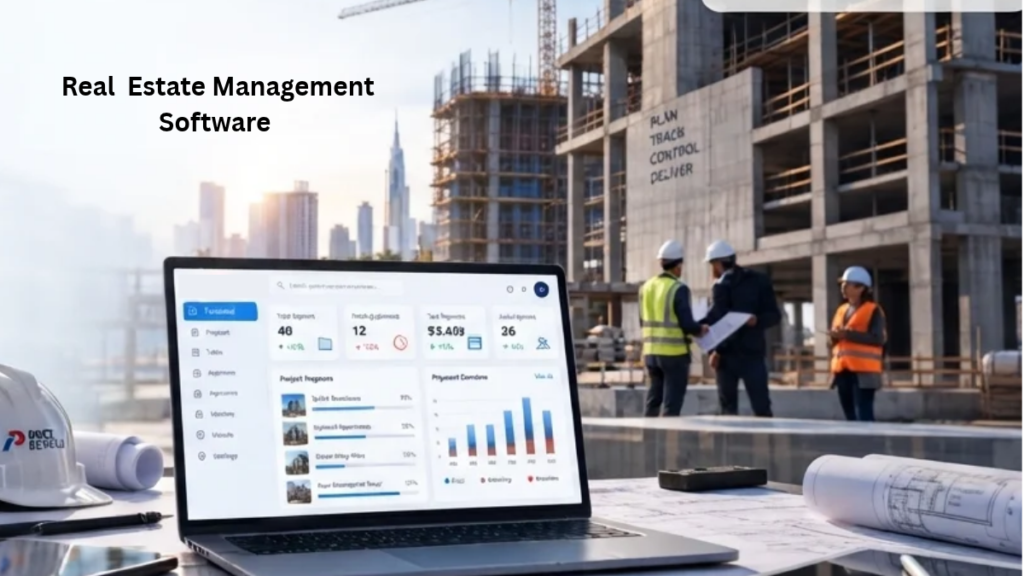
Real Estate Property Management Software in Dubai can help businesses maintain these records within a centralized platform, depending on the capabilities of the selected product.
Instead of searching through multiple folders, authorized employees can access relevant property information from a shared system.
Consider a company managing residential and commercial units across several buildings. Its team may need to identify properties approaching lease renewal, units awaiting maintenance, or tenants with outstanding payments.
A centralized system can make these details easier to review and help employees prioritize their next actions.
However, centralization alone is not enough. Businesses need clear procedures for updating records, verifying information, and assigning responsibility for unresolved tasks.
Improving Tenant Communication and Service Quality
Property management involves ongoing communication with tenants and property owners. Questions about lease terms, payment status, maintenance, and renewals require timely responses.
When communication is scattered across personal inboxes and messaging applications, employees may struggle to locate previous conversations or determine who is responsible for responding.
A structured system can help maintain communication histories and connect enquiries with the relevant property records.
For example, when a tenant reports a leaking pipe, the request should be recorded, assigned to the appropriate person, and tracked until it is resolved. The team should be able to determine whether the issue is new, in progress, or completed.
Businesses should evaluate whether their software supports maintenance tickets, task assignments, notifications, and service history. These features can improve accountability and make recurring problems easier to identify.
Technology cannot guarantee excellent service, but it can help teams respond more consistently when responsibilities and workflows are clearly defined.
Why Customer Relationship Management Matters
Real estate businesses must manage relationships with buyers, sellers, investors, landlords, and prospective tenants. Each group has different requirements and may interact with the company at different stages.
A customer relationship management system helps employees organize these interactions.
Using real estate crm software in uae, a brokerage can record enquiries, assign leads, schedule follow-ups, document customer preferences, and monitor opportunities through the sales pipeline.
For instance, a prospective buyer may enquire about several properties before deciding which one meets their budget and location preferences. Recording those preferences helps the sales representative provide relevant options rather than restarting the conversation every time.
CRM reporting can also reveal where leads originate, how quickly employees respond, and which stages of the sales process experience the most drop-offs.
These insights can help management improve sales procedures and allocate resources more effectively.
The important consideration is data quality. If employees do not update customer records, the CRM will provide an incomplete picture of sales activity.
Reducing Delays in Real Estate Transactions
Real estate transactions involve coordination among multiple people and documents. Depending on the transaction, activities may include property selection, negotiations, document collection, approvals, payment arrangements, and completion checks.
Delays often occur when responsibilities are unclear or information is difficult to locate.
Real Estate Transaction Management Software can help teams organize transaction stages, track outstanding tasks, maintain document records, and monitor deadlines.
Imagine a brokerage managing several transactions at once. One deal may be waiting for a document, another may require a customer response, and a third may be ready for completion.
A structured workflow allows employees to distinguish between these situations and take the appropriate action.
When evaluating a platform, businesses should examine whether it supports the specific transaction stages they use. They should also confirm how documents are stored, how changes are recorded, and whether relevant notifications can be configured.
Automating reminders may reduce missed deadlines, but it does not replace professional review of contracts or compliance requirements.
Connecting Property Management With Financial Information
Operational efficiency also depends on accurate financial records. Property businesses may need to track rental income, service expenses, maintenance costs, commissions, invoices, and outstanding balances.
If property managers and finance teams use disconnected applications, reconciling information can become time-consuming.
An integrated platform can connect operational records with relevant financial information, subject to the system’s configuration and available integrations.
For example, management may want to compare occupancy information with rental collections and property-related expenses. Connecting these records can make it easier to identify missing information and review financial performance.
Before purchasing software, companies should confirm whether the platform supports their accounting workflows and required reporting. UAE-specific taxation and invoicing needs should also be verified with the provider and relevant professional advisers.
When an ERP System Becomes a Practical Choice
Some real estate businesses eventually outgrow standalone property management and CRM tools.
A property developer, for example, may need to coordinate project budgets, procurement, suppliers, finance, sales, employees, assets, and management reporting. Maintaining separate applications for each function can create additional integration and administration challenges.
This is where Best Real Estate ERP Software in the UAE becomes a relevant consideration.
An ERP platform connects multiple business functions through a shared operational environment. Depending on the product, it may bring together finance, procurement, CRM, project management, reporting, and other modules.
The advantage is not simply having more features. It is the ability to connect information across departments and reduce repeated data entry.
However, ERP implementation can involve substantial planning, configuration, data migration, and training. A small agency with straightforward requirements may not need a comprehensive ERP system.
Businesses should select the level of functionality that fits their current operations and realistic growth plans.
Using Reports to Identify Operational Problems
Reliable reports help managers identify problems before they become larger operational issues.
Useful indicators may include:
- Average response time for customer enquiries
- Number of unresolved maintenance requests
- Upcoming lease renewals
- Occupancy levels
- Outstanding rental payments
- Lead conversion rates
- Average transaction completion time
- Property-related operating expenses
These indicators should be selected according to the company’s business model.
For example, a property management company may focus on maintenance resolution and lease renewals, while a brokerage may prioritize enquiry response times and sales conversion.
A dashboard becomes valuable when it helps managers decide what action to take. Displaying numerous metrics without clear business objectives can make reporting more complicated rather than more useful.
Companies should therefore define their performance indicators before configuring dashboards and reports.
Security and Access Control in Property Operations
Real estate records may contain confidential customer information, financial details, agreements, and identity documents. Protecting this information is an important responsibility.
Software buyers should examine role-based access, authentication, backup policies, audit trails, data recovery procedures, and the provider’s approach to data protection.
For example, a maintenance employee may need access to a work order and property location but should not automatically receive access to unrelated financial records.
Companies should also establish procedures for removing access when employees leave and reviewing permissions when responsibilities change.
Security depends on both technology and internal practices. Staff training, clear policies, and regular access reviews remain necessary even when the software includes security controls.
A Practical Framework for Choosing Software
Choosing software without understanding existing operational problems can lead to unnecessary expense. Before evaluating vendors, businesses should document how work currently moves between departments.
The following process can help:
First, identify recurring delays. Determine where employees lose time searching for information, following up manually, or correcting inconsistent records.
Second, prioritize requirements. Separate essential capabilities from optional features. This keeps the evaluation focused on actual business needs.
Third, test real scenarios. Ask vendors to demonstrate how the system handles a new customer enquiry, a property maintenance request, a lease renewal, and a financial report.
Fourth, examine integration requirements. Confirm whether the software can work with the business’s existing accounting, communication, and operational tools.
Fifth, calculate the total cost. Include implementation, subscriptions, customization, data migration, training, support, and future upgrades.
Finally, define measurable outcomes. Establish how the business will determine whether the software has improved response times, reduced manual work, or increased reporting accuracy.
This approach provides a more useful basis for comparison than choosing a vendor solely because of its feature list or promotional claims.
Conclusion
Efficient property operations require accurate records, clear responsibilities, timely communication, and reliable reporting. When these elements are disconnected, employees spend more time coordinating information and less time addressing customer and business needs.
The right software can help real estate companies organize property records, strengthen customer relationship management, track transactions, and connect financial information. For organizations with broader operational requirements, an integrated ERP system may provide additional value.
The best real estate management software in UAE is not necessarily the most expensive or feature-rich option. It is the platform that addresses the organization’s specific challenges, fits its operating model, and can be adopted effectively by its employees.
By identifying operational bottlenecks before investing in technology, real estate businesses can make more informed decisions and build processes that remain manageable as their operations grow.