

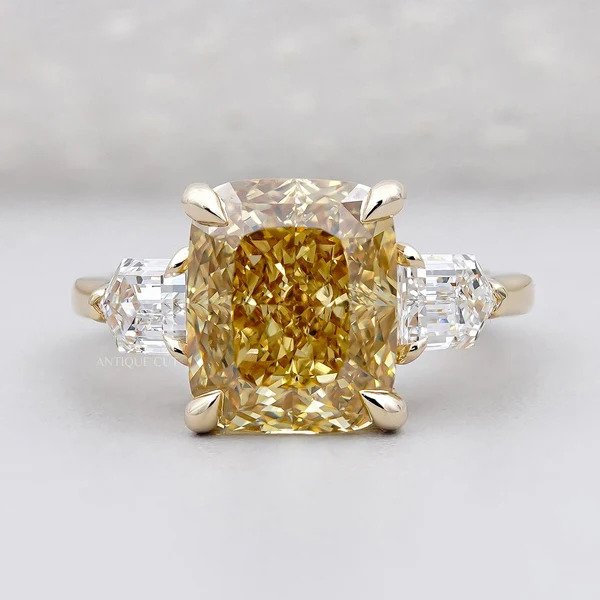

Buying a yellow diamond engagement ring can feel exciting, but it also comes with an important question: How do you know the diamond you are buying is actually what the seller says it is? A diamond certificate can help answer that question.
Certification gives you written details about a diamond’s characteristics, including its color, clarity, measurements, and sometimes its cut and proportions. For yellow diamonds, the report is especially useful because color plays a major role in the stone’s appearance and value.
Before choosing a ring, understanding the certificate can help you compare diamonds fairly and avoid paying more for features that are not properly documented.
What Is a Diamond Certification?
A diamond certification is a report prepared by an independent gemological laboratory after examining a diamond. It records important characteristics identified during the grading process.
The report may include information such as:
- Diamond shape and measurements
- Color grade
- Clarity grade
- Cut information
- Polish and symmetry
- Fluorescence
- Identification number
- Whether the diamond is natural or laboratory-grown
A certificate is not the same as a guarantee of what a diamond is worth. Instead, it provides an independent assessment that helps you understand what you are purchasing.
Why Certification Matters for Yellow Diamonds
With yellow diamonds, color can have a major effect on how the stone looks. Two diamonds with similar size and clarity may appear very different because of differences in their yellow color.
A grading report helps document that color rather than leaving the description entirely to the seller.
For example, fancy-color diamonds can receive color grades such as Fancy Light, Fancy, Fancy Intense, Fancy Vivid, Fancy Deep, or Fancy Dark, depending on the diamond and the grading system used.
This information gives buyers something concrete to compare when looking at several stones.
What Should You Check on the Certificate?
Reading a diamond report does not require gemological training. Start with the basic information and work through each section.
1. Diamond Identification
First, check the report number and make sure the information matches the diamond you are considering.
Some diamonds have a microscopic report number inscribed on the girdle. When available, this number can be compared with the number shown on the laboratory’s online report database.
This small step can give you extra confidence that the report belongs to the actual stone.
2. Color Grade
Color is one of the most important details to examine for a yellow diamond.
Look carefully at the exact color description listed on the report. A stronger yellow color can make a significant visual difference, but the most expensive grade is not automatically the right choice for every buyer.
Think about what you personally like. A soft yellow may feel understated, while a stronger yellow can create a much more noticeable appearance.
3. Clarity Grade
Clarity describes the presence of internal characteristics and surface features in the diamond.
However, clarity should not be judged separately from the diamond’s appearance. A diamond with a lower clarity grade can still look clean to the naked eye, particularly when inclusions are difficult to see without magnification.
For a ring you will wear regularly, it can make more sense to focus on what you can actually see rather than paying for a clarity grade that offers little visible difference.
4. Cut and Proportions
Cut affects how a diamond handles light and how well its shape and facets work together.
The report may provide cut information, polish, symmetry, proportions, and measurements. The exact information depends on the diamond’s shape and the grading laboratory.
Do not judge a stone from the certificate alone. If possible, look at photographs, videos, or the diamond in person as well.
5. Natural or Laboratory-Grown
This is an important detail when comparing prices.
The report should clearly identify whether the diamond is natural or laboratory-grown. Laboratory-grown diamonds have essentially the same chemical composition and crystal structure as natural diamonds, but they are produced using controlled technology rather than formed naturally underground.
Knowing this distinction helps you compare similar diamonds on an informed basis.
Which Laboratories Issue Diamond Reports?
Several established gemological laboratories issue diamond grading reports. The name of the laboratory matters because grading standards, report formats, and buyer confidence can vary.
For many shoppers, the important thing is to understand who graded the diamond and what the report actually says, rather than relying only on a seller’s product description.
If you are spending a significant amount on a ring, look up the report number through the laboratory’s official database when that service is available.
How to Verify a Diamond Certificate Online
Once you receive a certificate number, verification is usually straightforward.
Start by visiting the grading laboratory’s official website and locating its report verification or report-checking service. Enter the report number exactly as shown on the document.
Compare the online information with the diamond or product listing. Check the shape, measurements, color, clarity, and other identifying details.
If something does not match, stop and ask the seller for clarification before making the purchase.
This is particularly useful when shopping online because you may not be able to examine the stone physically before ordering.
Certification vs. Appraisal: What’s the Difference?
These two documents are often confused, but they serve different purposes.
A grading report describes the characteristics of the diamond based on a laboratory examination.
An appraisal generally provides an estimated monetary value for a particular purpose, such as insurance.
So, if a seller gives you an appraisal showing a high dollar amount, that does not replace an independent grading report. When comparing diamonds, the grading report is the better place to start because it gives you information about the stone itself.
Does Certification Mean the Diamond Is Better?
Not necessarily.
Certification tells you what characteristics the laboratory identified. It does not automatically mean one diamond will look better than another.
For example, you might compare two yellow diamonds with similar grades and find that one looks more attractive to your eyes because of its proportions, face-up appearance, or the way its color works with the setting.
That is why a certificate should be treated as a buying tool, not the only factor in your decision.
How Certification Helps You Compare Prices
Price comparisons become much easier when you have documented information.
Instead of comparing two rings based only on carat weight, look at their:
- Color grade
- Clarity
- Cut or proportions
- Shape
- Measurements
- Natural or laboratory-grown origin
- Grading laboratory
- Setting and metal
This gives you a more realistic basis for deciding whether the asking price makes sense.
For buyers researching their options, View Collection of Yellow Diamond Engagement Ring designs and compare the diamond details, setting style, and certification information before choosing a ring.
What If a Yellow Diamond Has No Certificate?
A missing certificate does not automatically mean the diamond is poor quality. Smaller diamonds, accent stones, and some lower-priced jewelry may not come with an individual laboratory report.
However, for a larger center stone, certification can provide useful protection and make comparison easier.
If there is no certificate, ask the seller why one is not available and request clear information about the diamond’s origin and grading. If the purchase is significant, you can also consider having the stone independently examined.
At Antiquecut, buyers should still take time to review the available diamond details and certification information rather than making a decision based only on photographs or a promotional description.
A Simple Certification Checklist Before Buying
Before paying for a yellow diamond engagement ring, take a few minutes to check:
- Is there an independent grading report?
- Does the report number match the diamond?
- Is the natural or laboratory-grown origin clearly stated?
- What color grade does the report show?
- What clarity grade is listed?
- Are the measurements consistent with the listing?
- Can the report be verified online?
- Does the diamond’s actual appearance match your expectations?
- Are you comparing similar diamonds when checking prices?
- Does the ring come with suitable documentation for your records?
Taking these steps may seem like extra work, but they can make the buying process much less stressful.
Final Thoughts
A diamond certificate cannot tell you whether a ring is the perfect choice for you, but it can give you reliable information to work with. For yellow diamonds, this is especially helpful because color has such an important role in the stone’s appearance.
Read the report carefully, verify its details, compare diamonds using similar criteria, and always consider how the stone looks beyond its grades. A well-documented purchase can give you greater confidence when choosing a ring that you will be happy to wear for years.