

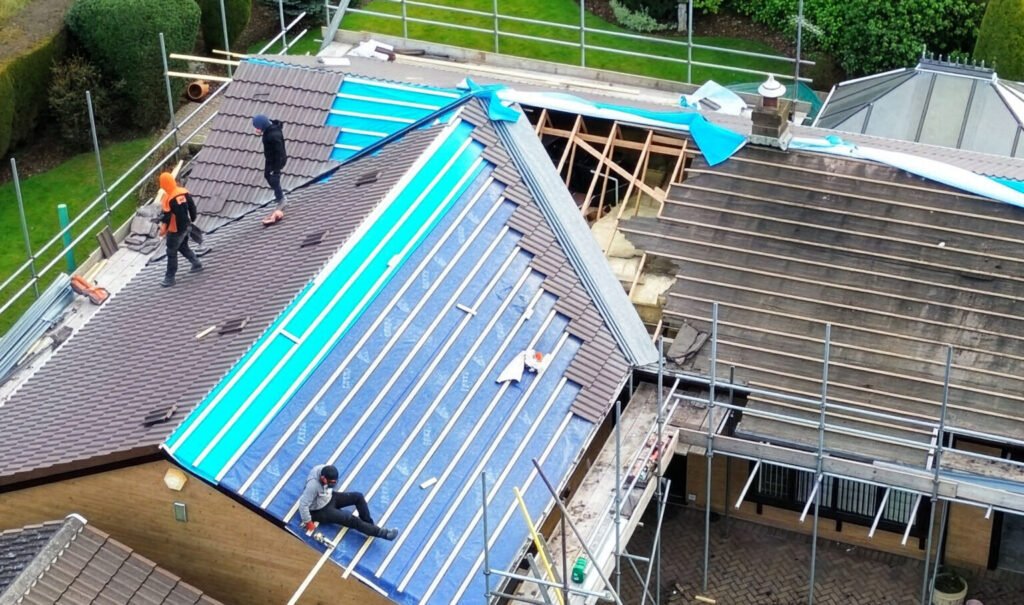

A roof rarely has big issues on a sudden day. More often than not, it usually starts with something seemingly insignificant, like a cracked tile, a clogged gutter, a broken seal, or even a small area where water has started penetrating the building.
Since they don’t interfere with day-to-day operations, such trivial matters are often ignored until they grow out of control. Before you know it, a simple repair has turned into an expensive ordeal. Learning how to spot small roof problems early can spare you major costs and headaches in the future.
What To Do About Your Roof If You Spot Small Leaks At The Start
A drip or a damp spot on the ceiling might not be a problem if it only appears after a particularly rainy day. However, you shouldn’t be deceived by the size of the leak, as it can be a symptom of a much bigger issue.
When a small amount of water gets in, it can saturate the roofing membranes, insulation, and ceiling joists on its way out – and it won’t necessarily come inside right above the point where it entered. If left untreated, it will cause significant damage as a major source of moisture inside the building.
Instead of trying to spot and seal the leak, focus on finding the hole. It is critical to remember why the damp spot has appeared in the first place. It is entirely normal if there isn’t a gaping opening in the roof, but even a small breach can become significant with the right circumstances.
What To Do About Your Roof If Its Coverings Come Loose
Roof tiles and coverings can come off for various reasons. They can sustain damage in an accident, or simply become dislodged over time due to wind and other environmental factors. While it happens, it rarely raises alarm if only a few roof tiles are affected. However, an opening that exposes the inner membranes to the weather can be devastating to the roof.
It is crucial to remember that wind can amplify the effect of a minor problem. If a few roof coverings are gone, the wind has a stronger chance of penetrating the roof and dislodging additional materials. It can also carry foreign objects that may supplement the hole or damage the membranes.
It is vital to check your roof after any strong gusts of wind and see if any of the coverings have come off. It is a good idea to inspect the whole structure regularly for small issues.
What To Do About Your Roof If Gutters Become Blocked
Gutters might not be the most remarkable part of a building, but you know they get dirty fast. Leaves, moss, and a myriad of other debris items will accumulate in gutters, restricting the flow of water. In time, the gutter will overflow, damaging the roof, fascias, and surrounding walls.
Moss and leaves can also block the downspouts, preventing water from flowing away from the building at all. Blocked gutters will eventually lead to damp spots on the roof, damp walls, and rotten fascias.
It is critical to clean your gutters at least a couple of times per year to avoid such inconveniences. If there are no large trees nearby, it shouldn’t take much time or effort. But if there are, you might need to use proper equipment to get inside the gutter and remove all the junk.
What To Do About Your Roof If Fascias Come Undone
The eaves of the roof rarely get much attention from building owners, but they play a crucial role in the structure’s operation. They provide essential support to the gutters, which in turn carry the water off the roof. Fascias often become stained, cracked, swollen, pitted, or simply come apart over time, and all of those problems are best resolved early.
While minor issues like staining or swelling might not seem like a big deal, a compromised fascia can hinder the functioning of the gutters and create additional problems. If the fascia is compromised, the gutter will stop doing its primary function and drain the roof. If the fascia has dislodged completely, it can no longer support the gutter, further disrupting its operations. In addition, the fascia serves as a conduit for cool air circulating at the bottom end of the roof space. If it’s blocked, the circulation will be impeded, creating unneeded stress on the building.
When it comes to the eaves, it is best to inspect and maintain them regularly to keep such issues at bay.
What To Do About Your Roof After Severe Weather Conditions
Strong weather often exposes a roof to multiple stressors. Powerful gusts of wind can shake the coverings and loosen them from the roof, and torrential rains can put an immense strain on the gutters, downspouts, and water-carrying membranes. Additionally, falling tree leaves and branches can cause serious damage to the roofing, depending on their size and the speed at which they fall.
If you have been through a severe storm, inspect your roof for any anomalies in the days that follow. Any missing roof coverings, overflow from the gutters, new damp spots, or unusual activity around the eaves should be carefully reviewed. It is better to deal with the aftermath of a storm as soon as possible, rather than waiting for more damage to occur.
Minor Issues Are Not Always As Simple As They May Seem
When a problem emerges, it is natural to want to fix as much of it as you can as soon as possible. However, a lot of roofing issues are multi-faceted, and there is no point in trying to address one symptom without understanding the cause.
For example, you might have damaged roof coverings and think it’s the reason why water keeps getting in, when in reality, the source of the problem is a different part of the roof. Similarly, you might think that cleaning the gutters will prevent water from spilling over them, when in reality, the overflow is caused by a structural issue. Always try to understand the cause and effect behind the changes, and seek professional help if you can’t determine them.
When To Seek The Help of A Professional Roofer
Roofing is hard and dangerous work. Unless you have experience, it is better to entrust the job to a professional. A roofing contractor can handle the job safely and efficiently.
However, even the best local roofing contractors in Lincoln can’t fix large-scale issues if they stem from multiple small causes. In cases where the cause of the trouble isn’t apparent, a call to an expert can be incredibly informative. They will be able to determine what the problem is and address it. Most often, such issues can only be resolved by addressing the cause rather than individual symptoms.
How To Take Care Of Your Roof To Avoid Big Expenses In The Future
Roofing maintenance is not a one-time thing. Rather, it is a process of regular inspections and small-scale repairs to tackle the emerging issues before they merge into one large and expensive ordeal. You can prevent multiple problems by being observant and not putting off repairs. Keeping the gutters cleaned, inspecting the roof after severe weather, and paying attention to the overall state of the building are all examples of measures that will help you in the long run.
It is true that such expenses can be aggravating, but they are rarely as inconvenient as large-scale repairs and replacements that could have been avoided.
The Last Word
Your roof quietly protects you every day, so it is easy to ignore it until something bad happens. However, most significant roofing troubles tend to start with some minor issues. A small leak, some damages to the roofing coverings, blocked gutters, or even damaged fascias and soffits don’t have to ruin your day, but they shouldn’t be neglected either. Paying attention to even the smallest irregularities can help you address them before they become impossible to manage. After all, you want to take care of your home and avoid expensive and stressful repairs if and when they can be avoided.