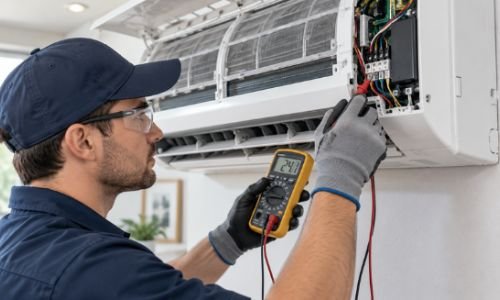

Water dripping from an indoor AC unit can quickly become more than an inconvenience. A damp patch may spread across the ceiling, droplets can run down the wall, and furniture beneath the unit may become wet. Even when the air conditioner still cools, the leakage needs attention.
An AC normally produces condensation while cooling, but that water should leave through its intended drainage route. When it escapes into the room, the cause may involve a blocked drain, a damaged tray, installation problems, or ice forming on the cooling coil.
If the dripping continues, arranging AC repair in Dubai can help establish where the water originates. A useful inspection should explain why drainage failed and verify that the repair prevents another indoor leak.
Why Does an Air Conditioner Produce Water?
As warm room air passes over a cold evaporator coil, moisture can condense on the coil’s surface. The appliance collects that moisture and directs it toward a drain or another discharge arrangement.
The amount of condensation varies with humidity, operating conditions, and the system’s design. Water emerging from an intended outdoor drain can therefore be part of normal cooling operation.
Water dripping from the indoor casing, ceiling, or surrounding wall is a different situation. It suggests that moisture is escaping somewhere along the collection or discharge route, or forming where insulation should prevent it. The location and timing of the leak help the technician decide which areas to inspect.
What Should You Do When the AC Starts Dripping Indoors?
Switch the unit off using its normal controls if you can do so safely. Move accessible belongings away from the wet area and place a suitable container beneath the drip where practical. Avoid touching wet switches, wiring, or electrical fittings. If water is near a ceiling light or another electrical connection, keep clear and arrange appropriate professional assistance.
Do not remove the indoor cover or attempt to reach concealed drainage components while the system operates. Ceiling units also require safe access equipment. Photograph the leak and any visible staining. Record whether the dripping began shortly after startup, after several hours, or when the AC was switched off.
A Blocked Drain Line Is One Possible Cause
The condensate drain carries collected water away from the indoor unit. Debris and buildup can restrict that route, allowing water to collect and overflow. A restriction may sit near the tray outlet or farther along a concealed pipe. Clearing only the visible opening may not resolve the complete problem.
Professional AC drain line repair should establish whether water can travel through the intended route and discharge properly. The technician should also consider why the restriction developed and whether the installation contributes. Avoid pouring household drain cleaners into the unit. Products intended for building plumbing may be unsuitable for AC components and surrounding materials.
The Drain Tray May Be Damaged or Incorrectly Positioned
The drain tray collects condensation beneath the cooling coil. A crack, corrosion, displaced section, or faulty connection can let water escape even when the drain pipe itself is clear. Tray problems can be harder to identify when access is limited, or water travels along the casing before becoming visible. Ask whether the tray and its outlet have been inspected if the leak returns after drain cleaning.
Repeated clearing will not repair a damaged collection surface. The appropriate solution depends on the component’s condition and availability. A temporary patch should be explained clearly, including any limitations, rather than presented as equivalent to replacing a failed part.
Ice on the Cooling Coil Can Lead to Leakage
An evaporator coil that freezes can produce water leakage as the ice melts. In this situation, treating the drain alone may leave the underlying fault unresolved. Restricted airflow, a fan problem, or a refrigerant-related issue can contribute to icing. The symptoms overlap, so visible ice does not automatically mean the AC needs a gas refill.
Clues worth reporting include:
- Cooling that weakens before the leak begins.
- Reduced airflow from the indoor unit.
- Visible ice on an accessible area.
- Dripping that increases after shutdown.
- A problem that returns after temporary improvement.
Do not chip away ice or use direct heat to melt it. Keep the system off and arrange inspection when icing is suspected.
Dirty Filters and Airflow Problems Need Consideration
A heavily restricted filter can reduce airflow across the cooling coil. Depending on the conditions, that restriction may contribute to abnormal operation and icing. Check only filters designated for routine user maintenance. Follow the manufacturer’s instructions for removal, cleaning, drying, and refitting. Disposable filters should be replaced with the specified type rather than washed.
Filter maintenance may help restore airflow, but it does not rule out a dirty coil, blower fault, or another restriction. If the unit remains weak or starts leaking again, ask for an airflow assessment alongside AC water leakage repair. Related symptoms should be investigated together instead of treated as separate complaints.
Installation and Drain Slope Can Affect Water Discharge
Condensate must move through the drain arrangement as intended. An unsuitable pipe slope, sagging section, poor connection, or incorrect unit positioning can interfere with that movement. Installation deserves particular attention if leakage began immediately after fitting the AC, moving a unit, or completing ceiling work.
Tell the technician whether the system has ever operated without leaking in its current position. Also mention whether a previous repair changed the drain route. Do not try to correct the slope by pushing the indoor unit or adjusting its mounting yourself. The system may have concealed electrical, refrigerant, and drainage connections that require careful handling.
Some Systems Depend on a Condensate Pump
Certain installations use a pump to move collected water where gravity drainage is impractical. If that pump fails, becomes obstructed, or receives an incorrect control signal, water may accumulate. The pump arrangement varies between systems. Some include protective controls that stop operation when water reaches an abnormal level.
A proper inspection should determine whether a pump is fitted and check its operation where relevant. Clearing the pipe alone will not resolve a failed pump or float-control problem. Do not bypass a protective switch to keep cooling running. If the system stops with a drainage-related warning, report the message and have the reason investigated.
Wet Pipes or Ceiling Stains May Have Another Source
Not every wet patch near an AC comes from a blocked condensate drain. Damaged or incomplete insulation around cold pipework can allow condensation to form outside the intended collection area. Water may also travel from another building service before appearing near an AC grille. The visible location can therefore be misleading, particularly with concealed ducted systems.
Explain whether the stain appears only during AC operation and whether it changes with use of nearby plumbing. These observations can guide the inspection without proving the source. The technician should trace the moisture rather than assume that the nearest drain line is responsible.
What to Ask During the Repair Visit
A useful visit should identify the source, explain the cause, and describe the proposed work. Ask whether the assessment covers the tray, drain route, airflow, icing, insulation, and pump where applicable.
Before approving repairs, clarify:
- Where the water is escaping.
- Whether a blockage, damaged part, or installation issue caused it.
- Whether related cooling faults need attention.
- What the quotation includes.
- How drainage will be tested afterward.
- Whether concealed access or follow-up work is required.
If leakage has happened before, share the earlier repair details. A recurring problem needs an explanation for why the previous work did not prevent its return.
Verify Drainage Before Returning to Normal Use
After repair, the system should be checked for appropriate water collection and discharge under relevant operating conditions. A dry casing immediately after cleaning does not by itself confirm that drainage will remain normal.
Ask what was tested and whether enough operating time was allowed to assess the original complaint. Where icing contributed, cooling and airflow also need attention. Existing ceiling or cabinet moisture may require separate drying or assessment. Identifying old moisture helps avoid confusion with a fresh leak.
For recurring indoor dripping, professional AC repair services in Dubai can investigate the complete drainage arrangement. Confirming the cause and checking operation afterward gives you a clearer route back to cooling without water collecting inside your home.