
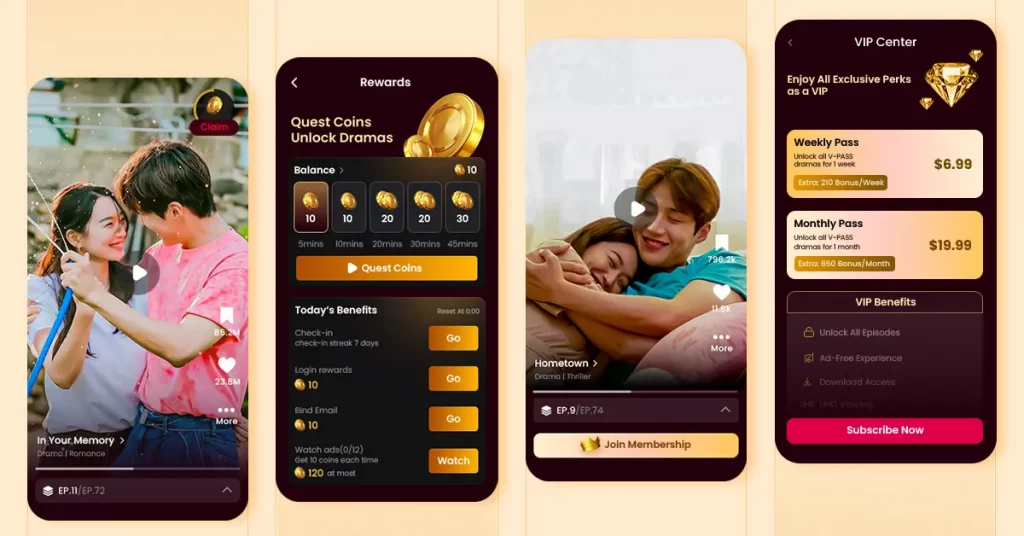

Micro drama apps have changed the way people consume entertainment. Instead of sitting down for a two-hour movie or watching a 45-minute episode, users can watch short, fast-moving stories designed for quick viewing.
One episode ends with a cliffhanger. You watch the next one. Then another.
Before you know it, you’ve spent 30 minutes watching a story that started as a five-minute break.
That habit is exactly what makes the micro drama model interesting for entrepreneurs. But there is one big question: Do you need to build the whole streaming platform from scratch?
Not necessarily.
A white label micro drama app can give startups a faster way to enter this market. Instead of developing every component from the ground up, you start with an existing application, customize the branding and experience, add your content, and launch it as your own platform.
Let’s look at how it works, what features you need, and where the real costs come from.
What Is a Micro Drama Streaming App?
A micro drama streaming app is a video platform built around short-form scripted entertainment.
The episodes are usually much shorter than traditional TV episodes. Stories are broken into small parts, making them easy to watch on a smartphone.
The format works particularly well for mobile users because they can watch an episode while commuting, waiting for an appointment, or simply killing a few minutes.
A typical micro drama platform can include:
- Short drama episodes
- Series and seasons
- Personalized recommendations
- User profiles
- Watch history
- Search and categories
- Subtitles
- Favorites or watchlists
- Push notifications
- In-app purchases
- Subscription plans
- Advertising
- Content management tools
The interesting part is that the app isn’t just a video player.
The entire experience is built around keeping users engaged with the next episode.
Why Build a Micro Drama App?
There are already plenty of video platforms around, so why enter this particular space?
Because short-form entertainment fits naturally with mobile behavior.
People don’t always have time to watch a full movie. But they might have five minutes.
That five minutes can become ten. Then twenty.
For a startup, the micro drama model also creates several possible monetization routes. Depending on the business model, revenue can come from subscriptions, advertising, premium episodes, virtual credits, or pay-per-episode access.
Of course, having an app doesn’t automatically mean making money. Content quality is still king.
A beautiful application won’t save a platform if nobody cares about the stories.
Why Use a White Label Micro Drama App?
Building a streaming platform from scratch can be expensive and time-consuming.
You need mobile development, backend infrastructure, video management, user accounts, payment systems, analytics, content management, and more.
A white-label solution gives you a starting point.
Instead of spending months building common functionality, you can begin with an existing application and customize it around your business.
You might change:
- Logo
- App name
- Brand colors
- Categories
- Content
- Pricing
- User interface elements
- Payment options
- Subscription structure
This doesn’t mean zero development work.
Some customization will still be needed, especially if you want features that aren’t included in the original product.
But you’re no longer starting with a blank screen.
Features Your Micro Drama App Should Have
A serious micro drama platform needs more than basic video streaming.
1. Video Streaming
This is the obvious one.
Users should be able to stream episodes smoothly without constant buffering.
Video quality should ideally adapt to different internet speeds, especially if you’re targeting mobile-first markets where network quality can vary.
2. Short Episode Management
Your content team needs a way to organize episodes into series and seasons.
The admin panel should ideally make it easy to upload videos, create episode descriptions, assign categories, and control publishing schedules.
This becomes really important once you have hundreds or thousands of episodes.
3. User Profiles
Allow users to create accounts and personalize their experience.
Features could include:
- Watch history
- Favorites
- Continue watching
- Personalized recommendations
- Account settings
It’s simple stuff, but it makes the platform feel much more like a real streaming service.
4. Subscription and Payment System
If you’re charging users, payment functionality is essential.
You could offer:
- Monthly subscriptions
- Annual subscriptions
- Premium episodes
- Episode credits
- Pay-per-view access
The right model depends on your audience.
Some platforms may find subscriptions work better. Others may prefer a credit-based system where users unlock individual episodes.
5. Content Management System
This is one feature entrepreneurs sometimes underestimate.
Your admin panel should let you manage the entire content library without needing a developer every time you want to upload a new episode.
You may need tools for:
- Uploading videos
- Managing series
- Managing episodes
- Adding thumbnails
- Creating categories
- Setting premium content
- Scheduling releases
- Managing subtitles
The easier this is, the easier it becomes to scale your content operation.
6. Push Notifications
Notifications can bring users back to the app.
For example:
“New episode just dropped.”
That’s much more useful than sending random promotional notifications.
Used properly, notifications can help users continue stories they were already watching.
7. Search and Discovery
A growing content library needs good navigation.
Users should be able to search for shows, browse categories, discover trending dramas, and continue watching unfinished series.
You don’t want someone spending five minutes trying to find the show they were watching yesterday.
How to Build Your White Label Micro Drama App
The process doesn’t need to be complicated.
Step 1: Choose Your Business Model
First decide how you’ll make money.
Will users subscribe?
Will they pay to unlock episodes?
Will you use advertising?
Or will you combine several models?
Make this decision early because it affects the app’s payment and user-flow requirements.
Step 2: Select a Ready-Made Application
Next, look for a white-label micro drama or short-video streaming solution that already includes the features you need.
Don’t just look at screenshots.
Ask for a working demo.
Test the app.
Check the admin panel.
Understand the licensing terms.
Step 3: Customize the Brand
Now make the application yours.
Add your:
- Logo
- Brand identity
- Colors
- Content categories
- Pricing
- App store information
If you’re building a serious entertainment business, don’t make the app look like a generic template.
Step 4: Add Your Content
This is where the real business begins.
You need drama series, episodes, thumbnails, descriptions, subtitles, and promotional material.
Content licensing also needs careful attention. You need the appropriate rights to distribute the content in your target markets.
A technically excellent app with weak or improperly licensed content isn’t much of a business.
Step 5: Configure Monetization
Set up your subscriptions, purchases, advertisements, or credit system.
Test every payment flow before launch.
Nobody wants their first customer discovering that the payment button doesn’t work.
Step 6: Test Before Launch
Test on different devices and network conditions.
Check:
- Login
- Video playback
- Payments
- Notifications
- Search
- Watch history
- Content loading
- Account management
Then test again.
Seriously.
Step 7: Launch and Improve
Once the app is live, watch what users actually do.
Which dramas get the most views?
Where do users stop watching?
Which episodes drive subscriptions?
Which shows bring people back?
Those insights can help you improve both your content strategy and your product.
How Much Does a White Label Micro Drama App Cost?
There isn’t one universal price.
A basic no-code or white-label solution may use a monthly subscription model, while a ready-made application with source code can cost hundreds or thousands of dollars depending on its functionality and licensing.
Then you have additional costs such as:
- Video hosting
- CDN usage
- App store fees
- Payment processing
- Content production
- Content licensing
- Marketing
- Maintenance
- Custom development
And video streaming deserves special attention.
As your audience grows, bandwidth and storage costs can become significant. A platform with 100 users is a very different infrastructure problem from one with 100,000 users.
So don’t create your budget around the app purchase alone.
Think about the entire business.
White Label vs Building From Scratch
Here’s the simple comparison:
| Factor | White Label | Custom Development |
|---|---|---|
| Launch time | Faster | Longer |
| Initial development | Lower | Higher |
| Customization | Depends on solution | Very high |
| Existing features | Available immediately | Built from scratch |
| Technical resources | Lower | Higher |
| MVP suitability | Excellent | Can be expensive |
| Long-term flexibility | Depends on source/product | Very high |
If you’re testing the market, white label can be a smart starting point.
If you already have a proven audience and highly specific requirements, custom development may eventually be the better option.
And there’s nothing stopping you from starting with one approach and moving to another later.
Where Can You Get Ready-Made Software?
Entrepreneurs don’t always need to hire a development company immediately.
A software marketplace or source code marketplace can be another place to look for existing products.
Sell My Code, for example, connects buyers with ready-made applications, white-label software, source code, SaaS products, and other software assets.
For someone planning a micro drama platform, this approach can help reduce the amount of technology that needs to be built from scratch.
It’s also useful for developers on the other side of the transaction. Instead of letting an old project sit unused on a hard drive, developers can explore ways to sell source code or software products.
That’s a pretty practical win-win.
Mistakes to Avoid
There are a few things I’d be careful about.
Don’t choose purely on price.
The cheapest app isn’t always the cheapest business solution.
Don’t ignore the backend.
Your admin system will become extremely important as your content library grows.
Don’t forget content rights.
Make sure your dramas are legally licensed for distribution.
Don’t overbuild the first version.
Start with the features users actually need. Add the fancy stuff later.
Don’t launch without analytics.
You need to understand what people watch, where they leave, and what brings them back.
Final Thoughts
Building a micro drama streaming app doesn’t necessarily require starting from scratch.
A white-label solution can give entrepreneurs a quicker way to launch, test a concept, build an audience, and learn what works before making a huge technology investment.
The technology is only one part of the equation, though.
Your content, storytelling, pricing, marketing, user experience, and retention strategy will decide whether people actually stay.
So, if you’re thinking about building your own micro drama platform, start with the business model first. Then choose the technology that supports it.
And if a ready-made application already gives you 70–80% of what you need, there’s no prize for rebuilding that same 70–80% yourself.
Sometimes the smarter startup move is simply to start with what already works.