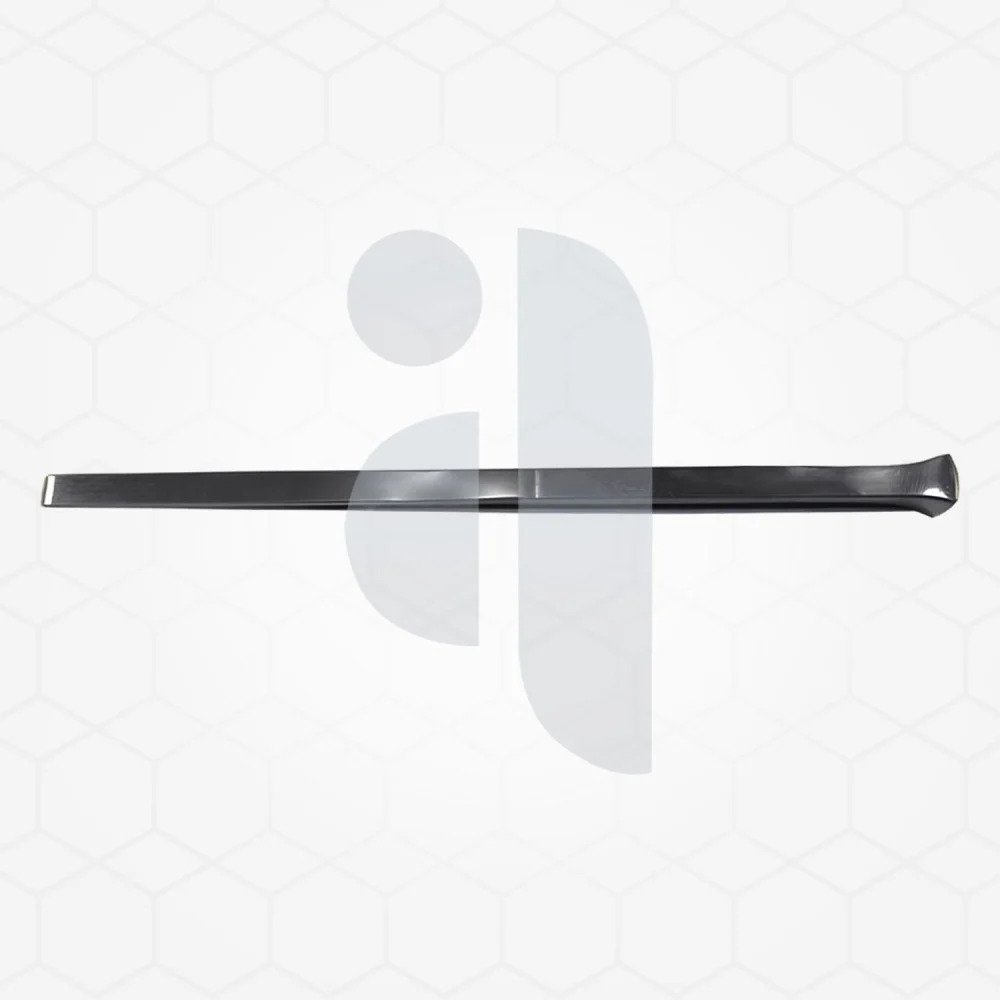

When a surgeon needs to cut, shape, or remove bone, a scalpel won’t do. That’s where a chisel surgical instrument comes in. It has a sturdy handle, a solid shaft, and a flat blade with a sharp beveled edge. Guided by light taps from a surgical mallet, it removes bone in small, controlled amounts. How chisel surgical works, where surgeons use it, and what sets a great one apart from an average one.
How the Design Delivers Precision
Every part of this instrument serves a purpose. A chisel has a single beveled edge, which sets it apart from an osteotome, which is beveled on both sides. That one-sided edge lets the surgeon pare bone along a flat, predictable plane. A well-balanced chisel surgical tool carries each mallet tap straight to the cutting edge, so the surgeon stays in control even when applying force. Textured handles also add grip and reduce hand strain during long procedures.
Where Surgeons Rely on It
This instrument is used in many specialties. In orthopedic surgery, it helps shape bone, remove fragments, prepare joint surfaces, and harvest bone grafts. Spine surgeons use designs like the Hibbs chisel to prepare bone surfaces during spinal fusion. In plastic surgery, Cottle-style chisels help refine the nasal bones during rhinoplasty. Oral surgeons also use a chisel surgical instrument to remove bone around impacted teeth or reshape the jaw ridge before placing implants.
Types You Should Know
No single blade fits every case. Straight chisels make clean, flat cuts. Curved versions reach around contours and into tight spaces. Gouges have a concave, scoop-shaped blade for hollowing out bone. Blade widths range from a few millimeters to wider options for larger surfaces. The right chisel surgical design depends on the procedure, the bone involved, and the surgeon’s technique.
Care and Maintenance Tips
Good habits protect your investment. Clean your tooth elevator tools right after use to remove blood and bone debris from the blade and handle. Check the edge for nicks or dullness, and have it professionally sharpened when needed. Use edge guards or protective trays during storage so the blade stays sharp and safe to handle.
Trusted Craftsmanship from AzeeMed
AzeeMed makes surgical instruments of the highest quality for the medical community around the globe. With over two decades of experience, we offer a wide range of instruments for plastic, dental, ophthalmic, neuro and spine, and orthopedic surgeries. We craft every chisel surgical instrument for sharpness, balance, and lasting performance in skilled hands.
Conclusion
A chisel may look simple, but it plays a central role in safe, precise bone work. A reliable chisel surgical instrument gives surgeons control, clean cuts, and confidence in every case. Choosing quality supports better outcomes for your patients and your team. Explore AzeeMed’s collection today to find the right instruments for your practice.