

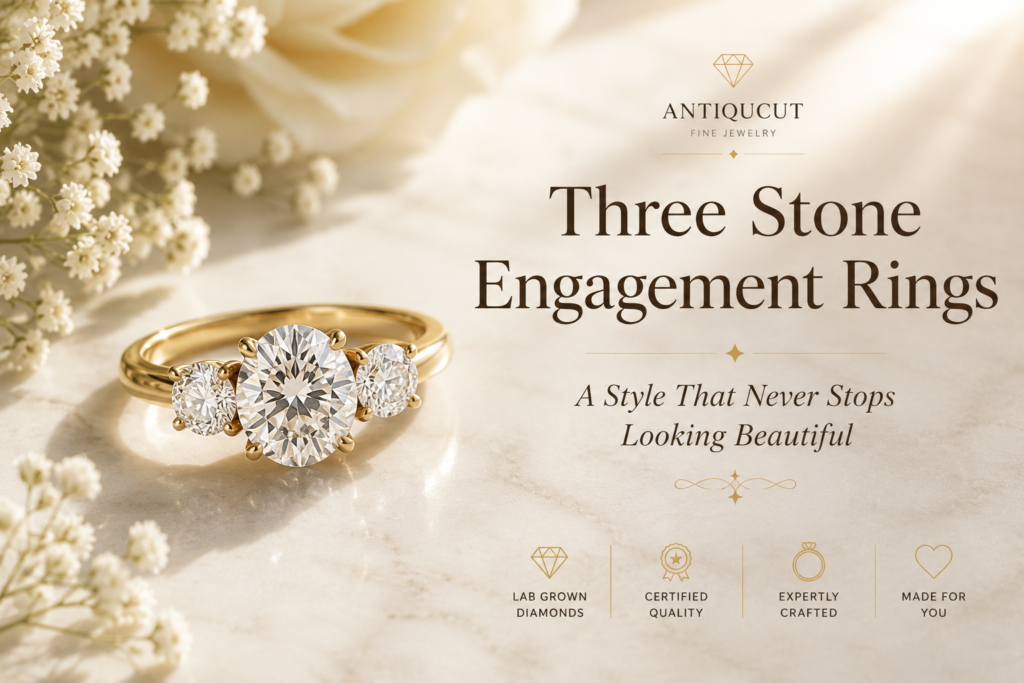

Selecting the center diamond is one of the biggest decisions when buying a three stone ring. While the side diamonds add balance and beauty, the center stone is what most people notice first. It represents the heart of the ring and reflects your personal style.
Many buyers feel confused because there are so many shapes, sizes, and quality grades to choose from. A higher price does not always mean a better choice. The right diamond is the one that fits your budget, matches your style, and works well with the side stones.
This guide explains what to look for before making your final decision so you can feel confident about your purchase.
Why the Center Stone Matters
The center diamond is the main attraction of the ring. It naturally catches the eye before anything else. A well-chosen center stone creates balance and makes the entire design look complete.
Instead of focusing only on carat weight, think about how the diamond looks as part of the whole ring. Sometimes a slightly smaller diamond with better cut quality can appear brighter and more attractive than a larger stone with lower quality.
Start with the Diamond Shape
Every diamond shape gives the ring a different look. Choosing the right one depends on personal taste.
Round
Round diamonds remain one of the most popular choices because they reflect light well and match almost every ring style.
Oval
Oval diamonds create the appearance of longer fingers and often look larger than their actual carat weight.
Cushion
Cushion-cut diamonds have soft corners and offer a comfortable balance between classic and unique.
Emerald
Emerald-cut diamonds highlight clean lines and clear reflections instead of bright flashes.
Pear or Marquise
These shapes give the ring a different personality and work well for buyers who want something less common.
Pick the Right Size
Many people think bigger is always better, but that’s not necessarily true.
The center diamond should be larger than the side stones without making them look too small. A balanced design feels more comfortable to wear and looks pleasing from every angle.
A common choice is using side diamonds that are about half the size of the center stone, although different proportions can also create beautiful results.
Remember that finger size also changes how large a diamond appears.
Focus on Cut Before Carat
If you have a limited budget, spend more on cut quality before increasing carat weight.
A well-cut diamond reflects light better and often appears brighter than a larger diamond with an average cut.
When comparing diamonds, pay close attention to how lively they look instead of simply checking their weight.
Don’t Ignore Color and Clarity
The center diamond should match the side diamonds as closely as possible.
If the center stone has a much different color grade, the difference may become noticeable when viewed together.
For many buyers, choosing near-colorless diamonds provides an attractive appearance without paying the highest prices.
Clarity is also important, but remember that many small inclusions cannot be seen without magnification. Paying extra for tiny differences that are invisible to the eye may not always be worth it.
Choose Side Stones That Work Together
The beauty of this ring style comes from harmony.
Round side diamonds pair nicely with almost every center shape.
Tapered baguettes create a clean appearance around emerald-cut diamonds.
Half-moon diamonds complement larger center stones beautifully.
The goal is to guide attention toward the center without making the side stones compete for attention.
Think About Your Lifestyle
Your engagement ring will likely be worn every day.
If you have an active lifestyle or work with your hands often, choose a setting that protects the center diamond well.
Lower-profile settings reduce the chance of accidental bumps while still showing off the diamond beautifully.
Comfort matters just as much as appearance because you’ll wear the ring for many years.
Compare Different Settings Before Deciding
The same diamond can look completely different depending on the setting.
Prong settings allow more light to enter the diamond.
Bezel settings provide extra protection.
Cathedral settings add height and create a more noticeable profile.
Looking at different settings side by side often helps buyers understand which style feels right for them.
Explore Collection of three stone diamond engagement ring designs to compare different settings, diamond shapes, and proportions before making your final decision.
Set a Comfortable Budget
Buying a diamond should feel exciting, not stressful.
Decide on your budget before shopping and focus on getting the best value within that range.
Small changes in color, clarity, or carat weight can often save a significant amount while still giving you a beautiful ring.
A smart purchase is one you’ll continue to feel happy about long after the proposal.
Take Your Time Before Choosing
A three-stone ring celebrates an important chapter in life, so there’s no reason to rush the decision.
Compare several diamonds, view them under different lighting conditions if possible, and ask questions before buying.
If you’re searching for carefully made designs with attention to detail, Antiquecut offers a wide selection of rings that make it easier to compare different styles and find one that feels right for your story.
Final Thoughts
Choosing the right center diamond is about more than selecting the largest stone. Shape, cut, size, color, clarity, and the way each diamond works with the side stones all play an important role.
Take time to compare your options and think about what matters most to you. A thoughtful choice will give you a ring that feels balanced, comfortable, and meaningful every time you wear it. Whether you prefer a round, oval, cushion, or emerald cut, the best center diamond is the one that fits both your style and your budget while creating a ring you’ll always enjoy looking at.