

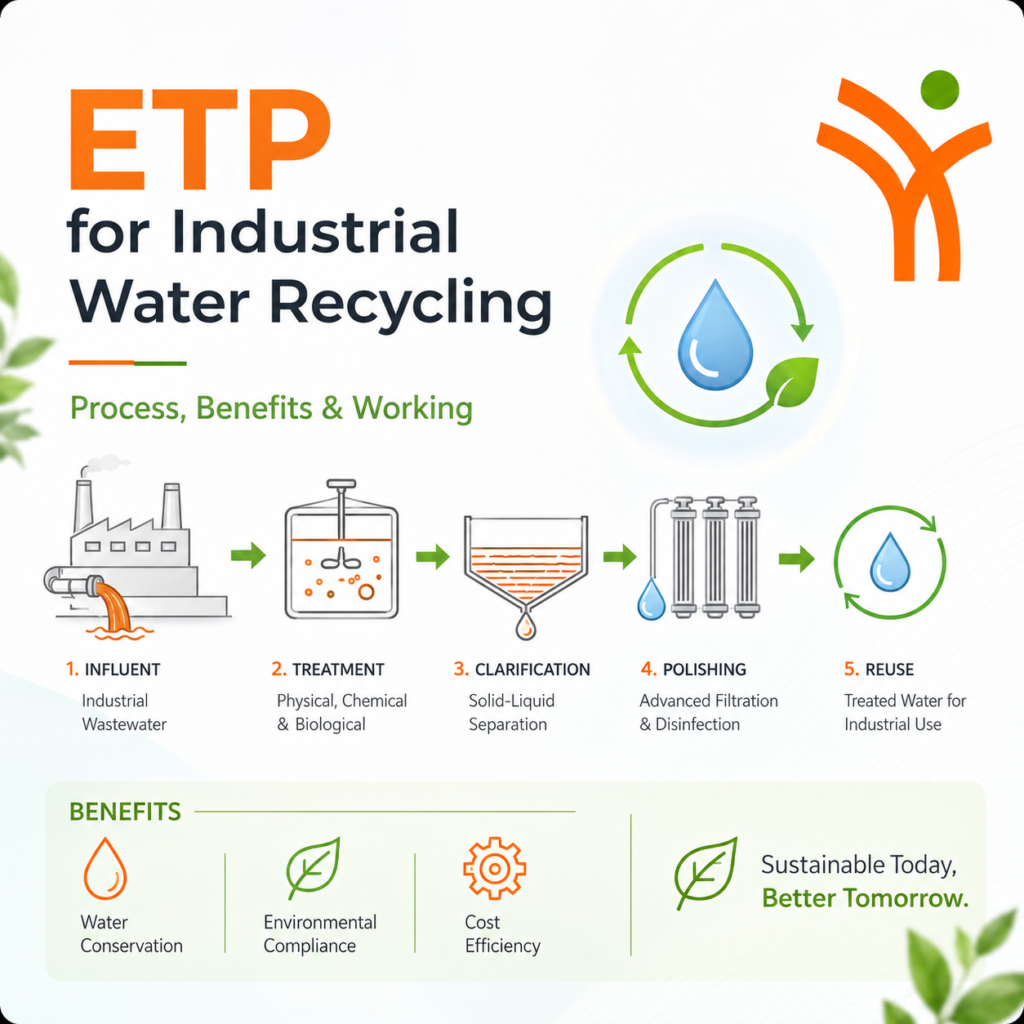

Industrial activities generate wastewater containing chemicals, oils, suspended solids, and other pollutants. If this wastewater is discharged without proper treatment, it can harm water sources, soil, and the surrounding environment. An Effluent Water Treatment Plant helps industries treat this wastewater and make it suitable for safe discharge or reuse.
An Effluent Treatment Plant (ETP) uses a combination of physical, chemical, and biological treatment processes to remove harmful contaminants from industrial effluent. It also helps industries reduce freshwater consumption, control pollution, and follow environmental regulations.
What Is an Effluent Water Treatment Plant?
An Effluent Water Treatment Plant is a wastewater treatment system designed specifically for industrial effluent. Different industries may produce different types of wastewater, so the treatment process is selected according to the quality and quantity of effluent generated.
The main objective of an ETP is to remove pollutants such as suspended solids, oil, grease, chemicals, colour, and other contaminants before the treated water is discharged or reused.
How Does an ETP Work?
The ETP process generally involves several stages. First, industrial wastewater passes through bar screens to remove larger solid materials and debris. An oil and grease trap can then separate floating oils from the wastewater.
The wastewater is collected in an equalization tank, where it is mixed to maintain a more uniform quality. After this, coagulation and flocculation may be used to bring smaller suspended particles together so they can settle more easily.
The water then passes through settling and filtration stages to remove remaining solids, colour, and odour. Depending on the wastewater characteristics and treatment requirements, biological treatment may also be included. Finally, the treated water can be stored for suitable reuse applications such as gardening, flushing, cooling, or cleaning.
5 Key Benefits of an Effluent Water Treatment Plant
1. Effective Pollution Control
An ETP helps remove harmful chemicals, oils, suspended solids, and other pollutants from industrial wastewater. This reduces the risk of contamination of nearby water bodies and soil.
2. Water Recycling and Reuse
Treated wastewater can often be reused for non-potable applications such as cleaning, cooling, gardening, and landscaping. This reduces dependence on fresh water.
3. Environmental Compliance
Industries need to manage their wastewater responsibly and meet applicable environmental requirements. An effective ETP supports better wastewater management and helps industries work toward regulatory compliance.
4. Reduced Water-Related Costs
Reusing treated water can reduce freshwater requirements and may lower water procurement and wastewater discharge costs. Over time, efficient treatment and reuse can contribute to better operational savings.
5. Sustainable Industrial Operations
An ETP supports responsible water management by reducing pollution and encouraging wastewater reuse. It can become an important part of an industry’s broader sustainability and environmental management strategy.
Why Industries Need ETP Solutions
Industries such as manufacturing, food processing, pharmaceuticals, textiles, chemicals, and other sectors can generate wastewater with different levels of contamination. Simply releasing untreated effluent is not a sustainable solution.
A properly designed Effluent Water Treatment Plant can be customized according to the industry’s wastewater characteristics, treatment requirements, available space, and expected water reuse. This makes ETPs an important solution for industries looking to improve wastewater management.
Conclusion
An Effluent Water Treatment Plant is more than just a wastewater treatment system. It helps industries control pollution, conserve water, reduce wastewater-related costs, and move toward more sustainable operations.
With the right treatment process, industrial wastewater can be treated efficiently and, where suitable, reused for different non-drinking applications. Investing in a well-designed ETP can therefore support both environmental responsibility and long-term industrial efficiency.
Domestic Biogas , Commercial Biogas , BioGas , Sewage Water Treatment Plant , Effluent Water Treatment Plant , Zero Liquid Discharge Water Treatment Plant