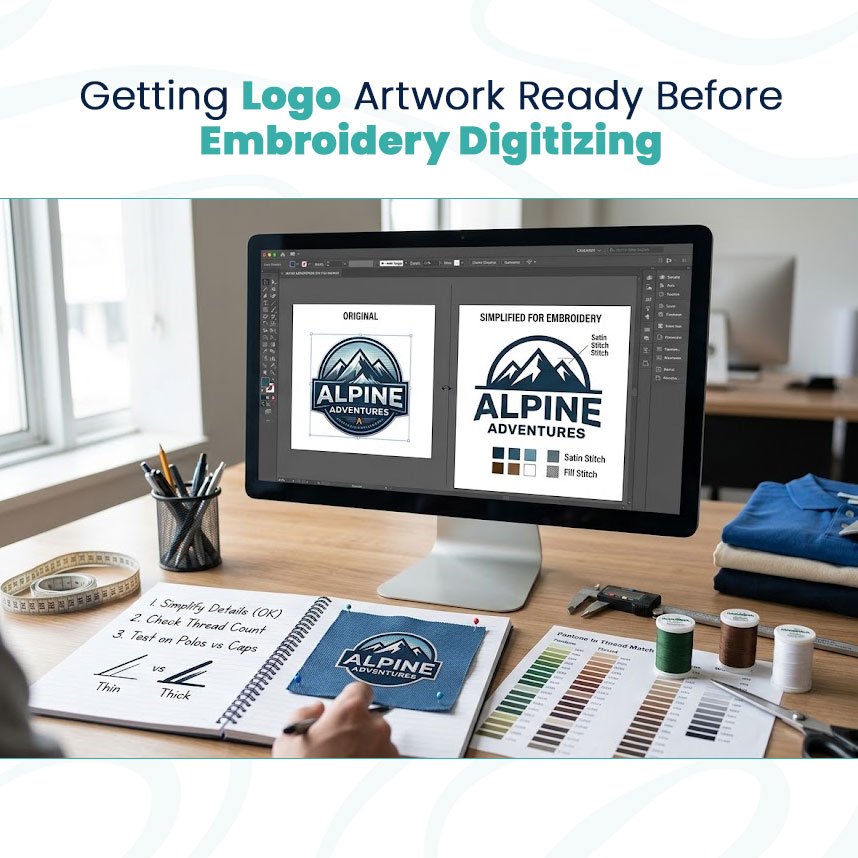

A logo does not need to be complicated to create embroidery problems. Even a simple brand mark can produce poor results if its lines are too thin, its details are too small, or its artwork is not prepared for the intended garment.
Anyone planning to Convert JPG to PES should first consider how the image will translate into thread. This becomes especially important when the project also involves embroidery file conversion because the artwork must be prepared before the final machine file is created.
Identify the Important Elements
Every logo has elements that matter more than others. The brand name, main symbol, and key shapes usually need to remain clear.
Less important details may need to be simplified.
A useful first step is separating the artwork into:
- Main logo shapes
- Text
- Borders
- Decorative details
- Background elements
This makes it easier to decide what should actually become embroidery.
Consider the Stitch Type
Different shapes require different stitch structures.
Large areas may use fill stitches, while narrow lettering and borders may work better with satin stitches. Fine lines can require a running stitch or may need to be redesigned if they are too small.
The choice should depend on the artwork and the finished size.
Avoid Designing Only for the Screen
A logo displayed on a monitor can look sharp because the screen is not limited by thread thickness or fabric movement.
Embroidery has physical limitations.
A small opening may close during stitching. Thin lettering may lose clarity. Heavy fills may make lightweight fabric stiff.
That is why the artwork should be judged based on its intended embroidery size.
Plan for Consistent Apparel
Brands may use one logo across polos, caps, jackets, bags, and uniforms. The same artwork may need adjustments for each placement.
A good production plan can include:
- A standard brand color reference
- Approved embroidery sizes
- Simplified versions for small placements
- Separate files for different applications
- Test samples before large orders
Final Review Matters
Once the design has been converted, review the PES file before production. Check the dimensions, stitch sequence, density, colors, and small details.
The best embroidery preparation starts with realistic expectations about what thread can reproduce. A carefully prepared logo gives the digitizer more useful artwork and helps the finished apparel maintain a clean, recognizable brand appearance.