

Rawalpindi is one of the largest and most important cities in Pakistan. Located adjacent to Islamabad, it serves as a major commercial, educational, and healthcare center. The city is home to millions of residents and also provides medical services to people from nearby districts such as Attock, Jhelum, Chakwal, Murree, Azad Kashmir, and northern Punjab. Over the years, Hospitals in Rawalpindi has developed an extensive healthcare system that includes government hospitals, military hospitals, teaching hospitals, and private healthcare institutions. These hospitals offer a wide range of medical services, including emergency care, surgery, cardiology, oncology, pediatrics, gynecology, orthopedics, and diagnostic facilities.
The healthcare infrastructure in Rawalpindi plays a vital role in improving public health. The district also has numerous Basic Health Units (BHUs), Rural Health Centers (RHCs), and Tehsil Headquarters (THQ) hospitals that provide primary healthcare services to urban and rural communities.
Importance of Hospitals in Rawalpindi
Hospitals are essential for maintaining the health and well-being of the population. They provide treatment for diseases, perform surgeries, offer preventive healthcare, and respond to emergencies around the clock. Rawalpindi’s hospitals also serve as teaching institutions for medical students, nurses, and healthcare professionals, contributing to the development of Pakistan’s healthcare workforce.
The city’s hospitals are known for treating patients not only from Rawalpindi but also from surrounding regions. Many hospitals operate 24 hours a day, ensuring that emergency medical services are available whenever needed.
Government Hospitals
Government hospitals in Rawalpindi provide affordable and often free medical treatment. These hospitals receive thousands of patients every day and offer specialized healthcare services.
Holy Family Hospital
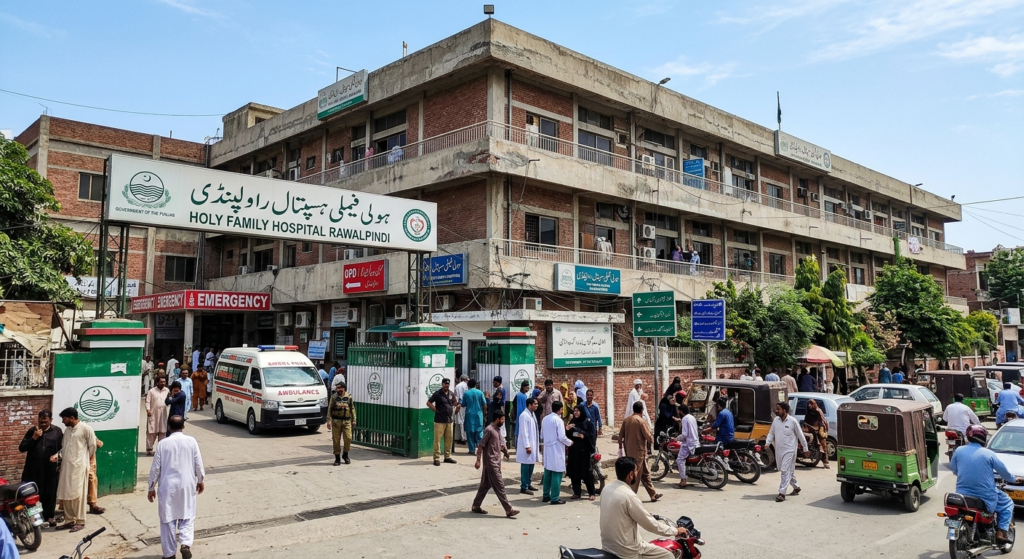
One of the largest government hospitals in the city is Holy Family Hospital Rawalpindi Pakistan. It is affiliated with Rawalpindi Medical University and serves as a major teaching hospital. The hospital has approximately 1,000 beds and offers services in medicine, surgery, cardiology, nephrology, pediatrics, gynecology, ENT, ophthalmology, radiology, and emergency medicine. It is one of the busiest hospitals in the district and provides healthcare to patients from across Punjab and neighboring areas.
Benazir Bhutto Hospital
Another important public hospital is Benazir Bhutto Hospital. Formerly known as Rawalpindi General Hospital, it is a major teaching hospital affiliated with Rawalpindi Medical University. The hospital has hundreds of beds and provides specialized services in internal medicine, surgery, orthopedics, urology, psychiatry, cardiology, and emergency care. It is recognized for medical education and postgraduate training.
Rawalpindi Teaching Hospital (DHQ)
Rawalpindi Teaching Hospital (RTH), Rawalpindi, formerly known as DHQ Hospital, serves the central areas of Rawalpindi. It provides emergency care, trauma services, surgery, medicine, gynecology, pediatrics, orthopedics, and outpatient services. The hospital also functions as an important teaching institution for medical students.
Military Hospitals
Rawalpindi is home to several military hospitals that provide high-quality healthcare primarily for armed forces personnel and their families, while some services are also available to civilians under specific circumstances.
Combined Military Hospital (CMH)
Combined Military Hospital Rawalpindi (CMH) is among Pakistan’s leading military hospitals. It offers advanced treatment in cardiology, neurosurgery, oncology, trauma care, orthopedics, transplantation, and intensive care. CMH is also affiliated with Army Medical College and the National University of Medical Sciences (NUMS).
Military Hospital Rawalpindi
Military Hospital Rawalpindi is another major healthcare institution with a long history. It functions as a teaching hospital and provides specialized medical and surgical care while supporting military medical education and research.
Private Hospitals
Private hospitals in Rawalpindi provide modern medical facilities, shorter waiting times, advanced diagnostic equipment, and specialist consultations.
Some of the well-known private hospitals include:
- Maryam Memorial Hospital (MMH)
- Bahria International Hospital
- Bilal Hospital
- Fauji Foundation Hospital
- Rawalpindi International Hospital
- Hanif Medical Complex – Saidpur Road, Rawalpindi
- Nusrat Hospital Rawalpindi (24/7 Gynecological Emergency and General Care)
These hospitals provide emergency services, maternity care, diagnostic imaging, laboratory testing, intensive care units, and specialized surgical procedures.
Specialized Medical Services
Hospitals in Rawalpindi provide healthcare across almost every medical specialty. Some of the most common services include:
- Emergency and trauma care
- General medicine
- General surgery
- Cardiology
- Orthopedics
- Gynecology and obstetrics
- Pediatrics
- Oncology
- Neurology
- Nephrology
- Urology
- ENT (Ear, Nose, and Throat)
- Ophthalmology
- Dermatology
- Psychiatry
- Intensive Care Units (ICUs)
Modern diagnostic facilities such as MRI, CT scans, digital X-rays, ultrasound, pathology laboratories, and endoscopy units are also available in many hospitals.
Teaching and Medical Education
Rawalpindi is an important center for medical education. Rawalpindi Medical University is affiliated with several teaching hospitals, including Holy Family Hospital, Benazir Bhutto Hospital, and Rawalpindi Teaching Hospital. These institutions train undergraduate medical students, postgraduate residents, nurses, and allied health professionals.
Medical education improves the quality of healthcare by producing skilled doctors and specialists who serve patients throughout Pakistan.
Primary Healthcare Services
In addition to major hospitals, the district has an extensive network of healthcare facilities, including Basic Health Units (BHUs), Rural Health Centers (RHCs), Mother and Child Health Centers (MCHs), and Tehsil Headquarters Hospitals. These facilities provide vaccinations, maternal healthcare, child health services, tuberculosis control, family planning, preventive healthcare, and treatment of common illnesses. This network helps reduce pressure on large tertiary hospitals while improving healthcare access for rural communities.
Challenges Facing Hospitals
Despite significant progress, hospitals in Rawalpindi continue to face several challenges.
One major issue is overcrowding. Government hospitals receive thousands of patients daily, leading to long waiting times and pressure on medical staff. Another challenge is the shortage of hospital beds in some departments, particularly during seasonal disease outbreaks.
Other challenges include:
- Limited healthcare funding
- Increasing patient population
- High workload for doctors and nurses
- Need for additional specialized equipment
- Better maintenance of healthcare infrastructure
- Improved access to medicines
Addressing these challenges requires continued government investment, healthcare reforms, and public-private collaboration.
Technological Advancements
Many hospitals in Rawalpindi are adopting modern healthcare technologies. Digital record systems, advanced imaging equipment, minimally invasive surgical techniques, telemedicine services, electronic laboratory reporting, and improved intensive care facilities have enhanced patient care.
Private hospitals especially continue to invest in state-of-the-art medical equipment to improve diagnosis and treatment outcomes.
Future of Healthcare in Rawalpindi
The future of healthcare in Rawalpindi appears promising. Population growth and increasing healthcare demands are encouraging further investment in hospitals, medical colleges, specialized centers, and healthcare technology.
Government initiatives to strengthen primary healthcare, improve emergency services, and expand hospital infrastructure are expected to enhance healthcare accessibility. Collaboration between public and private healthcare providers will also contribute to better medical services for the community.