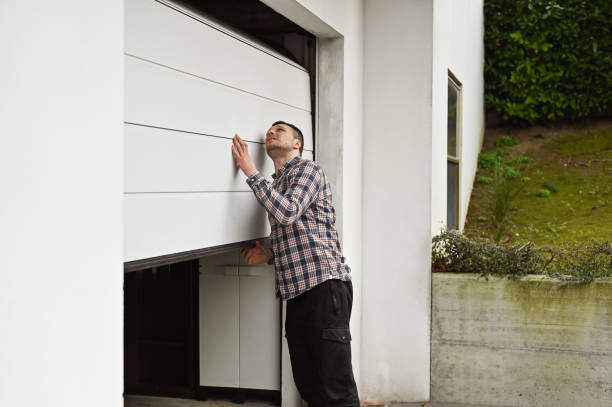
A garage door depends on several components working together to open and close smoothly. While the door panels, springs, rollers, and opener often receive the most attention, the track brackets are equally important. These brackets hold the metal tracks in position, allowing the rollers to move along a stable path. When a bracket begins to loosen, the door may become noisy, move unevenly, or show signs of misalignment.
Recognizing these warning signs early can help homeowners prevent further damage and avoid unexpected garage door problems. Whether you use your garage every day or only occasionally, knowing what to look for can help you decide when professional assistance is necessary.
What Does a Garage Door Track Bracket Do?
A garage door track bracket secures the vertical and horizontal tracks to the garage structure. The tracks guide the rollers as the door moves between its closed and open positions. Brackets, bolts, and other mounting hardware help keep the tracks properly aligned under the weight and movement of the door.
Over time, repeated operation, vibration, loose fasteners, and normal wear can affect the stability of these mounting points. In some cases, the bracket may shift slightly away from the wall or ceiling. If the problem continues, the track may become misaligned, affecting how the entire garage door system operates.
Homeowners experiencing track-related problems can learn more about professional Garage Door Track Repair and the types of issues that may require attention.
1. Visible Gaps Between the Bracket and the Wall
One of the clearest warning signs of a loose track bracket is a visible gap between the bracket and its mounting surface. A properly secured bracket should remain firmly attached to the wall or ceiling framing.
If you notice that one side of a bracket appears to pull away from the wall, the mounting screws or bolts may have loosened. You might also see a small change in the track’s position compared with the surrounding structure.
Do not attempt to push the bracket back into place while the door is operating. Garage doors are heavy, and their tracks may be under significant stress. If the bracket appears to be separating from its mounting point, stop using the door and arrange a professional inspection.
2. The Garage Door Makes Unusual Noises
New or unusual sounds can indicate that something is changing in your garage door system. A loose track bracket may allow the track to vibrate or shift slightly as the rollers pass through it.
Listen for sounds such as:
- Rattling or vibrating metal during operation.
- Clanking as the door begins to move.
- Scraping sounds that were not present before.
- Repeated knocking near the track mounting points.
These noises do not always mean a bracket is loose. Worn rollers, inadequate lubrication, loose hinges, and other mechanical issues can create similar sounds. However, if the noise comes from the same area each time the door moves, the track and its mounting hardware should be inspected.
Avoid repeatedly opening and closing the door to reproduce the sound if you suspect that a bracket is unstable.
3. The Door Moves Unevenly
A garage door should travel along its tracks without obvious sideways movement or sudden changes in alignment. When a track bracket loosens, the track may shift enough to interfere with the rollers.
You might notice that one side of the door appears to move differently from the other. The door may hesitate, wobble, or seem to drag as it travels. In more serious situations, the rollers may struggle to remain properly positioned inside the track.
Uneven movement can also indicate problems with the springs, cables, rollers, or other components. Because these parts work together, identifying the exact cause is important.
If the door looks crooked or begins moving unpredictably, stop operating it. A qualified technician can determine whether a loose bracket, damaged track, or another mechanical problem is responsible.
4. The Track Appears Bent or Misaligned
A loose bracket can allow a track to move away from its intended position. Over time, this movement may create visible alignment problems or contribute to track damage.
From a safe position, look at the track without touching it. Check whether the metal rail appears straight and whether its position seems consistent with the rest of the track system. Pay attention to unusual gaps, visible twisting, or areas where the track appears closer to or farther from the wall than expected.
A bent track does not necessarily mean the bracket is loose. The track may have been struck by a vehicle, damaged by repeated stress, or affected by other hardware problems.
If you see a noticeable change in track alignment, avoid operating the garage door until it has been assessed. Continuing to use a misaligned system can increase friction, damage rollers, and place additional stress on the opener.
5. The Rollers Struggle to Move Through the Track
Garage door rollers are designed to travel smoothly along the track. When a mounting bracket becomes loose, even a small shift in the track can interfere with that movement.
Possible warning signs include rollers that appear to jerk, scrape against the track, or move through a particular section with difficulty. The door may also pause briefly or produce a grinding sound as it opens or closes.
These symptoms can develop for several reasons, including worn rollers, dirt buildup, damaged track sections, and alignment problems. A professional inspection can help determine whether the bracket is contributing to the issue.
Do not try to guide a roller back into place by hand while the door is moving. If a roller has come out of the track, the door may be unstable and should remain unused until repaired.
6. Loose, Missing, or Damaged Fasteners
Track brackets rely on suitable fasteners to remain securely attached to the building structure. Over time, vibration or inadequate initial installation may cause a fastener to loosen. Corrosion, damaged mounting holes, or deteriorating wood can also affect the connection.
During a visual inspection, look for obvious signs such as missing bolts, a screw that appears to have backed out, rust around the mounting hardware, or cracked material around the attachment point.
Do not tighten suspicious fasteners while the garage door is under tension or attempt to reposition the track yourself. The correct repair depends on the bracket design, mounting surface, fastener type, and condition of the surrounding structure.
If the mounting point appears damaged, professional Garage Door Repair can help address the underlying problem rather than simply tightening a loose fastener.
7. The Door Reverses, Stops, or Strains During Operation
A garage door opener is designed to move the door along a predictable path. When a track bracket shifts and creates resistance, the opener may struggle to complete its normal cycle.
You may notice that the door stops partway, reverses unexpectedly, or sounds as though the motor is working harder than usual. Some openers may respond to the additional resistance by stopping or activating their safety features.
These symptoms can also be caused by sensor issues, incorrect travel settings, damaged springs, or other mechanical faults. Avoid increasing the opener’s force settings to compensate for a door that is struggling to move. Doing so may conceal the underlying problem and compromise safe operation.
If the door strains, jerks, or reverses repeatedly, discontinue use and arrange an inspection.
What Causes Garage Door Track Brackets to Come Loose?
Several factors can contribute to loose brackets.
Repeated vibration: Daily opening and closing create repeated movement that may gradually affect mounting hardware.
Improper installation: Incorrect fasteners or inadequate attachment to structural framing can make brackets less secure from the beginning.
Impact damage: A vehicle, stored item, or other object may strike the track or bracket, shifting it out of position.
Structural deterioration: Damaged wood, deteriorating mounting surfaces, or corrosion can weaken the bracket’s connection.
Track misalignment: Existing alignment problems can create uneven forces on the brackets and surrounding hardware.
Identifying the cause is important because tightening the bracket alone may not resolve the problem if the mounting surface, track, or other components are damaged.
Can You Inspect a Loose Track Bracket Yourself?
Homeowners can perform a basic visual inspection, provided they follow appropriate safety precautions. Start with the garage door fully closed only if it is already in a stable position and can be closed safely. If the door is crooked, partially off its tracks, or visibly unstable, do not attempt to move it.
From a safe distance, look for gaps around brackets, missing fasteners, track misalignment, unusual wear, and visible damage. Use adequate lighting to view the mounting points without touching the hardware.
Never loosen or remove track brackets, pull on the track, adjust cables or springs, or place your hands near rollers and moving components. Do not disconnect the opener or attempt to lift a door that may be unbalanced. These actions can expose you to sudden movement or serious injury.
When a bracket appears loose, a professional technician can inspect the mounting surface, determine whether the fasteners are suitable, check the track alignment, and identify related damage.
When Should You Call a Garage Door Professional?
You should arrange professional service if a bracket visibly separates from the wall, the track bends or shifts, rollers struggle to remain in position, or the door moves unevenly. Rattling sounds combined with visible movement around a mounting point also warrant attention.
If the door is crooked, off-track, sagging, or making sudden movements, keep people and pets away from the area. Do not operate the opener until a technician has assessed the system.
Homeowners in Centennial, Colorado, can explore Garage Door Services in Centennial to find service information relevant to their location. Prompt attention to loose mounting hardware can help prevent additional damage to tracks, rollers, and the opener.
How Can You Help Prevent Track Brackets From Loosening?
Routine maintenance can help identify potential problems before they become more serious. Consider these preventive practices:
- Arrange periodic professional inspections of the tracks, brackets, rollers, and other hardware.
- Keep the garage door tracks clear of obstructions.
- Pay attention to new noises or changes in the door’s movement.
- Avoid hitting the tracks with vehicles, bicycles, ladders, or stored items.
- Address damaged mounting surfaces and worn hardware when they are identified.
- Follow the garage door manufacturer’s maintenance recommendations.
Avoid applying grease to the inside of the tracks unless the manufacturer specifically recommends it. Tracks generally need to remain clean, while rollers and other designated moving parts may require appropriate lubrication.
Regular maintenance cannot prevent every mechanical problem, but it can help reveal early warning signs and reduce the likelihood of avoidable damage.
Conclusion
A garage door track bracket may be coming loose if you notice gaps between the bracket and the wall, unusual rattling, uneven door movement, misaligned tracks, struggling rollers, or visible fastener damage. Changes in opener performance can also indicate that something is interfering with the door’s movement.
Although some symptoms may have other causes, they should not be ignored when they occur alongside visible track or bracket movement. Because garage doors are heavy and operate under tension, avoid attempting repairs that involve moving tracks, brackets, cables, or springs.
If you suspect a loose track bracket, professional inspection and timely Garage Door Track Repair can help restore proper alignment, protect other components, and keep your garage door operating safely.