
Barter trade is one of the oldest forms of commerce, traditionally involving the direct exchange of goods or services without using money. However, conventional barter often comes with limitations. Finding two parties who need exactly what the other has to offer can be difficult, making transactions time-consuming and restrictive. Digital marketplaces are changing this traditional model by creating organised platforms where businesses can connect, exchange value, and discover new trading opportunities.
A digital marketplace for barter trade brings multiple buyers and sellers into one ecosystem. Instead of relying on personal contacts or searching manually for a suitable trading partner, businesses can list their products or services and explore a wider range of available offerings. This makes the barter process more accessible, efficient, and scalable.
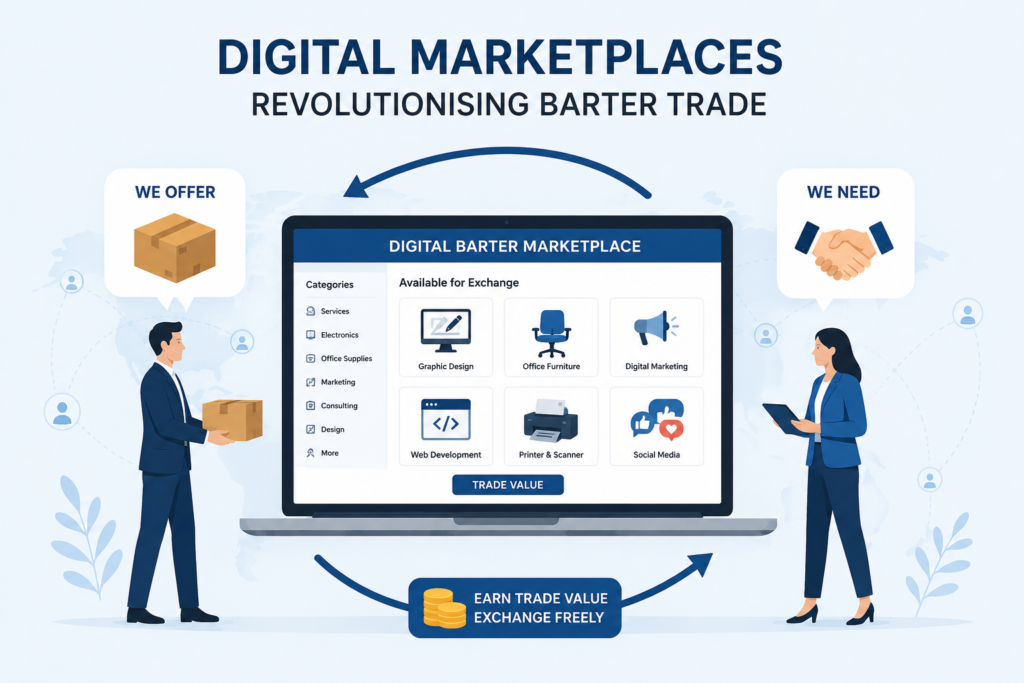
One of the biggest ways digital marketplaces are revolutionising barter trade is by overcoming the limitations of direct exchanges. In traditional barter, a business may need to find another company that both wants its product and offers something it needs in return. This requirement can make successful exchanges difficult. Digital platforms can introduce a more flexible system by allowing businesses to exchange goods or services for trade value or credits that can later be used for other requirements within the marketplace.
For example, a marketing agency may provide branding services to another business and receive value in return. Instead of immediately exchanging those services for a specific product from the same company, the agency may be able to use the earned value to access products or services offered by other participants in the network. This creates a more practical and flexible approach to business barter.
Digital marketplaces also help businesses make better use of surplus inventory and unused capacity. Many companies have products that remain unsold or resources that are not being fully utilised. Excess stock can occupy valuable storage space, while unused service capacity represents a missed business opportunity. Through a digital barter marketplace, these resources can potentially be converted into value that can be used to meet other business needs.
This approach can be particularly useful for businesses looking to manage their cash flow. Rather than relying entirely on cash for every purchase, companies may have the opportunity to use available goods or services as a form of exchange. This does not eliminate the need for cash in business operations, but it can provide an alternative way to acquire selected products and services while preserving financial resources for other priorities.
Another important advantage of digital barter marketplaces is access to a larger business network. Traditional barter is often limited to local contacts, existing relationships, or direct referrals. An online marketplace can connect businesses from different industries and locations, creating opportunities that may not otherwise be available. A company can discover new suppliers, service providers, customers, and potential collaborators through the same platform.
Technology also brings greater convenience and organisation to the barter process. Digital marketplaces can allow businesses to create profiles, list offerings, search for relevant products or services, communicate with other participants, and maintain transaction records in one place. This structured environment can make barter easier to manage compared with informal exchanges conducted through phone calls, emails, or personal connections.
Trust and transparency are also important elements of modern barter trade. Digital platforms can support clearer communication by providing information about available offerings and transaction processes. However, businesses should still review the terms of every exchange, understand the value involved, and ensure that expectations regarding quality, delivery, and other obligations are clearly defined.
Digital marketplaces are also expanding the types of businesses that can participate in barter trade. Barter is no longer limited to exchanging physical goods. Service providers, including consultants, marketing agencies, technology companies, event organisers, and professional firms, can also explore opportunities to exchange their expertise or available capacity. This makes the barter ecosystem more diverse and increases the number of potential exchange opportunities.
As digital technology continues to reshape business operations, barter trade is evolving from a simple one-to-one exchange into a more connected and flexible system. Digital marketplaces are helping businesses discover new ways to generate value from existing resources, build professional relationships, and access goods or services through alternative trading methods.
Ultimately, the growing role of digital marketplaces demonstrates that barter remains relevant in the modern business environment. By combining the traditional concept of exchange with digital technology, these platforms are making barter more organised, accessible, and adaptable. For businesses seeking new ways to utilise resources and explore alternative forms of trade, digital marketplaces are helping transform an age-old practice into a modern business opportunity.