
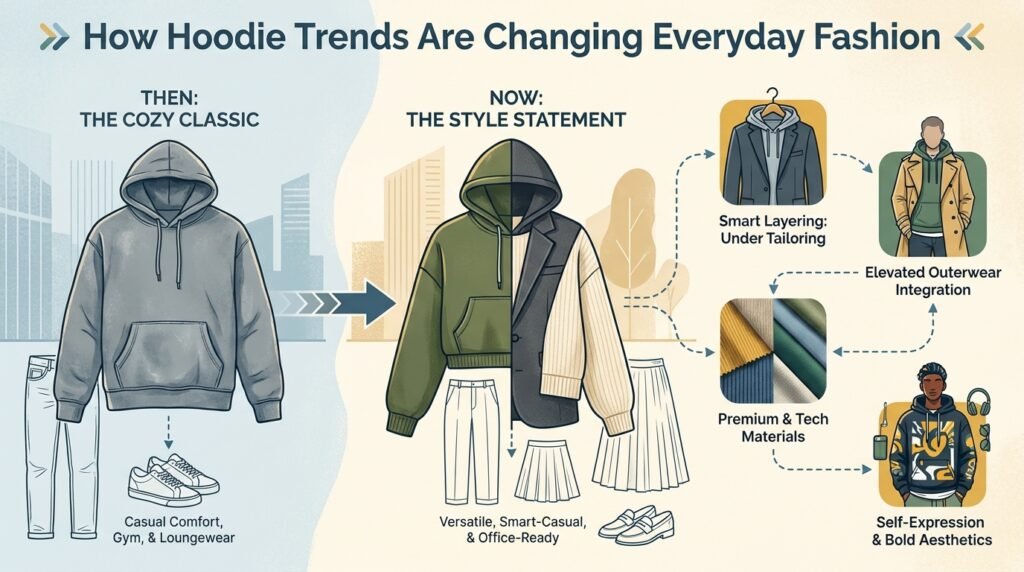

Hoodies have moved far beyond their origins as practical sportswear and cold-weather layers. Today, they sit at the center of everyday fashion, connecting comfort, streetwear, workwear, athleisure, and personal expression. What was once considered a basic casual garment can now anchor an entire outfit, influence seasonal styling, and even shape the way consumers think about versatility in their wardrobes.
The transformation is not simply about hoodies becoming more popular. It reflects a broader shift in fashion toward relaxed silhouettes, functional clothing, layering, gender-neutral styling, and pieces that transition easily between different parts of daily life. Consumers increasingly want clothing that feels comfortable without looking careless, and the modern hoodie fits that expectation remarkably well.
At the same time, hoodie culture has influenced neighboring categories such as bomber jackets, utility outerwear, denim, sneakers, cargo trousers, and oversized accessories. The result is a more flexible approach to getting dressed, where traditional boundaries between casual and polished clothing are becoming less rigid.
Why Hoodies Have Become an Everyday Fashion Essential
The appeal of the hoodie starts with practicality. A hood provides additional protection from wind and light rain, while a soft interior makes the garment comfortable enough for extended wear. Kangaroo pockets and zip-front designs add functionality, giving wearers convenient storage and easy temperature control.
However, practicality alone does not explain the hoodie’s fashion staying power. Its biggest advantage is adaptability. A simple hoodie can look completely different depending on what is worn with it. Pairing one with joggers creates a relaxed athletic outfit, while combining it with straight-leg jeans and structured outerwear produces a more deliberate streetwear look.
This versatility has changed consumer expectations. Rather than buying separate garments for every occasion, shoppers increasingly seek pieces that can perform multiple roles. A high-quality hoodie can work for travel, errands, casual social occasions, weekend activities, and relaxed workplaces where formal dress is not required.
- Comfort: Soft fabrics and relaxed silhouettes make hoodies suitable for long periods of wear.
- Layering: Hoodies work beneath coats, bomber jackets, denim jackets, and oversized outerwear.
- Versatility: They can support athletic, streetwear, casual, and workwear-inspired outfits.
- Seasonal adaptability: Lightweight versions suit transitional weather, while heavyweight fleece works well in colder months.
- Personal expression: Colors, graphics, embroidery, logos, and silhouettes allow wearers to communicate individual style.
The Rise of Relaxed Silhouettes
One of the clearest changes in contemporary fashion is the move away from restrictive, highly tailored silhouettes. Oversized and relaxed garments have become increasingly common because they offer both visual impact and physical comfort.
Hoodies have benefited directly from this trend. Oversized bodies, dropped shoulders, longer sleeves, and generous hoods create a distinctive silhouette that can make a basic outfit appear intentionally styled. The key is proportion. An oversized hoodie can be balanced with straight or slim trousers, while a more fitted hoodie can complement wider-leg pants.
This focus on proportion has also encouraged experimentation. Consumers are no longer limited to matching a hoodie with sweatpants. They can combine it with tailored trousers, denim, cargo pants, skirts, shorts, or structured outerwear. That freedom has helped transform the hoodie from a supporting item into a central styling piece.
Hoodies and the New Layering Culture
Modern everyday fashion increasingly revolves around layering. Instead of treating clothing as individual outfits, consumers build looks from several complementary pieces. Hoodies are particularly effective in this system because their shape naturally creates visual depth beneath outer layers.
A hoodie under a bomber jacket is a classic example. The hood adds dimension around the neckline, while the outer jacket supplies structure. This combination can balance comfort with a more substantial appearance, making it useful for casual urban outfits.
Workwear-inspired outerwear has become especially influential in this space. Garments built around durability, utility pockets, sturdy fabrics, and practical construction pair naturally with relaxed hoodies. The combination creates an aesthetic that feels functional rather than overly styled.
For example, a red carhartt jacket can introduce a strong workwear-inspired color and silhouette over a neutral hoodie. The contrast demonstrates how modern fashion often combines familiar functional garments with contemporary casual layers instead of relying on one style category from head to toe.
From Streetwear to Mainstream Fashion
Streetwear has played an enormous role in changing how people perceive casual clothing. Hoodies, sneakers, graphic tees, baseball caps, and relaxed trousers moved from niche subcultures into mainstream wardrobes. As designers and retailers adopted elements of streetwear, consumers gained more opportunities to incorporate these pieces into everyday outfits.
The hoodie became one of the most recognizable symbols of this transition. Its association with music, skateboarding, sports, and youth culture gave it a strong identity, while its simple construction made it accessible to a broad audience.
Today, the difference between streetwear and mainstream casual fashion is often difficult to define. A person might wear a minimalist hoodie with premium denim and leather shoes, creating an outfit that feels significantly more refined than traditional athletic wear. Another wearer might choose a graphic hoodie, cargo trousers, and sneakers for a distinctly urban appearance.
This flexibility is important because fashion trends rarely move in a single direction. Instead, consumers borrow elements from different aesthetics and combine them according to their own lifestyles.
Color Is Becoming a Bigger Part of Casual Styling
For years, neutral hoodies dominated casual wardrobes. Black, gray, navy, white, and beige remain dependable choices, but consumers have become increasingly comfortable using color to make everyday outfits more distinctive.
Colorful outerwear and hoodies can function as statement pieces while the rest of an outfit remains relatively understated. This approach allows people to experiment with fashion without completely abandoning practicality.
Pastel shades are particularly useful for creating softer casual looks. Pink, lavender, mint, pale blue, and cream can make traditionally utilitarian garments feel more fashion-oriented. Stronger colors, meanwhile, can create visual focal points when combined with neutral basics.
A pink carhartt jacket illustrates how workwear-inspired construction can take on a different personality through color. Layered over a simple hoodie and paired with understated trousers, a colorful jacket can become the defining element of an otherwise uncomplicated outfit.
The Growing Influence of Gender-Neutral Styling
Another major development is the increasing popularity of gender-neutral fashion. Hoodies have always possessed many characteristics that make them suitable for this movement: relaxed construction, adaptable sizing, uncomplicated styling, and broad color availability.
Contemporary consumers increasingly prioritize personal preference over rigid assumptions about which garments belong to particular genders. Oversized hoodies, utility jackets, loose trousers, sneakers, and caps can appear across a wide range of wardrobes.
This shift also affects how brands approach product development. Rather than creating dramatically different versions of the same garment, many labels emphasize silhouette, fabric, color, and fit as the primary ways to differentiate collections.
For shoppers, the result is greater freedom. Someone can choose an oversized hoodie because they prefer the silhouette, not because a traditional fashion category tells them they should. That emphasis on individual styling is likely to remain an important part of everyday fashion.
Hoodies Meet Functional Outerwear
The relationship between hoodies and outerwear has become increasingly important as consumers prioritize utility. Weather-resistant shells, insulated jackets, bomber silhouettes, canvas coats, and technical parkas can all be layered over hoodies.
This combination reflects a broader movement toward clothing that performs a practical function while retaining visual appeal. Consumers want pockets, durable fabrics, comfortable construction, weather protection, and easy movement, but they also want garments that fit contemporary aesthetics.
Reversible outerwear is another example of this functional mindset. A coach men’s reversible bomber jacket can provide two visual options in one garment, supporting the modern preference for versatility and adaptable wardrobes.
How Different Hoodie Styles Change an Outfit
Not every hoodie communicates the same aesthetic. Small differences in fabric weight, fit, color, neckline, graphics, and construction can significantly change the overall effect.
| Hoodie Style | Typical Characteristics | Best Styling Direction |
|---|---|---|
| Oversized Hoodie | Wide body, dropped shoulders, generous sleeves | Streetwear, relaxed layering, casual weekend outfits |
| Minimalist Hoodie | Solid color, subtle branding, clean construction | Smart-casual looks, denim, tailored trousers |
| Graphic Hoodie | Large prints, artwork, logos, or typography | Youth culture, streetwear, sneaker-focused outfits |
| Heavyweight Hoodie | Dense fleece or substantial cotton construction | Cold-weather layering and workwear-inspired outfits |
| Lightweight Hoodie | Thin fabric and flexible construction | Spring layering, travel, athleisure, transitional weather |
Understanding these distinctions helps consumers build more intentional wardrobes. Instead of treating every hoodie as interchangeable, shoppers can choose a particular construction based on the role they want the garment to play.
Why Fabric Quality Matters More Than Ever
As hoodies become everyday wardrobe staples, consumers are paying closer attention to construction and material quality. A hoodie that is worn frequently needs to retain its shape, color, softness, and structural integrity after repeated washing.
Cotton remains popular because of its breathability and familiar hand feel. Cotton-polyester blends can improve durability, reduce shrinkage, and support faster drying. Heavyweight fleece offers warmth and structure, while lighter jersey constructions can work as transitional layers.
Details also matter. Strong ribbing at cuffs and hems helps prevent excessive stretching. Quality stitching reduces seam failure, while well-constructed drawstrings and zippers can make a noticeable difference in long-term usability.
For consumers, paying attention to these details can be more valuable than simply following a logo or seasonal trend. A well-made hoodie can remain relevant for years, making it a more sustainable wardrobe investment than disposable trend pieces.
The Role of Hoodies in Sustainable Everyday Fashion
Sustainability has also changed how consumers evaluate casual clothing. Instead of constantly replacing inexpensive garments, many shoppers are becoming more interested in longevity, versatility, repairability, and responsible material choices.
Hoodies are well suited to this mindset because they can occupy multiple roles. A durable hoodie can be worn at home, outdoors, while traveling, or as part of a casual workplace outfit. The more situations a garment can accommodate, the greater its practical value becomes.
Consumers can also make more responsible purchasing decisions by considering fabric composition, construction quality, washing requirements, and expected lifespan. Buying fewer pieces that receive regular use can be more meaningful than repeatedly purchasing short-lived trend garments.
How to Build a Modern Hoodie-Based Wardrobe
Building a versatile hoodie collection does not require dozens of options. A small selection of strategically chosen pieces can support a surprisingly wide range of outfits.
- Start with a neutral foundation. Choose a black, gray, navy, cream, or similar neutral hoodie that can work with most existing wardrobe pieces.
- Add a distinctive color. Introduce one brighter or softer shade to create contrast and prevent the wardrobe from becoming visually repetitive.
- Experiment with proportions. Try both regular and oversized fits to discover which silhouettes work best with your trousers and outerwear.
- Invest in layering pieces. Add bomber jackets, denim jackets, utility coats, or other structured outerwear that can be worn over hoodies.
- Prioritize quality. Check fabric weight, stitching, cuffs, seams, and care requirements before buying.
- Build around real routines. Choose hoodies based on where you actually spend time rather than buying pieces solely because they are currently fashionable.
The Future of Hoodie Trends
Hoodie trends are likely to continue evolving alongside broader changes in consumer behavior. Comfort is unlikely to disappear, but comfort alone will not define the next generation of casual clothing. Consumers are increasingly looking for garments that combine comfort with durability, functionality, visual identity, and adaptability.
We can expect greater experimentation with technical fabrics, modular construction, reversible designs, oversized proportions, elevated minimalist finishes, and expressive graphics. At the same time, heritage workwear and classic sportswear will continue influencing hoodie styling because both categories offer recognizable silhouettes and practical construction.
The most interesting development may be the continued breakdown of traditional fashion boundaries. Hoodies are already being worn with garments that once belonged to very different categories. That experimentation allows consumers to create outfits that are personal rather than dictated by a single trend.
Frequently Asked Questions (FAQs)
Are hoodies still fashionable?
Yes. Hoodies have become a lasting part of contemporary casual fashion because they combine comfort, versatility, and easy layering. Their styling changes over time, but the fundamental garment remains highly relevant.
How can I make a hoodie look more fashionable?
Focus on proportions and layering. Pair a hoodie with structured outerwear, clean denim, cargo trousers, or tailored pants. Choosing quality fabrics and keeping the rest of the outfit coordinated can also create a more intentional appearance.
Are oversized hoodies still trending?
Oversized silhouettes remain influential because they align with the broader preference for relaxed clothing. However, the best fit depends on personal proportions and styling preferences rather than following one fixed trend.
Can hoodies be worn with jackets?
Absolutely. Hoodies work particularly well under bomber jackets, denim jackets, utility coats, and other structured outerwear. The layered combination creates visual depth while providing additional warmth and versatility.
What hoodie color should I buy first?
A neutral color is generally the most versatile starting point. Black, gray, navy, cream, and similar shades can be combined with a wide range of trousers and jackets. After establishing that foundation, adding a distinctive color can bring more personality to your wardrobe.
Embrace the New Everyday Fashion
Hoodies have evolved from simple athletic and casual garments into powerful building blocks for contemporary wardrobes. Their influence can be seen in relaxed silhouettes, layered outfits, gender-neutral styling, colorful workwear, functional outerwear, and the continuing convergence of streetwear with mainstream fashion.
The biggest lesson is that everyday fashion no longer needs to choose between comfort and style. With thoughtful proportions, durable materials, complementary layers, and a willingness to experiment, the humble hoodie can support outfits that feel practical, expressive, and distinctly modern.
Instead of treating hoodie trends as short-lived seasonal changes, consider them part of a larger transformation in how people dress. Choose versatile pieces, experiment with layers, and build outfits around the way you actually live. That approach makes it easier to stay current without constantly rebuilding your wardrobe.