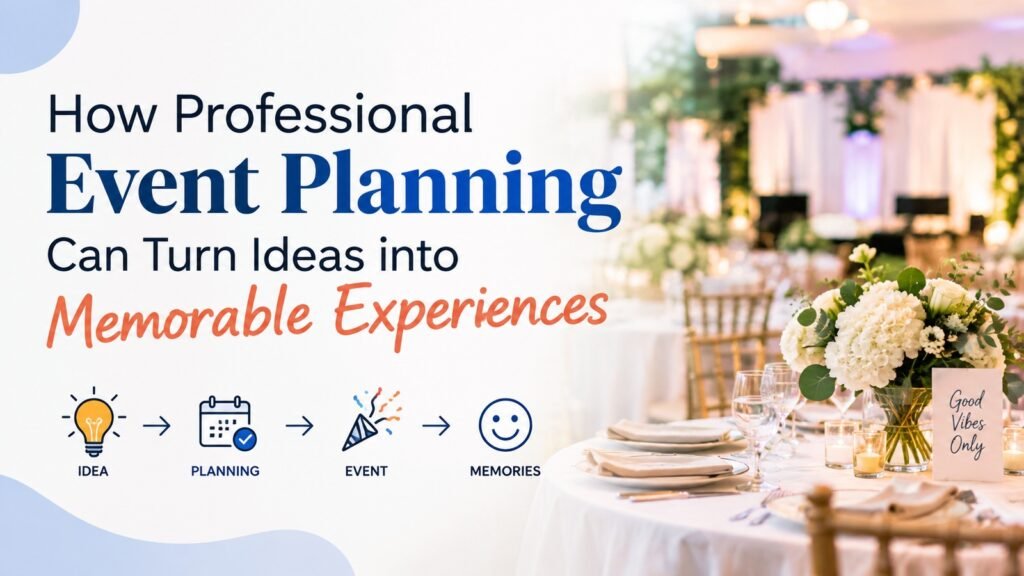

A well-executed event can create new opportunities, strengthen relationships, and leave guests with a positive impression. Yet the work behind the scenes is often more complex than it appears. Every successful gathering depends on decisions about the venue, budget, suppliers, guest experience, and schedule.
The good news is that event planning becomes easier when these decisions follow a logical process. By establishing priorities and managing tasks in the right order, you can reduce confusion and avoid many common problems.
Decide What Success Looks Like
Start by defining the main outcome you want from the event. For a business gathering, success might mean stronger client relationships, improved employee engagement, or increased awareness of a product.
For a private celebration, the priority may be guest comfort, personal touches, and an enjoyable atmosphere.
These goals should influence every major decision. If the event requires audience participation, the layout should encourage interaction. If it involves formal presentations, the technical arrangements must be dependable.
Set a few realistic indicators that will help you evaluate the result afterward. Clear goals prevent the planning process from becoming a collection of unrelated activities.
Create a Practical Financial Plan
A budget provides the foundation for making sensible decisions. Estimate the costs of the venue, catering, decoration, equipment, entertainment, photography, and transportation.
Obtain quotations early and compare the services included. Ask suppliers to identify additional charges and payment deadlines.
Prioritise the items that have the greatest impact on the event. A professional presentation may require good sound and display equipment, while a social gathering may benefit more from thoughtful catering and comfortable seating.
Keep a reserve for unforeseen expenses and record any changes to the original budget. Regular monitoring can help you make adjustments before costs become difficult to control.
Find a Venue That Fits the Occasion
The ideal venue depends on the audience and programme. A small meeting may require a quiet, accessible room, while a large celebration needs sufficient capacity and space for different activities.
Consider transport links, parking, electricity, washrooms, lighting, ventilation, and catering facilities. For outdoor events, review weather alternatives and any restrictions that could affect the schedule.
Check the venue in person where possible. This helps you understand the layout and identify practical concerns that may not be obvious in photographs.
Confirm all booking conditions before making payment, including setup access, cancellation rules, and charges for additional hours.
Make the Experience Consistent
The strongest events have a clear identity. The invitation, venue design, programme, signage, and activities should feel connected rather than appearing to have been planned independently.
Choose a theme or visual style that suits the occasion. Coordinate the main decorative elements and ensure that signs provide useful information without cluttering the space.
For business gatherings, consistent branding can help communicate professionalism. For personal celebrations, customised details can make guests feel more connected to the occasion.
Remember that the design should support the event rather than interfere with practical requirements such as movement, seating, or visibility.
Work With Suppliers Efficiently
Events often involve several independent service providers, each with their own schedules and requirements. Without proper communication, deliveries may overlap, setup may be delayed, or important details may be overlooked.
Prepare a shared schedule and confirm each supplier’s responsibilities. Record contact details, arrival times, technical needs, and payment arrangements.
When comparing an event company in lucknow, assess its ability to coordinate these moving parts rather than judging it only by decoration photographs. Ask how the team handles vendor communication, changes in requirements, and supervision on the event day.
A clear agreement helps ensure that everyone understands what is expected and reduces the possibility of disputes.
Prepare an Event-Day Checklist
An event-day checklist helps turn the plan into action. It should include venue access, deliveries, equipment testing, decoration completion, registration, catering readiness, and programme timings.
Assign each task to a responsible person and identify the main contact for urgent questions. For larger events, a coordinator can monitor the schedule and communicate with vendors as the day progresses.
Allow enough time for setup and testing before guests arrive. Small checks involving microphones, screens, lighting, and seating can prevent avoidable interruptions.
Anticipate Common Challenges
Unexpected situations can arise even when the plan is detailed. Weather, traffic, technical failures, or changes in attendance may affect arrangements.
Think about the most likely problems and prepare alternatives. Keep spare equipment where necessary, confirm backup arrangements for outdoor venues, and maintain updated vendor contacts.
A flexible plan makes it easier to respond to changes without losing sight of the main objective.
Learn From Every Event
After the gathering, review the final expenditure, attendance, feedback, and overall execution. Identify where time or money could have been used more effectively.
Keep a record of successful ideas, preferred suppliers, and lessons learned. These notes can make future planning faster and more predictable.
Conclusion
Effective event planning is about making informed decisions, communicating clearly, and keeping every element connected to the original objective. A practical budget, suitable venue, reliable suppliers, and a well-managed schedule can make a significant difference to the final experience.
If you are looking for professional support, Pentagon Events is worth exploring alongside other providers. Discuss your objectives and expectations, compare the proposed services, and choose the arrangement that offers the best fit for your event.
Take the next step towards a better-organised event. Contact Pentagon Events to explore your requirements and discuss practical ways to bring your ideas to life.