
Recovering from an injury, surgery, or a long-term musculoskeletal condition often requires more than rest alone. Neuromuscular electrical stimulation in Luton has become an effective treatment option for patients looking to improve muscle strength, reduce pain, and accelerate recovery. At Reviva Physio & Rehab, this advanced therapy is integrated into personalized rehabilitation programmes to help patients regain mobility, confidence, and overall physical function.
Whether you’re recovering from a sports injury, orthopaedic surgery, or neurological condition, understanding how neuromuscular electrical stimulation works can help you make informed decisions about your treatment.
What Is Neuromuscular Electrical Stimulation (NMES)?
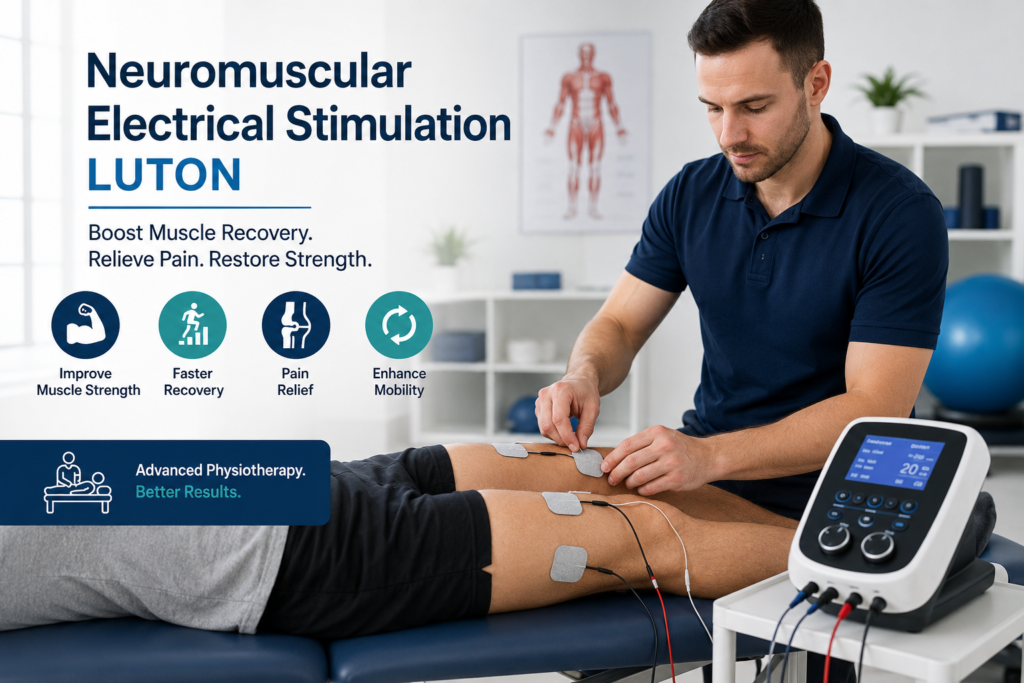
Neuromuscular Electrical Stimulation (NMES) is a physiotherapy technique that uses controlled electrical impulses to stimulate nerves and muscles. Small adhesive electrodes are placed on the skin over targeted muscles. These impulses trigger muscle contractions similar to those produced naturally by the nervous system.
The purpose of NMES is to:
- Restore muscle strength
- Prevent muscle wasting
- Improve circulation
- Reduce pain
- Enhance rehabilitation outcomes
- Improve muscle coordination
Unlike medications, NMES works by activating muscles directly, making it an excellent complement to exercise-based rehabilitation.
How Does NMES Therapy Work?
During NMES therapy in Luton, a physiotherapist carefully positions electrodes on the affected muscle group. A specialized electrical stimulation device sends gentle electrical impulses that cause the muscles to contract and relax repeatedly.
The treatment is fully adjustable according to:
- Your condition
- Pain tolerance
- Rehabilitation goals
- Muscle strength
- Stage of recovery
Sessions generally last between 20 and 40 minutes and are often combined with therapeutic exercises for optimal results.
Benefits of Neuromuscular Electrical Stimulation
NMES has become increasingly popular because of its wide range of clinical benefits.
Improves Muscle Strength
After surgery or injury, muscles can weaken quickly due to inactivity. Electrical stimulation activates muscles even when normal movement is limited, helping preserve and rebuild strength.
Speeds Up Recovery
Stimulating muscles encourages healthy movement patterns and increases blood flow, allowing nutrients and oxygen to reach damaged tissues more efficiently.
Prevents Muscle Atrophy
Following knee surgery, fractures, or prolonged immobilization, muscles begin shrinking from lack of use. NMES helps maintain muscle activity until regular exercise becomes possible.
Supports Pain Management
Many patients undergoing Pain relief therapy in Luton report reduced discomfort after electrical stimulation sessions. The treatment may help interrupt pain signals while encouraging the body’s natural healing mechanisms.
Improves Muscle Coordination
Patients recovering from neurological conditions often struggle with proper muscle activation. NMES helps retrain muscles and improve movement patterns.
Enhances Functional Mobility
As muscle strength improves, daily activities such as walking, climbing stairs, standing, and exercising become easier.
Conditions That Can Benefit from NMES
A physiotherapist may recommend Electrical muscle stimulation in Luton for a variety of conditions, including:
- Sports injuries
- Knee ligament injuries
- ACL rehabilitation
- Muscle weakness
- Hip replacement recovery
- Knee replacement rehabilitation
- Shoulder injuries
- Back pain
- Stroke rehabilitation
- Neurological disorders
- Tendon injuries
- Muscle strains
- Joint instability
- Post-operative recovery
Each treatment programme is tailored to the individual’s diagnosis and rehabilitation goals.
NMES for Sports Injury Recovery
Athletes frequently use NMES to maintain strength during recovery and accelerate their return to activity.
As part of Sports physiotherapy Luton, NMES can help:
- Reduce muscle loss after injury
- Maintain muscle activation
- Improve muscle endurance
- Speed up return-to-sport rehabilitation
- Support injury prevention programmes
Because athletes often require rapid yet safe recovery, combining NMES with physiotherapy exercises produces excellent outcomes.
The Treatment Process
Understanding what happens during treatment can help patients feel more comfortable.
Initial Assessment
A qualified physiotherapist performs a detailed assessment to evaluate:
- Medical history
- Current symptoms
- Muscle strength
- Joint mobility
- Functional limitations
- Rehabilitation goals
This ensures NMES is appropriate for your condition.
Personalized Treatment Plan
Every patient receives a customized programme based on:
- Injury severity
- Recovery stage
- Activity level
- Age
- Overall health
The physiotherapist determines the most suitable electrical stimulation settings for effective treatment.
NMES Application
Electrodes are placed over the target muscles.
During treatment:
- Gentle electrical pulses activate muscles.
- Contractions are controlled and comfortable.
- Intensity is adjusted throughout the session.
- Patients remain relaxed while muscles work.
Rehabilitation Exercises
NMES is most effective when combined with strengthening exercises, stretching, mobility work, and functional rehabilitation.
This combination promotes long-term recovery rather than temporary symptom relief.
Is NMES Painful?
One of the most common concerns patients have is whether electrical stimulation hurts.
The answer is generally no.
Most people describe the sensation as:
- Gentle tingling
- Mild tapping
- Rhythmic muscle contractions
The intensity is gradually increased based on individual comfort, ensuring the treatment remains safe and tolerable.
Who Is a Good Candidate?
NMES may be recommended for patients experiencing:
- Muscle weakness
- Reduced mobility
- Sports injuries
- Post-surgical recovery
- Chronic musculoskeletal pain
- Neurological rehabilitation
- Muscle imbalance
- Joint instability
A qualified physiotherapist will determine whether NMES is appropriate during your initial assessment.
When NMES May Not Be Suitable
Although highly effective, NMES is not suitable for everyone.
It may not be recommended for individuals with:
- Cardiac pacemakers
- Certain implanted electrical devices
- Pregnancy (over specific areas)
- Active infections
- Open wounds
- Certain cardiac conditions
Always discuss your medical history with your physiotherapist before beginning treatment.
Why Combine NMES with Physiotherapy?
While electrical stimulation provides excellent muscle activation, recovery is most successful when combined with a comprehensive physiotherapy programme.
At a trusted Physiotherapy Luton clinic, your rehabilitation may also include:
- Manual therapy
- Exercise rehabilitation
- Strength training
- Balance exercises
- Stretching programmes
- Posture correction
- Functional movement retraining
- Education on injury prevention
Together, these treatments address both the symptoms and the underlying cause of your condition.
Choosing the Right Rehabilitation Clinic
Selecting an experienced Rehabilitation clinic in Luton is essential for achieving the best possible outcomes.
Look for a clinic that offers:
- Experienced physiotherapists
- Individual treatment plans
- Modern rehabilitation equipment
- Evidence-based therapies
- Sports rehabilitation expertise
- Friendly patient-centred care
- Ongoing progress monitoring
A personalized approach ensures treatment evolves as your recovery progresses.
Tips to Maximise Recovery
Patients can improve rehabilitation outcomes by:
- Attending every treatment session
- Performing prescribed home exercises
- Staying physically active within recommended limits
- Following physiotherapy advice
- Maintaining proper hydration
- Eating a balanced, protein-rich diet
- Getting adequate sleep
- Reporting any changes in symptoms
Consistency is often the key to successful recovery.
Why Choose Reviva Physio & Rehab?
At Reviva Physio & Rehab, patient care is focused on achieving long-term recovery through evidence-based physiotherapy techniques.
The clinic provides comprehensive rehabilitation services designed to:
- Reduce pain
- Restore muscle strength
- Improve mobility
- Prevent recurring injuries
- Support post-surgical recovery
- Enhance athletic performance
By combining advanced NMES technology with personalized rehabilitation programmes, patients receive treatment tailored to their individual needs.
For appointments or further information, contact Reviva Physio & Rehab at +44 1582 292678.
Conclusion
Neuromuscular electrical stimulation is a valuable tool in modern physiotherapy, helping patients regain strength, improve mobility, and recover more efficiently from injuries and surgery. Whether you are dealing with muscle weakness, sports injuries, or post-operative rehabilitation, Neuromuscular electrical stimulation in Luton offers a safe, clinically supported approach to recovery.
When combined with expert physiotherapy, exercise, and personalized rehabilitation plans, NMES can significantly improve functional outcomes and help you return to your daily activities with greater confidence.
Frequently Asked Questions (FAQs)
What is Neuromuscular Electrical Stimulation (NMES)?
NMES is a physiotherapy treatment that uses controlled electrical impulses to stimulate muscles, helping improve strength, circulation, and recovery after injury or surgery.
Is NMES therapy safe?
Yes. When administered by a qualified physiotherapist, NMES is considered a safe and effective treatment for many musculoskeletal and neurological conditions.
How long does an NMES session last?
Most sessions last between 20 and 40 minutes, depending on your treatment plan and rehabilitation goals.
Does NMES hurt?
Most patients experience only a gentle tingling sensation and comfortable muscle contractions. The intensity is adjusted to suit individual comfort levels.
Can athletes benefit from NMES?
Absolutely. NMES is commonly used in sports physiotherapy to improve muscle activation, prevent muscle loss during recovery, and support a quicker return to sport.
How many sessions will I need?
The number of sessions varies depending on your condition, injury severity, and rehabilitation goals. Your physiotherapist will create a personalized treatment plan after your assessment.
Can NMES replace physiotherapy exercises?
No. NMES works best alongside a structured physiotherapy programme that includes strengthening, stretching, and functional exercises.
How can I book an appointment at Reviva Physio & Rehab?
To learn more about NMES treatment or schedule an assessment, contact Reviva Physio & Rehab on +44 1582 292678.