

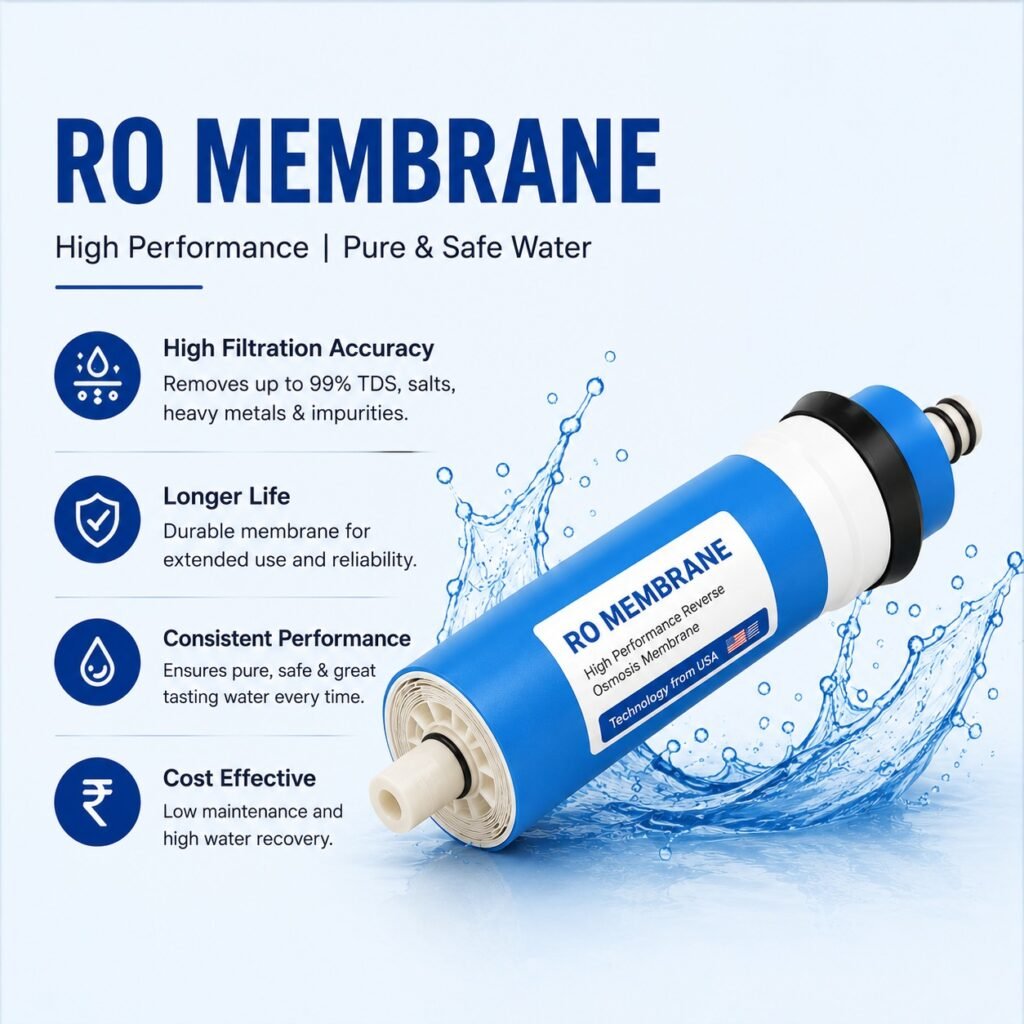

Clean drinking water is essential for a healthy life, and one of the most important components responsible for delivering pure water is the RO membrane. Whether you use a domestic RO purifier or an industrial water treatment system, the membrane is the core technology that removes harmful contaminants and ensures safe, great-tasting water.
What is an RO Membrane?
An RO (Reverse Osmosis) membrane is a semi-permeable filter designed to remove dissolved salts, heavy metals, bacteria, viruses, pesticides, and other impurities from water. It works by allowing only water molecules to pass through while blocking unwanted contaminants.
This advanced filtration process can remove up to 99% of dissolved impurities, making it one of the most effective water purification technologies available today.
How Does an RO Membrane Work?
The RO membrane uses water pressure to force untreated water through microscopic pores. These pores are so small that only pure water molecules can pass through. Contaminants such as lead, arsenic, fluoride, nitrates, and harmful microorganisms are rejected and flushed away as wastewater.
The result is clean, safe, and healthy drinking water.
Benefits of an RO Membrane
1. Removes Harmful Contaminants
RO membranes effectively remove dissolved salts, heavy metals, bacteria, viruses, pesticides, and chemicals that may affect your health.
2. Improves Water Taste
By reducing chlorine, dissolved minerals, and impurities, RO water tastes fresher and cleaner.
3. Protects Your Family
Pure drinking water helps reduce the risk of waterborne diseases and provides peace of mind for your family.
4. Extends the Life of Your Water Purifier
A high-quality RO membrane improves filtration efficiency and helps other purifier components perform better.
Signs Your RO Membrane Needs Replacement
An RO membrane does not last forever. You may need to replace it if you notice:
- Reduced water flow
- Poor taste or odor
- Higher TDS levels in purified water
- Frequent purifier servicing
- Membrane usage exceeding the manufacturer’s recommended life (typically 12–24 months, depending on water quality and usage)
Tips to Increase RO Membrane Life
- Replace sediment and carbon filters on time.
- Use the purifier regularly to prevent clogging.
- Service your RO system periodically.
- Avoid using extremely dirty or muddy water without proper pre-filtration.
- Monitor the TDS level of purified water regularly.
Choosing the Right RO Membrane
When selecting an RO membrane, consider:
- Compatibility with your RO purifier
- Water TDS level
- Daily water consumption
- Membrane capacity (50 GPD, 75 GPD, 100 GPD, etc.)
- Brand quality and certification
Investing in a genuine, high-quality membrane ensures better purification performance and longer service life.
Final Thoughts
The RO membrane is the most critical component of any reverse osmosis water purifier. Regular maintenance and timely replacement ensure consistent water quality, improved taste, and better protection against harmful contaminants. If your purifier is producing less water or the water quality has declined, checking the RO membrane should be your first step toward restoring optimal performance.