

Every successful business invests in infrastructure that improves employee well-being, enhances customer experience, and supports operational efficiency. One of the most overlooked yet essential investments is a reliable drinking water system. Clean, chilled, and hygienic drinking water is no longer just a convenience—it is a necessity for modern workplaces.
Traditional bottled water dispensers have served offices and institutions for decades, but they also bring recurring costs, plastic waste, storage issues, and the inconvenience of replacing heavy water jars. As businesses become more focused on sustainability and long-term value, the RO water dispenser with cooling has emerged as the preferred solution.
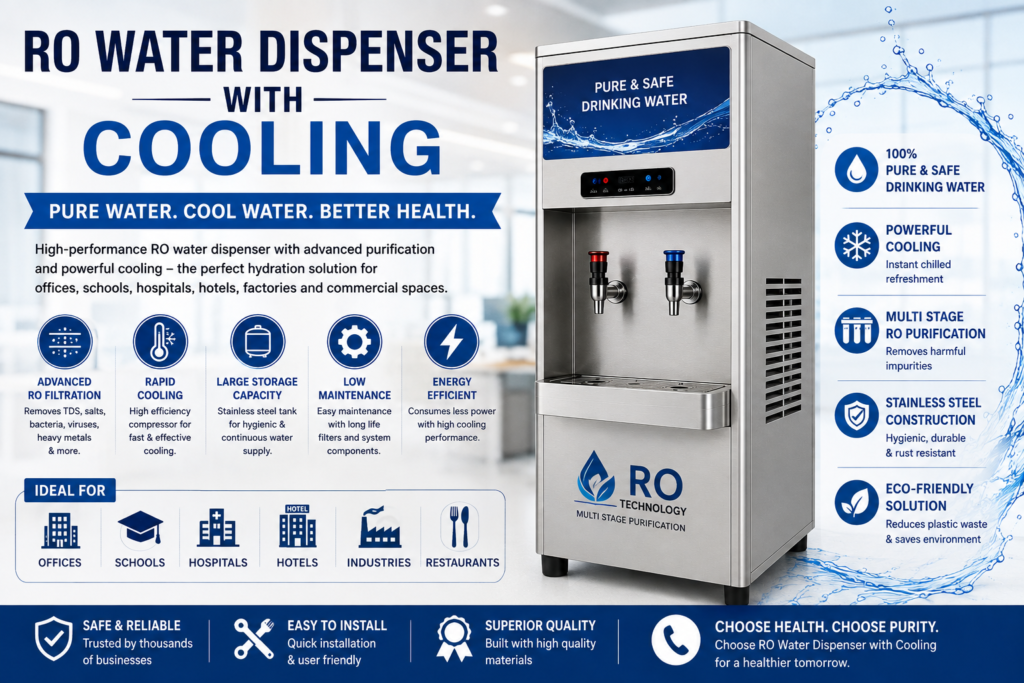
An RO water dispenser combines advanced Reverse Osmosis purification with an integrated cooling system, providing a continuous supply of purified and chilled drinking water directly from the main water source. It is an ideal choice for offices, schools, hospitals, hotels, factories, restaurants, and public buildings that require dependable hydration throughout the day.
This guide explains the technology, advantages, applications, buying considerations, maintenance practices, and future trends of RO water dispensers with cooling.
What Is an RO Water Dispenser with Cooling?
A RO water dispenser with cooling is a commercial drinking water appliance designed to purify and cool water within a single integrated unit. Instead of depending on bottled water, the dispenser connects directly to the municipal or treated water supply.
The system performs two primary functions:
- Removes impurities through multi-stage RO purification.
- Delivers chilled drinking water instantly through an efficient refrigeration system.
This integrated approach provides better hygiene, continuous water availability, and lower operating costs than conventional water dispensers.
Why Clean Drinking Water Matters in the Workplace
Hydration is closely connected to employee health, concentration, and productivity. Even mild dehydration can contribute to fatigue, headaches, reduced focus, and lower workplace performance.
For customer-facing businesses, providing purified drinking water also creates a positive impression. Visitors naturally associate clean facilities with professionalism and quality service.
A reliable RO water dispenser benefits everyone:
- Employees remain hydrated during working hours.
- Customers enjoy safe drinking water while visiting.
- Students receive healthier hydration at school.
- Patients and healthcare staff benefit from improved hygiene.
- Industrial workers stay refreshed during physically demanding shifts.
Understanding Reverse Osmosis Technology
Reverse Osmosis is one of the most effective water purification methods available today. It removes dissolved impurities at a microscopic level using pressure and a semi-permeable membrane.
Stage 1: Sediment Filter
Incoming water first passes through a sediment filter that captures sand, rust, dust, and suspended particles. This protects the remaining filtration system.
Stage 2: Activated Carbon Filter
Activated carbon removes chlorine, unpleasant odors, bad taste, and organic compounds that commonly affect municipal water quality.
Stage 3: RO Membrane
The RO membrane removes:
- Dissolved salts
- Heavy metals
- Fluoride
- Bacteria
- Viruses
- Harmful chemicals
This stage produces highly purified drinking water suitable for commercial consumption.
Stage 4: Hygienic Storage
Purified water is stored inside a food-grade stainless steel tank that helps preserve freshness while preventing contamination.
Stage 5: Instant Cooling
A powerful compressor cools the purified water, ensuring refreshing chilled water is available throughout the day.
Top Benefits of an RO Water Dispenser with Cooling
1. Continuous Access to Purified Water
Unlike bottled dispensers, RO systems never depend on external water deliveries. As long as the water supply is available, the dispenser continuously produces purified drinking water.
This eliminates interruptions caused by empty bottles or delayed deliveries.
2. Better Water Quality
Water quality varies significantly across different regions. Municipal water may contain chlorine, sediments, dissolved minerals, and contaminants that affect taste and safety.
An RO water dispenser improves water quality by removing impurities while delivering cleaner, better-tasting drinking water.
3. Lower Long-Term Expenses
Businesses often underestimate how much they spend on bottled water over several years.
Common recurring expenses include:
- Water jar purchases
- Delivery charges
- Storage space
- Manual bottle replacement
- Transportation costs
An RO dispenser converts these recurring expenses into a more economical long-term solution.
4. Superior Hygiene
Integrated purification reduces manual handling and minimizes contamination risks.
Additional hygienic features include:
- Stainless steel water tanks
- Food-grade pipelines
- Enclosed purification system
- Easy-to-clean dispensing area
These features make RO dispensers particularly valuable in hospitals and food-service environments.
5. Energy-Efficient Cooling
Modern refrigeration systems cool water quickly while consuming less electricity than older commercial cooling equipment.
Efficient insulation also helps maintain water temperature with reduced power consumption.
6. Environmentally Friendly
Switching from bottled water significantly reduces plastic waste and transportation emissions.
Organizations supporting reusable water bottles can further strengthen their sustainability initiatives.
7. Improved Employee Satisfaction
Providing chilled purified drinking water demonstrates that an employer values employee comfort and wellness.
Small workplace improvements often contribute to higher overall satisfaction and morale.
8. Professional Appearance
A modern stainless steel dispenser complements reception areas, conference rooms, cafeterias, hospitals, hotels, and educational institutions.
Its clean appearance reinforces a professional brand image.
Applications Across Different Industries
Corporate Offices
Office environments require reliable hydration for employees, clients, and meeting rooms. An RO dispenser provides continuous purified water without administrative effort.
Schools and Universities
Educational campuses serve hundreds of students daily. High-capacity dispensers ensure safe drinking water remains available during classes and break periods.
Hospitals and Healthcare Facilities
Healthcare institutions prioritize hygiene above everything else. Purified drinking water supports patients, visitors, and medical professionals while maintaining strict cleanliness standards.
Hotels and Restaurants
Hospitality businesses benefit from chilled purified water for guest service and kitchen operations, improving customer experience and food quality.
Manufacturing Industries
Factories often operate multiple shifts with large workforces. Heavy-duty RO dispensers provide uninterrupted hydration during demanding work schedules.
Shopping Malls and Public Buildings
Public facilities require dependable water systems capable of serving high visitor traffic throughout the day.
Choosing the Right RO Water Dispenser
Selecting the correct model depends on several practical factors.
Daily User Capacity
Estimate the number of people using the dispenser each day.
| Daily Users | Recommended Capacity |
|---|---|
| 10–20 | 20 Litres |
| 20–40 | 40 Litres |
| 40–80 | 60 Litres |
| 80–150 | 80–100 Litres |
| 150+ | 120+ Litres |
Choosing a slightly larger capacity helps maintain consistent cooling during peak demand.
Water Quality
Locations with high TDS or hard water require efficient RO membranes capable of handling challenging water conditions.
Cooling Output
High-footfall commercial environments should prioritize stronger cooling performance to prevent waiting times during busy hours.
Stainless Steel Construction
Food-grade stainless steel offers:
- Corrosion resistance
- Better hygiene
- Longer lifespan
- Easier cleaning
- Premium appearance
Service Support
Reliable manufacturers provide replacement filters, technical servicing, spare parts, and warranty coverage that minimize operational downtime.
RO Water Dispenser vs Bottled Water Dispenser
| Feature | RO Water Dispenser | Bottled Water Dispenser |
|---|---|---|
| Water Source | Direct connection | Water jars |
| Purification | Built-in RO | External |
| Water Availability | Continuous | Limited |
| Plastic Waste | Very Low | High |
| Running Cost | Lower | Higher |
| Storage Space | Not Required | Required |
| Hygiene | Excellent | Moderate |
For businesses with regular water consumption, integrated RO systems provide significantly better long-term value.
Installation Checklist
Before installation, verify that the location provides:
- Continuous water connection
- Standard electrical outlet
- Drainage for RO reject water
- Adequate ventilation
- Easy maintenance access
Professional installation ensures optimal purification efficiency and cooling performance.
Maintenance Tips
Routine maintenance protects water quality and extends equipment life.
Replace Filters
Sediment and carbon filters generally require replacement every six to twelve months depending on water quality and usage.
Inspect the RO Membrane
The membrane should be checked regularly to maintain effective removal of dissolved contaminants.
Sanitize the Water Tank
Periodic cleaning prevents bacterial growth and preserves hygienic drinking water.
Service the Compressor
Regular inspection of cooling components improves efficiency while reducing electricity consumption.
Preventive maintenance is considerably more economical than emergency repairs.
Sustainability and Corporate Responsibility
Modern organizations are increasingly measured by their environmental practices. Installing an RO water dispenser contributes to sustainability through:
- Reduced plastic bottle usage
- Lower transportation emissions
- Minimal packaging waste
- Support for reusable bottles
- Long equipment lifespan
These benefits align well with ESG initiatives and green workplace certifications.
Common Buying Mistakes
Avoid these frequent purchasing errors:
Choosing the Cheapest Model
Lower-cost machines may use inferior compressors, poor insulation, or low-quality components that increase maintenance expenses later.
Ignoring User Capacity
Insufficient storage leads to water shortages during peak usage periods.
Overlooking After-Sales Service
Reliable technical support is essential for uninterrupted commercial operation.
Selecting Non-Stainless Materials
Food-grade stainless steel provides superior hygiene and durability for long-term commercial use.
Future Trends in Commercial Hydration
The drinking water industry continues evolving through smarter technologies, including:
- Touch-free dispensing
- Digital temperature displays
- Smart filter replacement reminders
- IoT-based maintenance monitoring
- Energy-saving operating modes
- Antimicrobial dispensing surfaces
These innovations improve both hygiene and operational efficiency for commercial users.
Why an RO Water Dispenser Is a Smart Investment
Every infrastructure investment should deliver measurable value. An RO water dispenser with cooling offers benefits across multiple business priorities:
- Healthier employees
- Better customer experience
- Reduced operating expenses
- Continuous purified water
- Improved workplace hygiene
- Environmental sustainability
Rather than viewing drinking water as a recurring expense, businesses can transform it into a long-term operational asset.
Conclusion
An RO water dispenser with cooling represents the future of commercial drinking water solutions. By combining advanced purification with efficient cooling, it provides safe, hygienic, and refreshing drinking water whenever needed.
From offices and schools to hospitals, hotels, factories, and public institutions, these systems eliminate the limitations of bottled water while reducing costs, improving hygiene, and supporting sustainable business practices. Investing in a high-quality RO water dispenser is not simply about providing drinking water—it is about creating a healthier, more productive, and environmentally responsible workplace for everyone.