

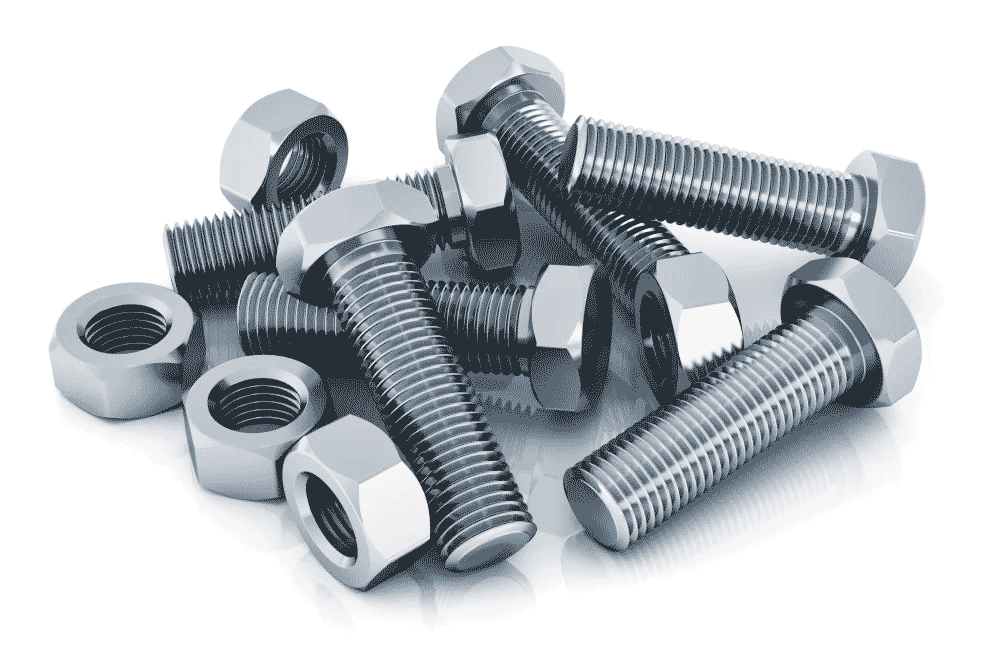

Choosing between 304 and 316 stainless steel fasteners is a critical decision for any project. This choice directly impacts the assembly’s longevity, reliability, and overall cost-effectiveness. Understanding the key differences between these two popular grades is essential for engineers, procurement specialists, and builders across USA, UK, Australia, and Europe.
Chemical Composition: The Core Difference
The primary difference between 304 and 316 stainless steel fasteners lies in their chemical composition . This composition dictates their performance in various environments.
Grade 304 (A2) Stainless Steel
Grade 304, also known as A2 stainless steel, is considered a “general purpose” alloy . Its composition is approximately 18% chromium and 8% nickel . It does not contain molybdenum. This material offers excellent oxidation resistance in standard atmospheric conditions, making it ideal for many applications . A2 stainless steel fasteners are widely used in the food industry, automotive parts, and general construction . Its cost-effectiveness makes it a popular choice for wholesale fasteners and bulk fastener orders .
Grade 316 (A4) Stainless Steel
Grade 316, or A4 stainless steel, is an upgraded version of 304. While it contains similar levels of chromium and nickel, its key differentiating factor is the addition of 2% to 3% molybdenum . This small addition fundamentally enhances the material’s resistance to chlorides and other harsh chemicals . Consequently, A4 stainless steel is often referred to as marine grade fasteners due to its superior performance in saltwater environments . Its use is prevalent in shipbuilding, coastal construction, and chemical processing plants .
Comparing Mechanical Properties and Strength
Both 304 and 316 stainless steel fasteners have good mechanical properties, but subtle differences exist. According to ISO 3506 standards, 304 (A2) stainless steel often exhibits slightly higher tensile and yield strength than 316 (A4) under standard test conditions . However, the difference is minimal and often not the deciding factor for most applications.
A significant distinction is seen in temperature resistance. 316 stainless steel demonstrates superior stability at both high and low temperatures, maintaining its structural integrity in extreme conditions where 304 may begin to degrade . In terms of hardness, both grades are softer than martensitic stainless steels like 410. However, there are Class 80 versions available in 316 for applications requiring higher strength .
It is crucial to note that neither 304 nor 316 can be hardened via heat treatment, unlike 400-series stainless steels . The choice between 304 and 316 for custom fasteners often comes down to environmental resilience rather than a need for incremental strength gains. A custom bolt manufacturer can guide you on the specific mechanical properties required for your engineered fasteners.
Corrosion Resistance: The Deciding Factor
Corrosion resistance is the most critical factor distinguishing 304 from 316 fasteners. While both are highly resistant to corrosion, their performance diverges in chloride-rich environments.
The Performance of 304 Fasteners
304 stainless steel provides a “very good” level of corrosion resistance for general use . It is suitable for applications exposed to moisture, freshwater, and many chemicals . It is an excellent choice for construction fasteners supplier projects like deck boards, fencing, and railings away from the coast . However, its resistance to chloride ions (salt) is limited. In coastal regions like Miami, Los Angeles, or Sydney, 304 fasteners are prone to pitting and crevice corrosion . This can lead to premature failure in infrastructure fasteners and heavy duty fasteners used in these zones.
The Superiority of 316 Fasteners
The addition of molybdenum in 316 stainless steel makes it the premier choice for corrosion resistant fasteners in harsh settings. Its resistance to pitting and crevice corrosion is significantly higher, especially against chlorides . This characteristic makes 316 the standard for marine grade fasteners, used in docks, piers, marinas, and other saltwater-adjacent projects . It is also the preferred material in applications involving harsh chemicals, such as in chemical plants, or in de-icing salt environments common in cities like New York or Chicago. A skilled precision fastener manufacturer often recommends 316 for any project near the ocean or in highly polluted industrial atmospheres .
Applications for Each Grade
The selection between 304 and 316 is dictated by the application’s environment .
Ideal Applications for 304 Stainless Steel Fasteners
-
General construction in inland or protected environments.
-
Automotive components not requiring chloride resistance.
-
Food processing and dairy equipment .
-
Interior architectural applications and furniture.
-
Projects where a cost-effective but durable solution is needed.
A custom fastener supplier can provide 304 fasteners in various forms, from hex bolts to machine screws, for these standard applications. This material is perfect for many industrial bolts and nuts not exposed to severe corrosive elements.
Ideal Applications for 316 Stainless Steel Fasteners
-
Marine and coastal constructions like docks, piers, and shipbuilding .
-
Chemical and pharmaceutical processing equipment .
-
Infrastructure near areas with high pollution or de-icing salts.
-
Aerospace and medical devices requiring high corrosion resistance.
-
Fasteners for pools, spas, and wastewater treatment plants .
For such demanding applications, a custom nut manufacturer and bolt manufacturer can supply bespoke fasteners and custom metal components in 316 to ensure long-term performance. Aerospace fasteners manufacturer and automotive fasteners manufacturer often specify 316 for components needing extreme durability.
Cost Comparison
316 stainless steel fasteners are noticeably more expensive than their 304 counterparts. This cost difference is driven by the higher nickel content and the addition of molybdenum . The decision, therefore, becomes a matter of economic justification. If the application is in a mild environment where the risk of corrosion is low, the lower-cost 304 fasteners are the most economical choice . However, in severe environments where 304 would fail prematurely, the higher initial cost of 316 is justified by longer service life, reduced maintenance, and avoidance of catastrophic failure. For export quality fasteners supplied to demanding regions, 316 is often specified for its reliability.
Conclusion
In summary, the choice between 304 and 316 stainless steel fasteners is a critical engineering decision. 304 (A2) fasteners offer excellent corrosion resistance for general-purpose applications at a lower cost, making them ideal for most indoor and mild outdoor projects . 316 (A4) fasteners, with their molybdenum content, are the superior corrosion resistant fasteners for harsh environments, particularly where exposure to salt, chlorides, or strong chemicals is a concern . The marine grade fasteners 316 grade is the definitive choice for coastal or offshore projects to prevent pitting and ensure longevity .
For your specific project, whether it requires standard components or custom fastening solutions, an experienced industrial fastener manufacturer can provide expert guidance. Engaging a custom fastener manufacturing company early in your design process ensures you select the correct material, balancing cost with performance for your precision fastening solutions. A fastener supplier India or a fastener exporter India may offer both materials at competitive prices, but ensuring they meet international standards like ASTM, DIN, or ISO is paramount. Ultimately, the right choice secures your assembly against failure and optimizes its life-cycle cost.