

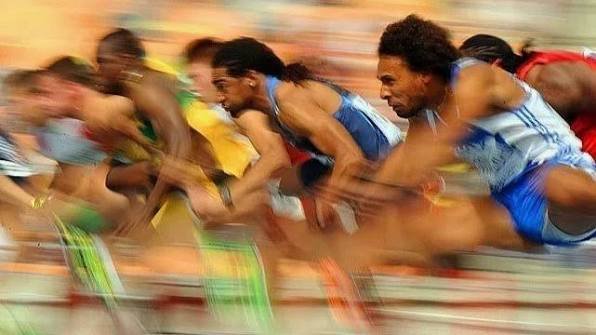

A great sports photograph can freeze a moment that lasts less than a second and turn it into a memory that survives for years.
Think about the image of an athlete celebrating after a career-changing victory, a runner collapsing at the finish line, a goalkeeper making an impossible save, or a young player sitting quietly after a painful defeat. The photograph does more than show what happened. It tells us how the moment felt.
That is why sports photography has become much more important in the digital era.
India’s sports audience is now deeply connected to digital platforms. Google reports that 90% of Indian sports fans consume sports content digitally, while 50% say they began following a sport after encountering related digital content.
Photography sits at the centre of that change. A single image can move from a stadium to Instagram, a news website, a team account, a newspaper, a brand campaign and thousands of personal posts within minutes.
The photographer is no longer simply documenting a match. Increasingly, they are helping shape the story people remember.
How Digital Media Changed Sports Photography
Traditional sports photography was built around newspapers, magazines, television broadcasts and agency distribution. Photographers had to capture decisive moments, edit their work and deliver images quickly to newsrooms.
The digital era has dramatically shortened that cycle.
Today, an image captured from the sideline can be edited and published while the match is still taking place. A team can use it on social media within minutes. A sponsor can turn it into branded content. Fans can share it globally before the photographer has even left the venue.
India’s mobile-first sports audience makes this particularly significant. Comscore data reported that 118 million Indians accessed sports content digitally in June 2025, with nearly 90% doing so exclusively through mobile devices.
This has changed what makes a sports photograph successful.
A technically perfect photograph is valuable, but today’s strongest images often need something more: emotion, context, identity and a clear visual story.
A photograph of a batsman hitting a six may be impressive. A photograph showing the same batsman looking toward the stands after reaching a milestone can tell a much deeper story.
From Match Coverage to Visual Storytelling
Sports photography used to focus heavily on the action.
Visual storytelling goes further.
A photographer covering a major tournament may now build an entire visual narrative around an athlete or team. The final gallery might include training sessions, travel, quiet moments in the dressing room, fans waiting outside the stadium, moments of frustration and celebrations after the result.
This creates a fuller picture of sport.
Consider a young Indian athlete preparing for an international championship. One photograph might show the athlete competing. Another could show them tying their shoes before training. A third could capture their coach giving instructions. A fourth might show their family watching from the stands.
None of those images alone explains the entire experience.
Together, they tell a story.
This approach is especially powerful because digital audiences increasingly consume sports beyond the live event. Google reports that Indian fans spend more time engaging with non-live sports content than with live events, while 42% continue interacting with sports content several times a week after the season ends.
That creates demand for photographs that remain interesting after the final whistle.

Why Social Media Made Images More Powerful
Social media changed the relationship between sports photographers and audiences.
Previously, the photographer’s work was often seen through an editor’s selection. Now photographers can build their own audiences.
Instagram, YouTube, personal websites and other platforms allow photographers to publish portfolios, behind-the-scenes material and photo essays directly.
The rise of visual-first platforms has also increased the commercial value of strong sports imagery.
Meta reported in 2026 that sports was among India’s highly engaged Reels categories, with 38% of users engaging with sports-related Reels content in its cited research.
Photography has adapted accordingly.
A photographer might publish a dramatic still image from a match, then follow it with a short behind-the-scenes video showing how the photograph was captured.
That combination makes the photographer part of the story.
The audience becomes interested not only in the athlete but also in the person behind the camera.
The Business Opportunities Behind Sports Photography
The growth of sports photography is not simply an artistic trend. It is becoming a broader professional opportunity.
Sports organisations need photographs for websites, social media, press releases, player profiles and promotional campaigns.
Athletes need personal-brand imagery.
Sponsors need campaign material.
Media companies need editorial photographs.
Tournament organisers need event coverage.
Even smaller academies and local clubs need high-quality images to communicate their identity.
This has created opportunities for photographers at several levels.
A professional photographer may work for a major sports publication or agency. Another may specialise in athlete branding. Someone else might cover school and university competitions before building a larger portfolio.
The important change is that photographers no longer have to depend entirely on traditional media employment.
They can develop multiple income streams.
For example:
- Match-day photography
- Athlete portrait sessions
- Sports-brand campaigns
- Academy and club photography
- Tournament coverage
- Editorial assignments
- Social media content
- Event photography
- Photo licensing
- Prints and photo books
- Coaching and photography workshops
A photographer who understands both photography and digital marketing can be particularly valuable.
The modern client may not simply ask, “Can you take good photographs?”
They may ask, “Can you give us images that work across Instagram, websites, press coverage and advertising?”
That is a different professional skill set.
The Rise of Athlete Personal Branding
Athletes themselves are becoming media brands.
Fans want to know what athletes do before competitions, how they train, what motivates them and what their lives look like away from competition.
Photography helps create that identity.
A footballer may need professional portraits for sponsorship announcements. A cricketer may want training images for social media. An emerging athlete may need a professional portfolio before approaching sponsors.
The photographer therefore becomes part of the athlete’s communication team.
This is particularly relevant in India, where sports audiences are becoming increasingly fragmented across platforms. Google reports that Indian fans use several channels while consuming sports content, with YouTube, social platforms and other digital destinations playing major roles.
A strong image has the advantage of being adaptable.
The same photograph can appear in a news story, social post, athlete biography, sponsorship deck or campaign.
Technology Is Changing How Photographers Work
Modern sports photography requires much more than owning an expensive camera.
Autofocus technology has improved dramatically. High-speed continuous shooting allows photographers to capture rapid sequences. Better low-light performance helps at indoor venues and night matches.
Long telephoto lenses allow photographers to isolate athletes from crowded backgrounds.
Editing software has also transformed workflow.
A photographer can now transfer, select, edit, caption and distribute images far faster than was possible with traditional film.
Artificial intelligence is beginning to influence the workflow too, particularly in areas such as image organisation, tagging, search and editing assistance.
But technology has not eliminated the photographer’s most important skill: judgement.
A camera can capture hundreds of frames.
It cannot decide which single frame best represents the emotion of a competition.
That remains a human decision.
What Makes a Great Sports Photograph?
The best sports photograph is not necessarily the sharpest one.
It is the one that communicates something.
A useful sports image often contains several elements:
Timing: The photographer catches the decisive instant.
Composition: The athlete, background and surroundings work together visually.
Emotion: The image communicates tension, joy, disappointment or determination.
Context: The viewer understands something about the event.
Light: Natural or artificial light adds atmosphere and depth.
Anticipation: The photographer predicts where the important moment will happen rather than simply reacting to it.
This is why experienced sports photographers often appear remarkably calm during chaotic events.
They are constantly predicting.
They study the sport.
They understand player habits.
They know where celebrations are likely to happen.
They anticipate substitutions, finishes, collisions and emotional reactions.
The camera is only the tool.
Observation is the real skill.
How Beginners Can Start Sports Photography
Someone interested in sports photography does not need to begin at a major international tournament.
Local sport is an excellent training ground.
Start with school competitions, community football, athletics meets, cricket academies or amateur tournaments where photography is permitted.
A beginner should focus on learning rather than buying the biggest lens available.
A practical starting process is:
- Learn shutter speed, aperture and ISO.
- Practise autofocus and continuous shooting.
- Study the sport before photographing it.
- Shoot from safe and permitted positions.
- Review photographs after every event.
- Identify recurring technical problems.
- Build a small, consistent portfolio.
- Learn basic editing and file management.
- Create an online portfolio.
- Approach local clubs and academies professionally.
The first portfolio does not need 500 photographs.
Twenty excellent images are more useful than hundreds of average ones.
Ethics and Responsibility Matter Too
Sports photography carries responsibilities that are sometimes overlooked.
Photographers work around real people experiencing intense emotions.
A player may be injured. A young athlete may be devastated after losing. Families may be celebrating. Fans may be crying.
Not every emotional moment needs to be published.
Professional judgement means understanding the difference between an important image and an intrusive one.
Photographers also need to respect venue rules, athlete privacy, accreditation requirements and copyright.
AI-generated or heavily manipulated imagery creates another challenge.
In journalism especially, photographs should not be altered in ways that misrepresent what actually happened.
Trust is part of the profession.
A visually spectacular image loses value if the audience cannot trust its authenticity.
Common Mistakes Beginners Make
Using too much equipment too early: A complicated kit cannot compensate for weak timing and composition.
Only photographing the action: Some of the strongest images happen before and after competition.
Ignoring the background: A distracting advertisement, pole or spectator can ruin an otherwise excellent photograph.
Shooting everything: Hundreds of frames do not automatically create a strong portfolio.
Forgetting the story: Ask what the viewer should feel or understand after seeing the image.
Ignoring permissions: Always understand venue, league and accreditation rules before shooting professionally.
Over-editing: Excessive sharpening, saturation or artificial effects can make sports photographs look unnatural.
Copying other photographers: Study great work, but develop your own visual approach.
Key Takeaways
- Digital media has made sports photography faster, more accessible and more commercially valuable.
- Indian fans increasingly discover and consume sports through digital platforms.
- Photography now contributes to athlete branding, sponsorship, journalism and fan engagement.
- Visual storytelling goes beyond capturing goals, wickets or finishes; it documents the people and emotions surrounding sport.
- Modern photographers need technical, creative, business and digital-media skills.
- Technology can improve workflow, but human judgement remains central.
- Beginners can build careers by starting with local competitions and developing strong portfolios.
- Ethical photography and respect for athletes are essential for long-term credibility.
Frequently Asked Questions About Sports Photography
Why is sports photography becoming more popular in India?
India’s rapidly expanding digital sports audience has created greater demand for visual content. Fans increasingly encounter sports through social media, websites and video platforms, creating more opportunities for photographs to circulate beyond traditional newspapers and magazines.
What does a sports photographer actually do?
A sports photographer captures competition, athletes, fans, training sessions and important emotional moments. Depending on the assignment, they may also provide portraits, social-media content, event galleries and commercial images.
Do sports photographers need expensive cameras?
Professional equipment can provide advantages, especially in difficult lighting and fast-moving sports, but equipment is not the foundation of good photography. Timing, positioning, composition and knowledge of the sport are equally important.
How can I become a sports photographer in India?
Start by photographing permitted local events, learning camera fundamentals and building a focused portfolio. Then approach clubs, academies, publications, event organisers and athletes with relevant examples of your work.
Can sports photography become a full-time career?
Yes, although income can vary significantly. Photographers can combine editorial work with athlete portraits, commercial campaigns, event coverage, licensing and social-media content to create multiple revenue streams.
Is social media important for sports photographers?
Very much so. A strong social portfolio can help photographers demonstrate their style, attract athletes and teams, build an audience and find commercial opportunities.
What is visual storytelling in sports?
Visual storytelling means using a series of images or carefully chosen photographs to communicate a larger narrative. Instead of showing only the result, it can show preparation, pressure, competition, emotion and recovery.
Sports audiences are also surrounded by a huge variety of online content, and unrelated search terms such as gold365 club can sometimes appear in the same digital environments as sports media. For photographers, however, the valuable opportunity lies in creating authentic sports stories that audiences actively want to follow.
The same applies to terms such as gold365 online which have little connection to the craft itself but illustrate how crowded the online attention economy has become. A photographer therefore needs more than technical ability; they need a clear visual identity that makes their work recognisable.
For some photographers, that may mean specialising in cricket. For others, it could be athletics, football, motorsport, combat sports or grassroots competitions.
The strongest opportunity is not simply to take photographs of sport. It is to understand the people inside those photographs.
A great image can show speed, but an exceptional image shows why the moment mattered. It can reveal the pressure before a race, the silence after defeat, the relief of a comeback or the joy of achieving something an athlete has worked toward for years.
That is why sports photography continues to matter in an era filled with smartphones, instant video and AI tools. Technology can make images easier to create, but it cannot replace the human ability to recognise a meaningful moment.
For the next generation of sports photographers, that human instinct may become their greatest competitive advantage.