

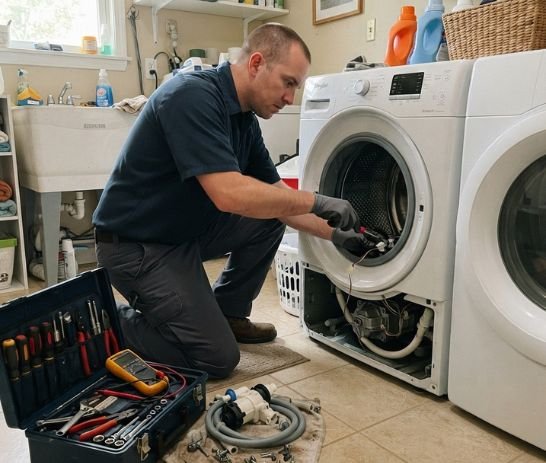

A washing machine that refuses to start even though it has power can be confusing and frustrating. The display may light up, the indicator lights may work, and electricity may reach the appliance, but pressing the start button produces no response. This problem often points to an internal electrical or mechanical fault rather than a complete power failure.
Many homeowners search for solutions when their washing machine is not turning on becomes a daily problem. In many cases, the issue is caused by a faulty door lock, a damaged control board, a defective start switch, or a worn internal component. Understanding these real causes helps you identify the problem early and prevents unnecessary replacement of the appliance.
A washing machine depends on several electrical and safety systems working together before a wash cycle can begin. If even one of these components fails, the machine will not start even though power is available. Knowing how each system works helps you understand what is happening inside the appliance.
Door Lock Problems Prevent the Wash Cycle
Modern washing machines will not begin a cycle unless the door locks securely. This safety feature protects users from opening the machine while the drum is moving. When the locking system fails, the appliance receives power but refuses to start.
Faulty Door Lock Mechanism
A damaged door lock cannot engage properly when the cycle begins. The control system detects the unlocked condition and prevents the machine from operating until the fault is repaired.
Worn Door Latch
The door latch keeps the door tightly closed during washing. After years of use, it may wear out or become misaligned. A worn latch prevents the lock from activating correctly.
Misaligned Door
A slightly misaligned door may not close completely. Even a small gap prevents the safety switch from recognizing that the door is secure, stopping the wash cycle from starting.
Broken Door Lock Switch
The door lock switch sends a signal to the control board after the door locks. If the switch fails, the washing machine believes the door remains open and will not begin washing.
Damaged Door Wiring
Loose or damaged wiring connected to the door lock interrupts communication with the control system. Repairing the wiring restores normal starting operation.
Control Panel and Start Button Faults
The control panel allows users to select wash programs and start the machine. If buttons or electronic controls fail, the appliance may receive power but remain completely unresponsive.
Faulty Start Button
Frequent use can wear out the start button over time. A damaged button fails to send the command needed to begin the wash cycle.
Control Panel Failure
Internal faults inside the control panel may prevent buttons from responding correctly. This affects program selection and stops the washing machine from starting.
Moisture Damage
Water or moisture entering the control panel can damage sensitive electronic circuits. This often causes buttons to stop responding or behave unpredictably.
Loose Electrical Connections
Loose wiring behind the control panel interrupts communication between buttons and internal components. Proper inspection helps identify damaged connections.
Worn User Interface Components
Regular use gradually wears electronic controls. Replacing damaged interface parts restores normal machine operation.
Electronic Control Board Problems
The electronic control board acts as the brain of the washing machine. It controls every function, including filling, spinning, draining, and starting the wash cycle. A faulty board can prevent the appliance from operating even when power is available.
Burnt Electronic Components
Power surges or overheating can damage electronic parts on the control board. Once damaged, the board may fail to send commands to other components.
Communication Failure
The control board constantly communicates with sensors and switches. If communication stops, the machine cannot verify operating conditions and refuses to start.
Damaged Circuit Tracks
Printed circuit tracks may crack or burn over time. Broken circuits interrupt electrical signals required for normal operation.
Software Errors
Some modern washing machines use software to manage washing programs. Internal software faults may prevent the appliance from starting correctly.
Control Board Replacement
When testing confirms severe control board damage, replacement is usually the most effective solution for restoring normal operation.
Power Supply Problems Inside the Machine
Although electricity reaches the washing machine, internal power distribution problems may prevent important components from receiving the required voltage.
Blown Internal Fuse
Some washing machines contain internal protection fuses. If one blows, certain components lose power even though the display remains active.
Damaged Power Cable
The external cable may appear normal while internal wires become damaged. This interrupts stable power delivery during operation.
Loose Internal Wiring
Vibration over time can loosen electrical connectors inside the machine. Loose wiring interrupts communication between important components.
Terminal Connection Problems
Burnt or loose terminal connections reduce electrical flow and prevent the washing machine from starting properly.
Voltage Fluctuations
Frequent voltage changes place stress on electrical components and may damage sensitive circuits responsible for starting the appliance.
Motor and Drive System Faults
The motor must operate correctly before the wash cycle can begin. If motor components fail, the washing machine may receive power but remain inactive.
Worn Carbon Brushes
In machines using brushed motors, carbon brushes wear gradually over time. Once worn beyond their limit, the motor cannot start properly.
Faulty Drive Motor
Internal motor damage prevents drum rotation. The control system may stop the wash cycle from starting to protect other components.
Damaged Motor Capacitor
A faulty capacitor reduces the motor’s ability to start efficiently. This often results in the machine remaining idle after pressing the start button.
Loose Motor Connections
Loose wiring connected to the motor interrupts power delivery. Secure electrical connections help restore proper motor operation.
Overheated Motor
Continuous heavy usage may overheat the motor. Some washing machines delay starting until the motor cools to a safe operating temperature.
Safety Features That Stop the Machine
Modern washing machines include several protective systems designed to prevent damage and improve user safety. When these systems detect abnormal conditions, they stop the appliance from starting.
Child Lock Activated
Many users accidentally activate the child lock feature. This disables control buttons until the lock is turned off through the correct button combination.
Water Level Sensor Fault
The control system monitors water levels before starting certain functions. Faulty sensors may send incorrect information and prevent operation.
Drainage Detection Problems
If the machine detects standing water from a previous cycle, it may refuse to begin another wash until the drainage issue is resolved.
Temperature Sensor Failure
Faulty temperature sensors may send incorrect readings that interrupt normal program operation and prevent startup.
Overload Protection
Some machines include overload protection that temporarily stops operation when excessive load or motor stress is detected.
Conclusion:
A washing machine that has power but refuses to start usually indicates problems with the door lock, control panel, electronic control board, motor, internal wiring, or built-in safety systems. Identifying the real cause early helps prevent further damage and reduces the risk of expensive repairs. Regular maintenance and prompt attention to warning signs also improve the appliance’s long-term reliability.
If simple checks do not solve the problem, professional diagnosis is the safest option because many starting faults involve electrical components that require proper testing. UAE Appliances Repair provides experienced technicians who can accurately identify the fault, repair damaged components, and restore your washing machine to safe and efficient operation.