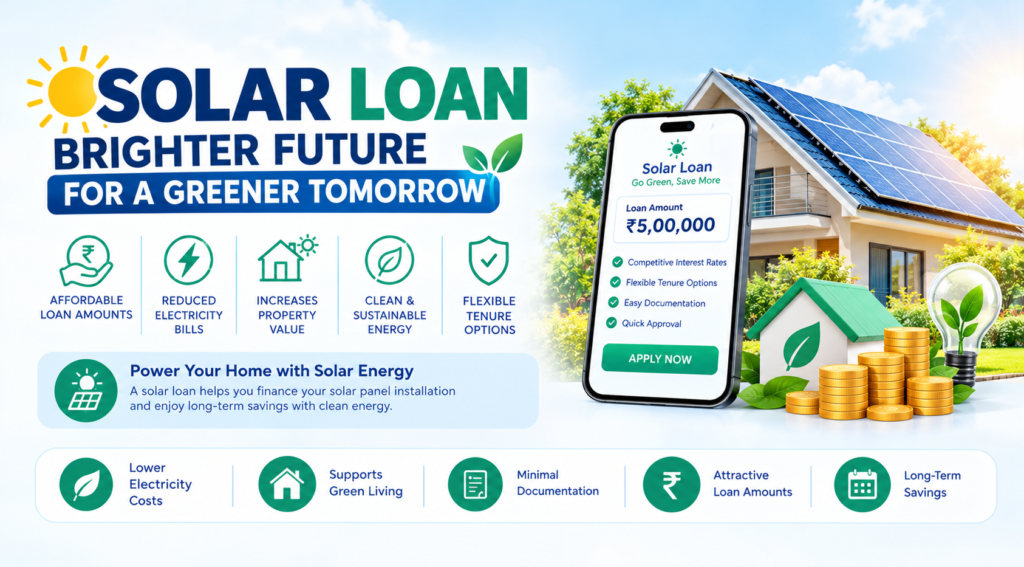

A solar loan is a type of financing that helps individuals, homeowners, and businesses install solar panels without paying the entire cost upfront. With the increasing demand for renewable energy and electricity bill savings, solar energy has become a popular choice in India. A solar loan allows borrowers to purchase and install solar power systems while repaying the borrowed amount through affordable monthly instalments.
Whether you want to install rooftop solar panels at your home or set up a solar system for your business, understanding how solar financing works can help you make an informed financial decision.
What Is a Solar Loan?
A solar loan is a financial product designed to cover the cost of purchasing and installing solar energy equipment. It may be offered by banks, financial institutions, and other eligible lenders, depending on the type of solar project and the borrower’s requirements.
The loan amount can cover expenses such as solar panels, inverters, mounting structures, wiring, installation, and other eligible equipment costs. The availability of financing depends on the lender’s policies, project size, and borrower eligibility.
Individuals planning to install residential rooftop solar systems can also explore government-supported schemes, such as the PM Surya Ghar: Muft Bijli Yojana, subject to the applicable eligibility and subsidy conditions.
How Does a Solar Loan Work in India?
The process of obtaining a solar loan generally involves the following steps:
1. Estimate Your Solar Installation Cost
First, determine the capacity of the solar system you need based on your electricity consumption. Obtain quotations from eligible solar vendors to understand the total installation cost.
2. Check Your Loan Eligibility
Lenders may evaluate your income, credit score, repayment capacity, existing financial obligations, and employment or business details. Some lenders may also assess the project’s technical and financial feasibility.
3. Compare Available Loan Options
Before you apply for solar loan financing, compare interest rates, repayment tenure, processing fees, collateral requirements, and prepayment conditions. Choose a loan that suits your budget and financial circumstances.
4. Submit Your Application
You can explore a solar loan online through eligible lenders’ websites or apply through their branches. Depending on the lender, you may need identity proof, address proof, income documents, bank statements, and solar installation quotations.
5. Receive Approval and Repay the Loan
After reviewing your application, the lender may approve the loan and disburse the amount according to its terms. You then repay the borrowed amount through monthly EMIs over the agreed tenure.
Benefits of Taking a Solar Loan
A solar loan offers several potential benefits:
-
Lower upfront expenses: Install solar panels without paying the full cost immediately.
-
Manageable repayments: Spread eligible installation expenses over a repayment period.
-
Electricity bill savings: Generate solar power and potentially reduce dependence on grid electricity.
-
Access to clean energy: Support renewable energy adoption and reduce your household’s carbon footprint.
-
Flexible financing options: Compare loan amounts, interest rates, and tenures based on lender availability.
Actual savings depend on electricity consumption, system performance, installation costs, applicable tariffs, and maintenance expenses.
Who Can Apply for a Solar Loan?
Eligibility criteria vary by lender. Salaried employees, self-employed individuals, homeowners, and eligible businesses may qualify for suitable solar financing products. Applicants generally need to meet the lender’s income, creditworthiness, documentation, and repayment requirements.
Tips Before Applying for a Solar Loan
Before choosing a loan, calculate the expected EMI and compare it with your estimated electricity bill savings. Check the total interest payable, additional charges, and subsidy eligibility. Remember that government subsidies are subject to scheme rules and are not guaranteed for every installation or financing arrangement.
Conclusion
A solar loan can make renewable energy more accessible by spreading installation costs over time. By comparing lenders, checking eligibility, and understanding repayment terms, you can make a better decision before choosing solar financing. Explore a solar loan online, evaluate the available options, and apply for solar loan financing that matches your needs and repayment capacity.