

What is an RO Filter?
Clean and safe drinking water is essential for maintaining good health. One of the most effective ways to purify water is by using an RO (Reverse Osmosis) filter. RO filters are widely used in homes, offices, schools, hospitals, and industries because they effectively remove harmful impurities, dissolved salts, heavy metals, bacteria, viruses, and unpleasant odors from water.
An RO filter is the heart of an RO water purifier. It works by forcing water through a semi-permeable membrane that removes contaminants while allowing clean water to pass through. This process ensures that the water you drink is safe, healthy, and tastes better.
In this guide, we’ll explore how RO filters work, the different types available, their benefits, maintenance tips, and how to choose the best RO filter for your needs.
How Does an RO Filter Work?
An RO filter uses a Reverse Osmosis membrane with microscopic pores. Water is pushed through this membrane under pressure.
During the purification process:
- Dissolved salts are removed.
- Heavy metals like lead and arsenic are filtered out.
- Harmful bacteria and viruses are reduced.
- Chemicals such as chlorine are eliminated.
- Bad taste and odor are improved.
The purified water is stored in a storage tank, while the rejected impurities are flushed out through the drain line.
Components of an RO Filter System
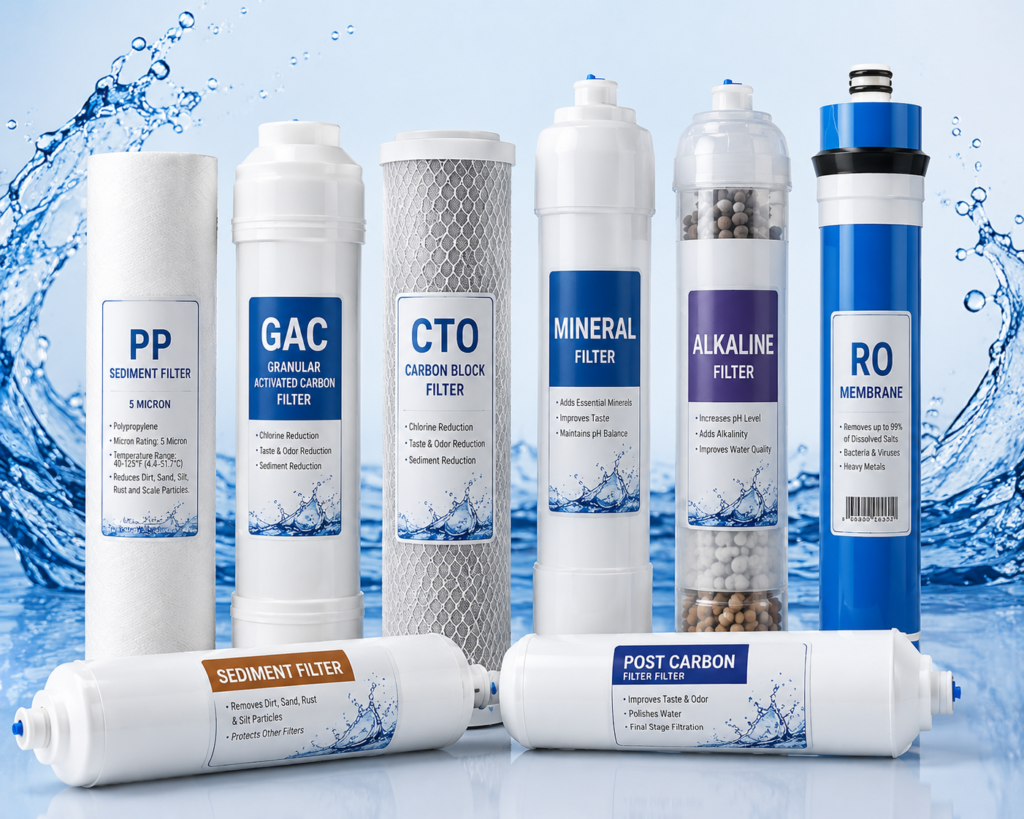
A complete RO purifier usually contains several filtration stages.
1. Sediment Filter
The sediment filter removes:
- Sand
- Dust
- Rust
- Mud
- Large particles
This filter protects the other filters from clogging.
2. Pre Carbon Filter
The carbon filter removes:
- Chlorine
- Bad smell
- Organic chemicals
- Pesticides
It also improves the taste of water.
3. RO Membrane
This is the main filtration stage.
The RO membrane removes:
- TDS
- Heavy metals
- Fluoride
- Nitrates
- Harmful bacteria
- Viruses
4. Post Carbon Filter
This filter provides the final polishing of purified water.
Benefits include:
- Better taste
- Fresh smell
- Improved drinking quality
5. UV Filter (Optional)
Many modern purifiers include UV purification for additional protection against microorganisms.
6. UF Filter (Optional)
The UF filter removes suspended particles and provides extra filtration without electricity.
Types of RO Filters
Domestic RO Filter
Designed for:
- Homes
- Apartments
- Small offices
Capacity:
- 8–15 Litres
Commercial RO Filter
Used in:
- Hotels
- Restaurants
- Hospitals
- Schools
- Factories
Capacity:
- High water output
Industrial RO Filter
Industrial systems are designed for:
- Manufacturing industries
- Pharmaceutical companies
- Food processing
- Chemical industries
Benefits of Using an RO Filter
1. Removes Harmful Contaminants
RO filters effectively remove:
- Lead
- Mercury
- Arsenic
- Fluoride
- Nitrates
- Chlorine
2. Improves Water Taste
RO purification removes unpleasant odor and bad taste, making water fresher and more enjoyable.
3. Reduces Waterborne Diseases
Purified water lowers the risk of illnesses caused by contaminated water.
4. Protects Household Appliances
Low-TDS water helps reduce scale buildup in kettles, coffee machines, and other appliances.
5. Better for Cooking
Using purified water can improve the taste of tea, coffee, soups, and other foods.
6. Environment Friendly
Using an RO purifier reduces dependence on bottled water and helps decrease plastic waste.
Signs Your RO Filter Needs Replacement
Like all filters, RO filters have a limited lifespan. Replacing them on time is essential for maintaining water quality.
Common signs include:
- Slow water flow
- Bad taste
- Unpleasant odor
- High TDS levels
- Noisy purifier
- Frequent servicing
- Reduced storage capacity
How Often Should You Replace an RO Filter?
The replacement schedule depends on water quality and usage.
| Filter | Recommended Replacement |
|---|---|
| Sediment Filter | Every 3–6 Months |
| Carbon Filter | Every 6–12 Months |
| RO Membrane | Every 2–3 Years |
| Post Carbon Filter | Every 12 Months |
| UV Lamp | Every 12 Months |
Regular maintenance ensures consistent water quality.
How to Choose the Best RO Filter
Before purchasing, consider these factors:
Water Quality
Test your water’s TDS level to determine the appropriate filtration system.
Capacity
Choose a purifier based on family size.
- Small family: 8 Litres
- Medium family: 10 Litres
- Large family: 12–15 Litres
Filter Quality
Always choose:
- Food-grade materials
- Certified filters
- Genuine spare parts
Brand Reputation
Purchase filters from trusted manufacturers and authorized dealers.
Warranty
Choose products that include warranty support for peace of mind.
Common Mistakes to Avoid
Avoid these common mistakes:
- Delaying filter replacement
- Buying duplicate filters
- Ignoring water quality
- Choosing only based on price
- Skipping regular servicing
These mistakes can reduce purifier performance and affect water quality.
Maintenance Tips
To keep your RO filter working efficiently:
- Replace filters on schedule.
- Clean the storage tank regularly.
- Check for leaks.
- Monitor TDS levels.
- Schedule annual servicing.
- Use only genuine replacement filters.
Why Choose Genuine RO Filters?
Original RO filters provide:
- Better purification
- Longer lifespan
- Higher flow rate
- Improved taste
- Better customer safety
- Reduced maintenance costs
Although cheaper duplicate filters may seem attractive, they often provide poor filtration and wear out quickly.
Frequently Asked Questions (FAQs)
What is an RO filter?
An RO filter is a water purification component that removes dissolved salts, heavy metals, bacteria, viruses, and other impurities through a semi-permeable membrane.
Is an RO filter suitable for all water?
RO filters are best suited for water with high TDS levels. Water testing is recommended before selecting a purifier.
How long does an RO membrane last?
Most RO membranes last between 2–3 years, depending on water quality and maintenance.
Can I replace the RO filter myself?
Basic filters may be replaced by users, but the RO membrane and internal components should ideally be replaced by a qualified technician.
Why should I use genuine RO filters?
Genuine filters provide reliable purification, better durability, improved taste, and protect the overall performance of your RO system.
Conclusion
An RO filter is one of the most important components of a water purifier, ensuring safe, clean, and great-tasting drinking water. Understanding how it works, choosing the right type, and replacing filters on time are essential for maintaining optimal performance. Whether you need an RO filter for your home, office, or business, investing in high-quality, genuine filters is the best way to protect your family’s health and maximize the lifespan of your water purifier.
Call to Action
Looking for premium-quality RO filters and genuine RO spare parts? Explore a wide range of sediment filters, carbon filters, RO membranes, UV filters, and complete water purification solutions. Choose reliable products that deliver superior performance, long-lasting durability, and safe drinking water for your home or business.