

Holy Thursday stands apart from every other day in the liturgical year.
It is the night of the Last Supper. The night Jesus washed his disciples’ feet. The night he broke bread and said: this is my body. The night the Eucharist was born.
For Catholic and other liturgical churches, the Mass of the Lord’s Supper on Holy Thursday is one of the most emotionally and theologically charged services of the entire year. And the priests clothing vestments worn that evening are an essential part of what makes this liturgy so visually powerful.
This article explains exactly which vestments are worn on Holy Thursday, what each piece means, and why the vestments change during the course of the evening.

What Makes Holy Thursday Liturgically Different From Other Masses?
Holy Thursday, also called Maundy Thursday in some traditions, marks the beginning of the Sacred Triduum, the three-day celebration at the heart of the Christian year. The Triduum encompasses Holy Thursday, Good Friday, and the Easter Vigil on Holy Saturday.
The Mass of the Lord’s Supper on Holy Thursday evening commemorates the institution of the Eucharist at the Last Supper, the washing of the disciples’ feet, and the establishment of the priesthood as Jesus understood it. It is a Mass of profound joy and equally profound solemnity.
The liturgy does not end ordinarily. After Mass, the Blessed Sacrament is transferred to an altar of repose in a solemn procession. And then the altar is stripped bare, leaving the church empty and silent as Good Friday approaches.
Each of these moments calls for specific clergy vestments, and the vestment choices communicate the shifting spiritual meaning of the evening.
Why Do Vestments Play Such an Important Role on Holy Thursday?
Every element of the Holy Thursday liturgy is intentional. The foot washing, the bells, the incense, the specific readings and prayers, all of these are carefully chosen to communicate the theological weight of what is being commemorated.
The priests clothing vestments worn on this evening are part of that intentional visual language. They tell the congregation something about what is happening before the priest says a single word.
What Color Are the Holy Thursday Vestments?
White is the primary liturgical color for Holy Thursday in the Catholic and most other Western liturgical traditions. In some settings, gold is used as an alternative or in combination with white.
This color choice directly reflects the theological meaning of the evening. Holy Thursday is a celebration of the Eucharist, the great gift given by Christ to his Church at the Last Supper. White and gold are the colors of joy, triumph, and the divine glory of what is being celebrated.
This stands in sharp contrast to Good Friday, which follows the next day, when the clergy vestments worn are red, reflecting the sacrifice and the blood of the Passion. The shift from white to red between Holy Thursday and Good Friday is one of the most powerful color transitions in the entire liturgical year.
How Does White on Holy Thursday Connect to the Easter Season?
White on Holy Thursday also anticipates the white of Easter, which follows just two days later. There is a visual thread running through the end of Holy Week and into Easter Sunday, with white representing both the solemnity of the Last Supper and the triumph of the Resurrection.
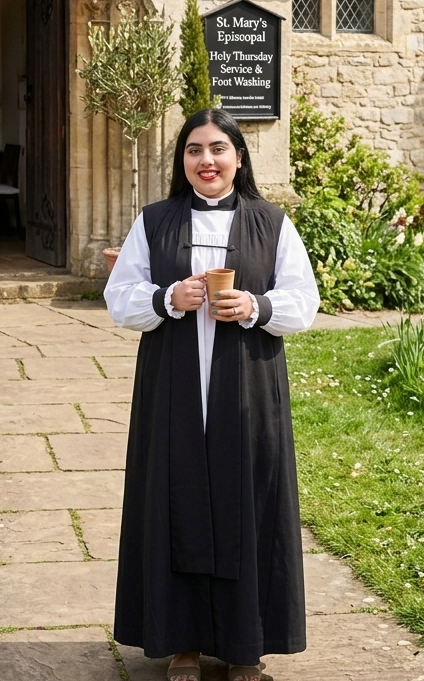
For women’s clergy attire in traditions that observe Holy Thursday liturgically, the same color principles apply. Female ministers participating in Holy Thursday worship in a formal leadership capacity would typically wear white or gold clergy wear appropriate to their tradition.
What Are the Specific Vestment Pieces Worn at Holy Thursday Mass?
The priests clothing vestments for Holy Thursday Mass follow the standard Eucharistic vestment set but worn in the white or gold appropriate to the feast. Understanding each piece and its meaning deepens appreciation for what the priest is wearing when he steps to the altar on this evening.
The vesting process itself is a prayerful act. Each piece is put on in a specific order, often accompanied by a prayer that connects the physical garment to the spiritual reality it represents.
What Is the Amice and What Does It Represent?
The amice is the first piece a priest puts on when vesting for Mass. It is a rectangular piece of white cloth placed around the neck and shoulders, covering the collar area.
The amice represents the helmet of salvation and the discipline of guarding the senses, particularly speech. The prayer said while putting on the amice asks God to place on the priest’s head the helmet of salvation so that he can defeat the attacks of the enemy. On Holy Thursday, this first garment of preparation connects the priest’s vesting to the spiritual discipline appropriate for a liturgy of such profound significance.
What Is the Alb and Why Is It Always White?
The alb is the long white robe worn over the amice, reaching from the shoulders to the floor. The name comes from the Latin albus, meaning white, and its whiteness is theologically significant.
The alb represents the purity of baptism. Every ordained minister wears it as a reminder that their ministry rests on the foundation of their own baptismal grace. On Holy Thursday, the alb’s white carries additional resonance, connecting the priest’s vestment to the white garments of the heavenly redeemed described in the Book of Revelation.
What Is the Cincture?
The cincture is the cord or belt tied around the waist of the alb. It gathers the flowing fabric of the alb and secures it for the physical movements of the liturgy.
Theologically, the cincture represents chastity and readiness for service. The prayer said while tying the cincture asks God to gird the priest with purity and virtue. On an evening when Jesus himself girded himself with a towel to wash his disciples’ feet, the cincture carries a particularly direct connection to the Gospel narrative being commemorated.
What Is the Stole and Why Does It Matter?
The stole is the long narrow band of fabric placed around the priest’s neck and draped down his front. It is one of the most theologically significant pieces in any vestment set because it represents the authority and responsibility of ordained ministry.
The stole symbolizes the yoke of Christ, the calling that the priest took on at ordination. Many priests kiss the embroidered cross on the stole before placing it around their necks as an act of reverence for what it represents.
On Holy Thursday, the stole is worn in the white or gold of the feast beneath the chasuble.
What Is the Chasuble and How Does It Complete the Holy Thursday Vestment?
The chasuble is the large outer vestment worn over everything else. It is the most visually prominent piece of the entire vestment set and the one that most clearly displays the liturgical color of the day.
On Holy Thursday, the chasuble is white or gold. Its flowing form covers the priest as he moves through the Mass, and its theological symbolism points to the virtue of charity, understood as the love that covers all things, precisely the theme at the heart of the Holy Thursday liturgy.
What Additional Vestments Are Worn During the Holy Thursday Procession?
After the Mass of the Lord’s Supper concludes, the liturgy continues with the Transfer of the Most Blessed Sacrament to the altar of repose. This solemn procession requires two additional pieces of priestly vestments that are not part of the regular Mass vestments. While these sacred garments are traditionally worn by priests, many people interested in women’s clergy attire also explore Christian liturgical clothing to better understand the significance of different vestments used during Holy Thursday services.
What Is the Cope and When Is It Worn?
The cope is a long, flowing cloak-like vestment worn for solemn processions and certain other non-Mass liturgical functions. It falls from the shoulders and extends all the way to the floor, creating a dramatic and formal silhouette appropriate for a solemn procession.

On Holy Thursday, the priest wears the cope in white or gold during the procession that transfers the Blessed Sacrament to the altar of repose. The cope signals that what is happening is not simply the end of Mass but a distinct and solemn liturgical act in its own right.
What Is the Humeral Veil?
The humeral veil is a shawl-like cloth placed over the priest’s shoulders and wrapped around his hands when he carries the monstrance containing the Blessed Sacrament during the procession.
This vestment has a specific and practical theological purpose. The Blessed Sacrament in the monstrance is the true presence of Christ. The humeral veil prevents the priest from touching the monstrance directly with his bare hands during the procession, communicating through visual reverence the extraordinary nature of what he is carrying.
The humeral veil is typically white and unadorned, its simplicity in striking contrast to the more elaborate clergy vestments worn during the Mass itself.
What Happens to the Vestments After the Procession?
One of the most striking moments of the entire Holy Thursday liturgy comes at the very end of the evening. After the procession and the prayer at the altar of repose, the priest and ministers return to the sanctuary for the stripping of the altar.
The altar is stripped of all coverings, candles, and decorative elements, leaving it completely bare. This stripping visually anticipates the desolation of Good Friday and the death of Christ.
During this stripping, the priest often removes the chasuble and stole, marking the transition from the active celebration of the Mass to the silent vigil that follows. The evening ends in quiet, with the church stripped bare and the congregation invited to remain in prayer before the altar of repose.
This progression from full elaborate liturgical vestments at the beginning of the evening to simplified or removed outer vestments at the end mirrors the emotional and theological movement of the liturgy itself. Joy becomes anticipation. Celebration becomes solemn watching.
How Do Eastern Orthodox and Greek Orthodox Traditions Mark Holy Thursday?
The eastern orthodox vestments and greek orthodox vestments worn on Holy Thursday follow the distinctive Eastern tradition rather than the Western color calendar.
In Orthodox tradition, Holy Thursday is associated with the commemoration of the Last Supper, the washing of feet, and the betrayal of Christ. The liturgical color in many Orthodox jurisdictions for this day tends toward darker, more somber tones, often dark red, maroon, or purple, reflecting the transition toward the Passion that this Thursday evening begins.
Eastern orthodox priest vestments for Holy Thursday, like all Orthodox clergy vestments, are typically elaborately embroidered and feature the layered complexity characteristic of the Byzantine vestment tradition. The epitrachelion, epimanikia, and phelonion worn by Orthodox priests on Holy Thursday carry the same theological symbolism they carry throughout the year, but the specific occasion adds layers of meaning connected to the Last Supper narrative.
FAQ
What Percentage of Catholic Priests Stay Celibate?
The Catholic Church requires celibacy for ordained priests in the Latin Rite as an official expectation of the Church, and this remains the universal standard for priestly ordination.
What Are the 5 Sacred Vestments?
The five core Eucharistic vestments are the amice, alb, cincture, stole, and chasuble. Together they form the complete vestment set worn by a priest for the celebration of Mass.
What Color to Wear on Maundy Thursday?
White or gold are the traditional liturgical colors for Holy Thursday, also called Maundy Thursday, reflecting the joy of the institution of the Eucharist at the Last Supper.
What Is the Most Catholic Color?
White and gold are perhaps the most distinctly Catholic colors, worn at the highest celebrations of the faith including Easter, Christmas, and ordinations. However, the full range of liturgical colors, purple, red, green, and white, are equally integral to Catholic worship throughout the year.
Final Thoughts
The priests clothing vestments worn on Holy Thursday tell the story of the evening before a single word of the liturgy is spoken.
White for joy and celebration. The alb for baptismal purity. The stole for the yoke of priestly service. The chasuble for the charity that covers all things. The cope and humeral veil for the solemn procession of the Blessed Sacrament. And then the stripping, the silencing, the watching.
It is one of the richest and most visually meaningful evenings in the entire liturgical year. And the vestments are part of what makes it so.
Explore eClergy’s full collection of priests clothing vestments, clergy vestments, eastern orthodox vestments, and complete women’s clergy attire and clergy wear built to honor every moment of the sacred liturgical year with beauty, reverence, and theological faithfulness.