

If you are asking “what should I do if I smell gas inside my house?”, treat the situation seriously and act immediately. A gas odor can indicate a natural gas leak, damaged gas line, faulty appliance connection, or another potentially dangerous plumbing or gas-system problem. If you suspect a gas leak, leave the property and contact your local gas utility or emergency services from a safe location. Once the immediate danger has been addressed, AAA AUGER’s gas repair services can help with gas-line and plumbing-related issues.
Do not stay inside trying to locate the leak yourself. The priority is getting everyone to a safe location before the source is investigated.
Why Does My House Smell Like Gas?
Natural gas itself is odorless. Gas suppliers add an odorant that creates a distinctive smell, often described as rotten eggs or sulfur, to make leaks easier to detect.
A gas smell inside your home can have several possible causes, including:
- A damaged gas line
- A loose appliance connection
- A faulty gas appliance
- A damaged gas fitting
- A leaking pipe
- An improperly connected appliance
- A problem with an outdoor gas line
Because you cannot safely determine the concentration of gas simply by smelling it, any unexplained gas odor should be taken seriously.
What Should You Do If You Smell Gas?
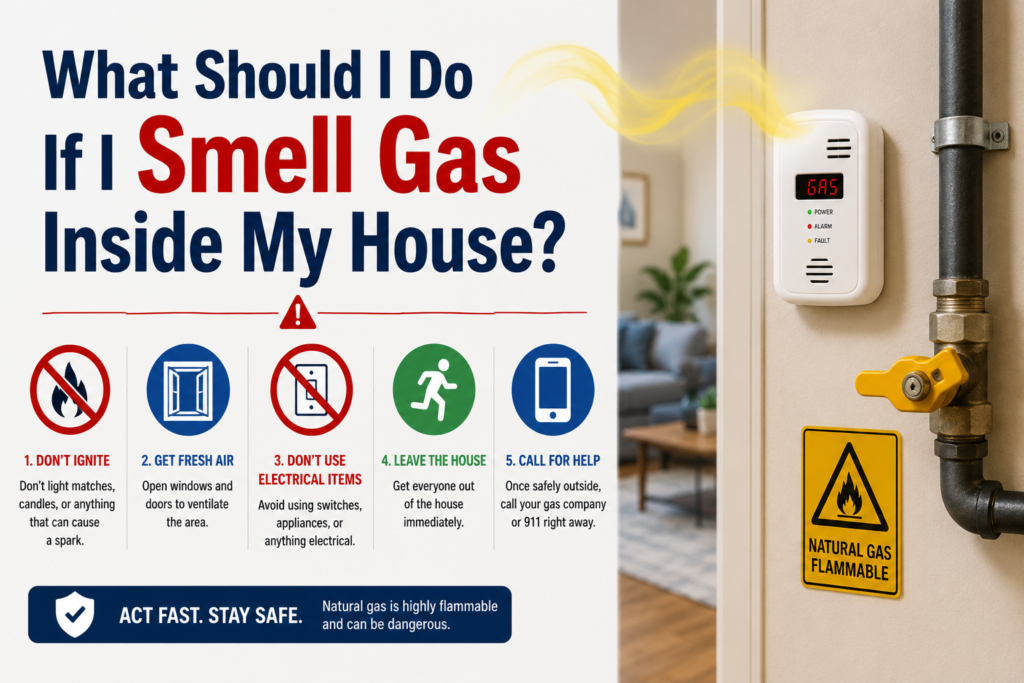
1. Leave the House Immediately
If you smell gas inside your home, get everyone out of the building.
Do not spend time searching for the source. Avoid attempting to diagnose the problem yourself.
If the smell is strong or you suspect a significant leak, move away from the property and keep others away as well.
2. Avoid Flames and Sparks
Do not light matches, candles, cigarettes, or anything else that creates a flame.
Avoid using anything that could create an ignition source.
This also means you should not intentionally switch electrical devices on or off while inside the area where gas may be present.
3. Do Not Use Your Phone Inside
If you need to make a call, move to a safe location away from the suspected gas leak before using your phone.
Do not use electrical switches, appliances, doorbells, or other potentially spark-producing devices while inside a gas-filled area.
4. Contact the Gas Utility or Emergency Services
Once you are safely outside and away from the suspected leak, contact your local gas utility or emergency services according to the severity of the situation.
Follow their instructions and do not return to the property until it has been determined to be safe.
5. Have the Gas System Professionally Inspected
After the immediate emergency has been addressed, a qualified professional can inspect the gas piping, connections, and appliances to identify and repair the source.
AAA AUGER provides gas repair services for residential plumbing and gas-related problems. Professional inspection is particularly important when the odor returns or a gas-line problem is suspected.
What Can Cause a Gas Leak Inside a Home?
Several plumbing and gas-system issues can potentially result in a gas odor.
Damaged Gas Lines
Gas lines can develop problems because of corrosion, physical damage, aging components, or improper installation.
A damaged gas line may allow gas to escape into an enclosed area.
Loose Connections
Gas appliances depend on properly sealed connections. A loose or damaged connection can potentially allow gas to escape.
Connections should be inspected and repaired by a qualified professional rather than tightened or modified as a DIY project.
Faulty Gas Appliances
Gas-powered water heaters, furnaces, stoves, fireplaces, and other appliances can potentially be involved in a gas leak.
If you notice a gas odor near an appliance, do not attempt to disassemble it or repair the gas connection yourself.
Damaged Fittings or Valves
Gas piping systems contain fittings, valves, and connections that can develop problems over time.
A professional gas inspection can help determine whether a component is damaged or improperly sealed.
Is a Gas Smell Always a Gas Leak?
Not necessarily, but you should never assume an unexplained gas smell is harmless.
Other substances can sometimes produce unusual odors that resemble sulfur or rotten eggs. However, because a natural gas leak can create a serious fire or explosion hazard, the safest approach is to treat a suspected gas odor as a potential gas leak until professionals determine otherwise.
Do not ignore an odor simply because it disappears after a few minutes.
Can a Gas Leak Make You Feel Sick?
Exposure to natural gas can reduce the amount of oxygen available in an enclosed area, and some situations may cause symptoms such as headache, dizziness, nausea, weakness, or confusion.
If anyone in your household feels unwell after a suspected gas exposure, move into fresh air and seek appropriate emergency medical assistance.
The most important step is getting away from the suspected source rather than remaining inside to investigate.
What Should You Not Do During a Suspected Gas Leak?
Knowing what not to do is just as important as knowing what to do.
Avoid:
- Lighting matches or candles
- Smoking
- Turning electrical switches on or off
- Starting appliances
- Using power tools
- Trying to locate the leak with a flame
- Attempting DIY gas-line repairs
- Staying inside to investigate
- Re-entering the property before it is declared safe
Gas-line repairs should be handled by appropriately qualified professionals.
How Can a Plumber Help With a Gas-Line Problem?
Once the immediate safety issue has been handled, a qualified professional can inspect the gas system and identify problems involving gas piping, fittings, valves, or appliance connections.
Depending on the situation, the technician may inspect accessible gas lines, connections, and appliances to determine where the problem originates.
AAA AUGER offers gas repair and plumbing services and provides service in Texas communities including San Antonio, Austin, Dallas, Fort Worth, Arlington, Irving, Plano, and surrounding areas.
Professional service can help address the underlying problem instead of simply masking the odor.
How Can You Reduce the Risk of Gas Problems?
Although not every gas-line problem can be prevented, regular inspection and maintenance can help identify aging or damaged components.
You can also:
- Keep gas appliances properly maintained
- Avoid DIY gas-line modifications
- Have new appliances professionally installed
- Watch for unusual appliance behavior
- Pay attention to recurring gas odors
- Keep combustible materials away from gas appliances
- Install appropriate carbon monoxide alarms
Carbon monoxide alarms are especially important because carbon monoxide is odorless and cannot be detected by smell.
When Should You Call a Professional for Gas Repair?
If you smell gas, your first priority should always be immediate safety, not scheduling a routine plumbing appointment.
Leave the property and contact the appropriate gas utility or emergency service from a safe location. After the immediate danger has been addressed, a qualified gas professional can investigate the cause and perform necessary repairs.
If a gas odor keeps returning after the immediate situation has been addressed, do not ignore it. Recurring odors may indicate an unresolved problem with a gas line, appliance, valve, or connection.
Take a Gas Smell Seriously
So, what should I do if I smell gas inside my house? Leave the property, avoid flames and electrical switches, move to a safe location, and contact your local gas utility or emergency services. Do not attempt to find or repair the leak yourself.
Once the area has been made safe, professional inspection can identify the underlying gas-line or appliance problem.
A gas odor is not something to troubleshoot casually. Taking quick action can help protect your household and property from the potentially serious consequences of a gas leak.
FAQs
1. What does a natural gas leak smell like?
Natural gas is naturally odorless, but an odorant is added to make leaks easier to detect. A gas leak may smell similar to rotten eggs or sulfur.
2. Should I turn off the gas if I smell gas?
Do not put yourself at risk trying to reach a gas shutoff valve. Leave the property and contact your local gas utility or emergency services from a safe location. Follow their instructions.
3. Can I find a gas leak myself?
You should not attempt to locate a suspected gas leak using a flame, electrical equipment, or DIY testing methods. Leave the area and have the system evaluated by appropriately qualified professionals.
4. Can a water heater cause a gas smell?
A gas-powered water heater can potentially be associated with a gas odor if there is a problem with its gas supply line, connection, valve, or other component. A qualified professional should inspect the system.
5. Is a gas smell inside the house an emergency?
A suspected natural gas leak should be treated as an emergency. Leave the property, avoid potential ignition sources, and contact your local gas utility or emergency services from a safe location.