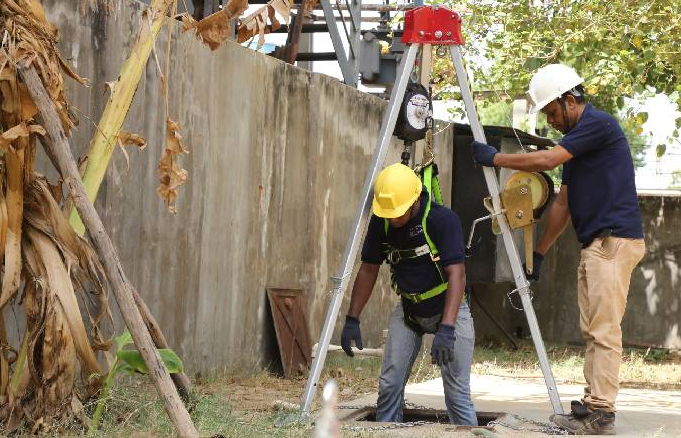

Working at heights is an essential part of many industries, from construction and manufacturing to telecommunications and infrastructure maintenance. However, even a routine task performed on a ladder can become dangerous without proper safety arrangements. A reliable ladder fall arrest system helps protect workers by reducing the consequences of accidental falls and creating a safer working environment. Businesses looking for dependable height safety solutions can explore the ladder fall arrest system range offered by Indianinovatix, where workplace protection is an important consideration.
Safety should never be treated as an additional expense. It is an investment in people, productivity, and long-term business responsibility. Understanding how fall protection works can help organisations make informed decisions and establish stronger workplace safety practices.
Why a Ladder Fall Arrest System Is Important in Modern Workplaces
Ladders are commonly used because they provide convenient access to elevated areas. Workers use them for electrical installations, equipment inspections, building maintenance, warehouse operations, and numerous other activities. Despite their convenience, ladders introduce potential risks, particularly when employees work at significant heights.
A fall can happen because of an unexpected movement, unstable positioning, damaged equipment, or a loss of balance. Even experienced professionals are not completely protected from these situations.
A properly selected fall protection arrangement provides an additional layer of security. It is designed to help arrest a worker’s fall when used with compatible equipment and appropriate anchorage.
Reducing Workplace Accidents
One of the primary purposes of fall protection equipment is to minimise the risk of serious injuries associated with working at heights. A suitable system helps create a controlled safety arrangement rather than relying entirely on a worker’s balance and experience.
Employers should consider the nature of the work, ladder configuration, surrounding environment, and applicable safety requirements before choosing protective equipment.
Building a Safety-Conscious Workforce
Workplace safety is not only about installing equipment. It also involves developing responsible habits among employees.
Regular training, equipment inspections, and clear safety procedures encourage workers to recognise potential hazards before beginning a task.
Understanding the Main Components of a Ladder Fall Arrest System
Effective fall protection depends on multiple components working together. Every component has a specific purpose, and compatibility between individual elements is essential.
- Full-Body Safety Harness
A full-body harness is designed to distribute the forces associated with fall arrest across appropriate areas of the body. It should fit the individual worker correctly and be inspected before every use.
- Connecting Elements
Connectors, lanyards, and suitable energy-absorbing components help establish the connection between the worker and the anchorage arrangement.
Their selection depends on the application, manufacturer specifications, and the complete fall protection configuration.
- Anchorage Points
Anchorage points provide the structural connection required for fall protection. They must be suitable for the intended application and meet relevant engineering and safety requirements.
An unsuitable anchorage can compromise the entire arrangement, regardless of the quality of the other equipment.
- Guided Fall Arrest Equipment
Certain ladder applications use vertical lifelines or guided-type fall arrest devices. These arrangements are designed to allow movement along a compatible climbing path while providing fall protection.
The equipment must be selected and installed according to its manufacturer’s instructions.
How to Choose the Right Fall Protection Solution
Selecting workplace safety equipment requires more than comparing product prices. Businesses should evaluate the specific conditions in which employees will use the equipment.
Here are several important considerations:
- Work environment: Consider indoor and outdoor conditions, exposure to moisture, dust, chemicals, and temperature variations.
- Equipment compatibility: Ensure that harnesses, connectors, lifelines, and anchorage components are approved for use together.
- Worker requirements: Select equipment that provides an appropriate fit and supports comfortable movement.
- Applicable standards: Check relevant Indian and international safety standards and manufacturer certifications.
- Inspection requirements: Understand how frequently equipment must be inspected and when it should be removed from service.
Making a thoughtful selection helps organisations develop a more dependable approach to workplace protection.
Indianinovatix: Supporting Safer Industrial Operations
Choosing a suitable safety equipment supplier is an important part of establishing effective workplace protection. Indianinovatix provides an online platform where businesses can explore industrial safety solutions for different operational requirements.
When evaluating products, organisations should consider technical specifications, application suitability, product documentation, and available support.
The goal should always be to select equipment that matches the actual working conditions rather than purchasing products based solely on appearance or price.
A Practical Approach to Workplace Safety
A good safety strategy combines appropriate equipment with employee awareness and regular supervision. Even a high-quality fall protection arrangement cannot replace proper training or safe working procedures.
Businesses should establish clear guidelines covering equipment usage, pre-use inspections, emergency response, and rescue planning.
Workers should also understand the limitations of their equipment and know how to identify damaged or unsuitable components.
Best Practices for Maintaining Fall Protection Equipment
Regular maintenance helps preserve equipment condition and supports consistent workplace safety.
Consider these essential practices:
- Inspect harnesses, connectors, and lifelines before each use.
- Check for cuts, corrosion, deformation, damaged stitching, or other visible defects.
- Follow the manufacturer’s instructions for cleaning and storage.
- Remove equipment from service after a fall-arrest event until it has been assessed according to manufacturer requirements.
- Maintain inspection records and replacement schedules.
- Provide refresher training to employees who regularly perform elevated tasks.
Professional inspections should also be conducted at the intervals specified by the manufacturer and applicable regulations.
The Future of Height Safety in Industrial Environments
Industrial safety practices continue to evolve as organisations place greater emphasis on employee wellbeing, regulatory compliance, and operational efficiency.
Modern workplaces increasingly recognise that preventing accidents requires a combination of engineering controls, suitable personal protective equipment, effective training, and consistent supervision.
Fall protection solutions are an important part of this approach. However, employers should always prioritise avoiding work at height where reasonably practicable and use collective protection measures where appropriate before relying on personal fall protection.
Conclusion
Workplace safety begins with recognising risks and taking practical steps to control them. A properly selected ladder fall arrest system can play an important role in protecting employees who perform elevated tasks, provided it is compatible, correctly installed, inspected, and supported by appropriate training and rescue arrangements. By exploring suitable industrial safety solutions through Indianinovatix, businesses can take a more informed approach to height safety. Ultimately, creating a safer workplace is not simply about purchasing protective equipment; it is about building a culture where every worker’s wellbeing matters.