
In today’s competitive business environment, strong supplier relationships are essential for maintaining an efficient, reliable, and successful supply chain. Organizations depend on suppliers to deliver raw materials, products, and services on time while maintaining quality and controlling operational costs. However, financial challenges such as delayed payments, limited working capital, rising production expenses, and changing market conditions can affect relationships between buyers and suppliers. To overcome these challenges, businesses are increasingly adopting strategic supply chain finance solutions.
Supply chain finance has become an important financial strategy that helps organizations improve cash flow, strengthen supplier partnerships, and create long-term business value. By connecting buyers, suppliers, and financial institutions, it provides flexible financing arrangements that benefit all participants. Rather than treating supplier payments as a routine financial activity, businesses can use supply chain finance to build stronger partnerships, improve financial transparency, and support sustainable growth.
Understanding Strategic Supply Chain Finance
Strategic supply chain finance refers to financial solutions that optimize payment processes and working capital throughout the supply chain. It enables buyers to manage their payment obligations efficiently while giving suppliers access to faster and more affordable financing.
In traditional business arrangements, suppliers often face long payment cycles. Large organizations may operate with payment terms of 60, 90, or even 120 days. Although extended payment terms can help buyers preserve working capital, they may create liquidity challenges for suppliers, particularly small and medium-sized businesses.
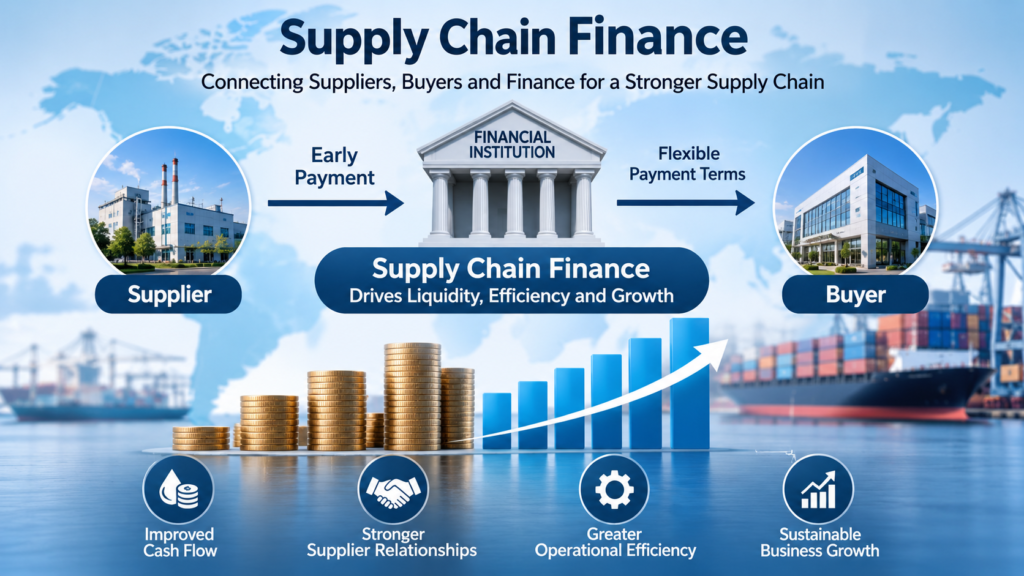
Supply chain finance addresses this issue through financing arrangements supported by banks, financial institutions, or digital platforms. One common solution is reverse factoring, where the buyer approves an invoice and a financial institution offers the supplier early payment. The buyer then pays the financial institution on the agreed due date.
This arrangement creates financial flexibility for both parties. Suppliers receive funds earlier, while buyers can maintain their established payment schedules. Consequently, supply chain finance supports a more balanced and collaborative business relationship.
Building Stronger Supplier Relationships
Supplier relationships are a fundamental part of business success. Reliable suppliers help organizations maintain production schedules, improve product quality, manage inventory, and fulfil customer expectations.
However, financial pressure can weaken these relationships. When suppliers experience delayed payments or insufficient working capital, they may struggle to purchase materials, pay employees, or maintain production capacity.
Strategic supply chain finance helps reduce these challenges by providing suppliers with access to early payment options. Instead of waiting for the original invoice due date, suppliers can receive funds through financing programs and continue their business activities without unnecessary financial pressure.
This approach creates greater trust between buyers and suppliers. When suppliers know that their financial requirements are being considered, they are more likely to maintain long-term partnerships and prioritize reliable service.
Stronger supplier relationships also encourage better communication, improved collaboration, and greater transparency across the supply chain.
Improving Cash Flow and Working Capital Management
Effective cash flow management is essential for both buyers and suppliers. Businesses require sufficient liquidity to manage daily expenses, purchase materials, pay employees, and invest in operational improvements.
Supply chain finance provides opportunities to optimize working capital by improving the timing of cash inflows and outflows.
For suppliers, early payment programs reduce the waiting period between invoice approval and payment. This improves liquidity and reduces dependence on expensive short-term borrowing.
For buyers, supply chain finance allows organizations to maintain agreed payment terms while preserving available cash for strategic investments and business expansion.
For example, a manufacturing company may purchase raw materials from several suppliers under 90-day payment terms. Some suppliers may experience cash flow difficulties while waiting for payment. Through a supply chain finance program, these suppliers can receive early payment from a financial institution after invoice approval.
The buyer maintains its payment schedule, while suppliers gain the financial flexibility required to continue production. This creates a more sustainable financial arrangement for both parties.
Key Benefits of Strategic Supply Chain Finance
- Increased Supplier Financial Stability
One of the most important benefits of supply chain finance is improved supplier liquidity. Access to early payments helps suppliers manage operating expenses, purchase raw materials, and maintain production activities. Financial stability allows suppliers to focus on business development rather than constantly managing cash shortages.
- Reduced Financing Costs
Small and medium-sized suppliers often face higher borrowing costs because of limited credit histories or restricted access to traditional financing. Through supply chain finance, financing may be based on the stronger credit profile of the buyer. This can provide suppliers with more competitive financing rates and reduce their overall financial expenses.
- Improved Business Collaboration
Financial transparency encourages stronger communication between buyers and suppliers. When both parties have access to reliable payment information and financing opportunities, they can coordinate their activities more effectively and resolve financial concerns quickly.
- Better Supply Chain Reliability
Suppliers with sufficient working capital are better equipped to maintain inventory, purchase materials, and meet delivery commitments. This reduces the risk of production delays and strengthens overall supply chain performance.
- Long-Term Business Growth
Strategic financing arrangements create opportunities for suppliers to invest in new equipment, expand production capacity, improve technology, and enter new markets. Buyers also benefit from stronger supplier networks that support business expansion and operational efficiency.
The Role of Technology in Strengthening Supplier Partnerships
Technology is transforming how businesses manage supplier relationships and financial transactions. Digital supply chain finance platforms provide centralized systems that connect buyers, suppliers, and financial institutions.
These platforms allow participants to monitor invoice approvals, payment schedules, financing options, and transaction records in real time. Greater visibility reduces uncertainty and helps suppliers make better financial decisions.
Automation also improves invoice processing and reduces administrative workloads. Instead of relying on lengthy manual procedures, businesses can use automated systems to approve invoices and manage payment transactions more efficiently.
Artificial intelligence and data analytics are helping organizations evaluate supplier financial performance, predict cash flow requirements, and identify potential risks. These insights allow businesses to develop proactive financing strategies.
Blockchain technology can further improve transaction transparency by providing reliable digital records. This can help reduce documentation errors, strengthen financial security, and increase confidence among supply chain participants.
Overcoming Challenges in Supply Chain Finance Implementation
Although supply chain finance provides significant advantages, businesses may face several challenges when introducing new financing programs.
One common challenge is supplier awareness. Some suppliers, particularly smaller businesses, may not fully understand how financing arrangements work or how early payment options can benefit their operations.
Another challenge involves technology integration. Companies may need to connect financing platforms with existing accounting systems, procurement software, and enterprise resource planning solutions.
Financial transparency and data security are also important considerations. Organizations must ensure that financing agreements are clear, transaction information is protected, and all participants understand their responsibilities.
To overcome these challenges, businesses should develop effective communication strategies, provide supplier training, select reliable financial partners, and establish transparent financing policies.
Regular performance reviews can also help organizations identify opportunities for improvement and ensure that financing programs continue delivering value.
Creating Sustainable Supplier Partnerships
Sustainable supplier relationships require long-term financial cooperation and shared business objectives. Supply chain finance can contribute to this goal by supporting suppliers that are essential to an organization’s operations.
Businesses can develop supplier financing programs that prioritize strategically important suppliers and smaller businesses with greater working capital requirements.
Organizations can also connect financing benefits with environmental, social, and governance objectives. Sustainable supply chain finance programs may offer favorable financing conditions to suppliers that demonstrate progress in areas such as environmental responsibility, ethical sourcing, and responsible business practices.
This approach encourages suppliers to improve their operational standards while strengthening long-term business relationships.
The Future of Strategic Supply Chain Finance
The future of supply chain finance will be shaped by digital innovation, automation, financial collaboration, and sustainability.
Businesses are increasingly moving toward integrated financing platforms that connect procurement, accounting, banking, and payment systems. These platforms will make financial transactions faster and provide greater visibility across supplier networks.
Artificial intelligence will support improved financial forecasting and supplier risk assessment, while digital payment solutions will simplify transactions and increase operational efficiency.
As global supply chains become more complex, organizations will increasingly recognize that strong supplier relationships depend on financial stability, transparency, and mutual trust.
Companies that invest in strategic supply chain finance will be better positioned to manage uncertainty, strengthen supplier partnerships, and achieve sustainable business growth.
Conclusion
Transforming supplier relationships through strategic supply chain finance is an effective way to improve financial collaboration and strengthen overall supply chain performance. By providing suppliers with faster access to funds while allowing buyers to manage payment schedules efficiently, supply chain finance creates benefits for every participant.
Improved liquidity, reduced financing costs, greater transparency, and stronger supplier partnerships contribute to a more resilient business environment. With the support of digital technology and effective financial planning, organizations can develop sustainable supplier relationships that support long-term growth.
As businesses continue to face changing economic conditions and increasing competition, strategic supply chain finance will remain an important tool for building reliable partnerships, improving working capital management, and creating lasting value throughout the supply chain.