

Introduction
In today’s digital world, a brand’s reputation can make or break its success. Customers no longer rely solely on advertisements or company claims when making purchasing decisions. Instead, they turn to online reviews, social media discussions, search engine results, and customer feedback to evaluate a business. This is where ORM in Marketing (Online Reputation Management) becomes essential.
Online Reputation Management is the process of monitoring, influencing, and maintaining how a brand is perceived online. It helps businesses build trust, improve credibility, and create positive customer experiences. Whether you run a small business, an e-commerce store, or a large enterprise, ORM plays a crucial role in attracting customers and maintaining long-term growth.
What is ORM in Marketing?
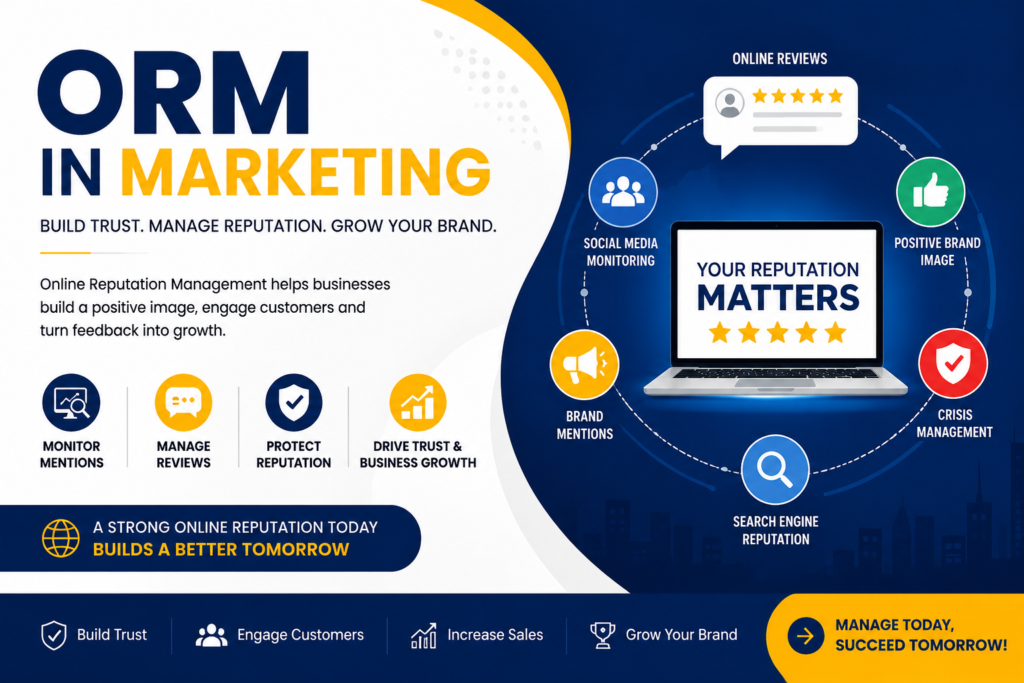
Online Reputation Management (ORM) is a marketing strategy focused on managing a company’s digital image across various online platforms. It involves monitoring brand mentions, responding to customer reviews, handling negative feedback, and promoting positive content about the business.
The primary goal of ORM is to ensure that customers find accurate, positive, and trustworthy information about a brand whenever they search online. A strong online reputation not only attracts new customers but also strengthens relationships with existing ones.
Why ORM is Important in Marketing
The internet has given customers a powerful voice. A single review, social media post, or blog article can influence public perception of a brand. Therefore, businesses must actively manage their online presence.
Builds Customer Trust
Consumers are more likely to purchase from brands with positive reviews and strong online reputations. When potential customers see favorable feedback and professional responses, they feel more confident in choosing that business.
Enhances Brand Credibility
A well-managed online reputation demonstrates transparency, professionalism, and commitment to customer satisfaction. This helps establish credibility in the marketplace.
Increases Conversion Rates
Positive reviews and ratings significantly influence purchasing decisions. Customers are more likely to convert when they see evidence of satisfied buyers and successful customer experiences.
Improves Customer Retention
ORM is not only about attracting new customers but also about retaining existing ones. Responding to feedback and resolving concerns helps build stronger customer relationships and loyalty.
Supports Business Growth
A positive reputation creates opportunities for partnerships, increased sales, and greater market visibility, contributing to long-term business success.
Key Components of ORM in Marketing
Review Management
Customer reviews play a major role in shaping online reputation. Businesses should actively monitor review platforms, encourage satisfied customers to leave feedback, and respond professionally to both positive and negative reviews.
Social Media Monitoring
Social media platforms are among the most influential channels for customer interaction. Monitoring comments, messages, and brand mentions allows businesses to engage with their audience and address concerns promptly.
Search Engine Reputation Management
Search engine results often provide the first impression of a brand. ORM focuses on ensuring that positive content, company information, and customer testimonials appear prominently in search results.
Content Creation
Publishing high-quality content such as blogs, case studies, testimonials, and press releases helps strengthen brand authority and improve online visibility.
Brand Mention Tracking
Businesses must monitor online discussions about their brand across websites, forums, social media platforms, and news outlets. This helps identify opportunities and potential reputation risks.
The Role of Customer Reviews in ORM
Online reviews have become one of the most influential factors in consumer decision-making. Many customers read reviews before purchasing products or services.
Positive reviews help:
- Increase customer trust
- Improve brand reputation
- Boost sales and conversions
- Enhance search engine visibility
Negative reviews, if left unaddressed, can damage a company’s image. However, businesses can turn negative experiences into positive opportunities by responding professionally and offering solutions.
A thoughtful response demonstrates accountability and shows potential customers that the business values feedback and customer satisfaction.
ORM and Social Media Marketing
Social media is a powerful platform for brand communication. Customers frequently share experiences, opinions, and recommendations on platforms such as Facebook, Instagram, LinkedIn, X (formerly Twitter), and YouTube.
Effective social media ORM includes:
- Monitoring comments and mentions
- Responding to customer inquiries
- Addressing complaints professionally
- Sharing valuable and engaging content
- Building meaningful customer relationships
Consistent social media engagement helps businesses maintain a positive public image and strengthen customer trust.
ORM and SEO: A Powerful Combination
Online Reputation Management and Search Engine Optimization (SEO) work together to improve brand visibility and perception.
SEO helps positive content rank higher in search results, while ORM ensures that the content reflects a strong brand image. Together, they can:
- Increase organic visibility
- Promote positive brand mentions
- Suppress negative content
- Improve click-through rates
- Build online authority
By creating optimized, high-quality content, businesses can strengthen both their reputation and search engine performance.
Effective ORM Strategies
Monitor Your Online Presence
Use tools such as Google Alerts, SEMrush, Ahrefs, Brand24, and Mention to track brand mentions and customer feedback across digital channels.
Respond to Reviews Promptly
Timely responses show customers that their opinions matter. Whether feedback is positive or negative, every review deserves acknowledgment.
Encourage Positive Reviews
Satisfied customers are often willing to share their experiences when asked. Encourage reviews through follow-up emails, surveys, and customer engagement initiatives.
Create Valuable Content
Publish informative blogs, customer success stories, videos, and industry insights that highlight your expertise and build trust with your audience.
Address Negative Feedback Professionally
Avoid defensive responses. Instead, acknowledge concerns, apologize when necessary, and offer practical solutions to resolve issues.
Maintain Consistent Brand Messaging
Ensure that your communication across websites, social media platforms, and customer interactions reflects your brand values and identity.
Common ORM Challenges
Businesses often face several challenges when managing their online reputation:
- Handling fake or misleading reviews
- Managing negative publicity
- Responding to viral complaints
- Maintaining consistent engagement
- Monitoring multiple digital platforms
Despite these challenges, a proactive ORM strategy can help businesses minimize risks and maintain a positive image.
Future of ORM in Marketing
As technology evolves, ORM is becoming increasingly sophisticated. Artificial intelligence, sentiment analysis, and advanced monitoring tools are helping businesses gain deeper insights into customer opinions and market trends.
Companies that invest in reputation management will be better equipped to respond to customer expectations, protect their brand image, and remain competitive in the digital marketplace.
Conclusion
ORM in Marketing is an essential strategy for businesses that want to build trust, improve customer relationships, and maintain a positive online presence. In a world where customer opinions are readily available online, reputation management is no longer optional—it is a necessity.
By monitoring brand mentions, managing reviews, engaging on social media, and creating valuable content, businesses can strengthen their reputation and drive long-term success. A strong online reputation not only attracts customers but also creates a foundation for sustainable growth, credibility, and competitive advantage in today’s digital landscape.
Read for more blog: Online Reputation Management