

Introduction
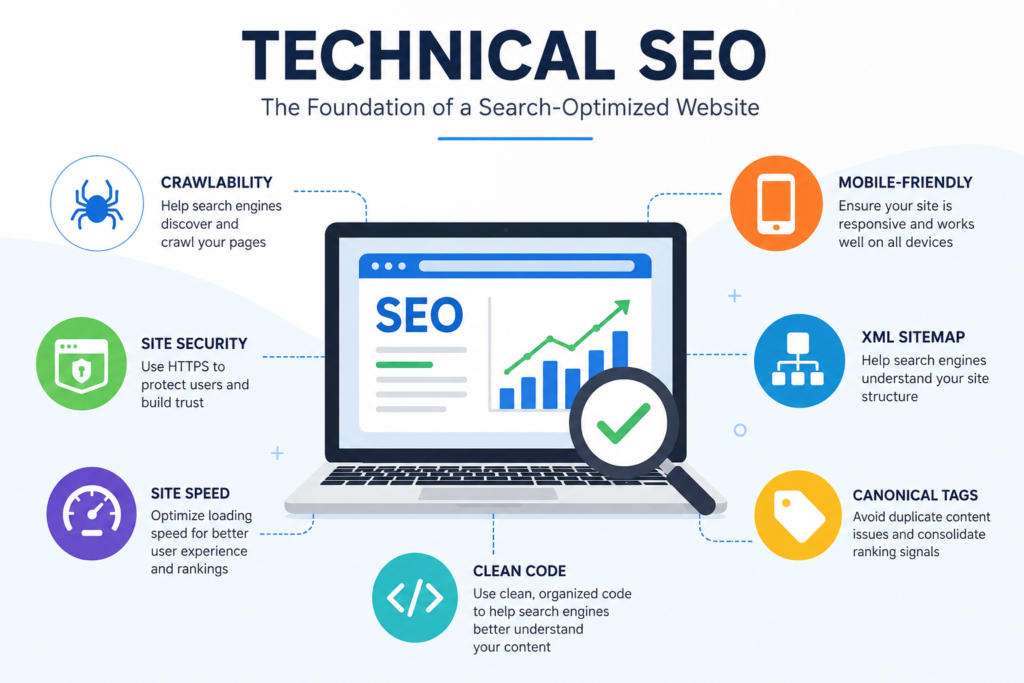
Search Engine Optimization (SEO) is essential for businesses that want to improve their online visibility and attract qualified traffic. While content creation and link building often receive the most attention, Technical SEO serves as the foundation that supports every successful SEO strategy.
Technical SEO focuses on optimizing a website’s infrastructure to help search engines crawl, index, and understand content efficiently. Without a strong technical foundation, even the best content may struggle to rank in search engine results pages (SERPs).
In today’s competitive digital landscape, businesses must prioritize Technical SEO to ensure their websites deliver excellent user experiences while meeting search engine requirements. This guide explores the importance of Technical SEO, its key components, and best practices for achieving long-term search visibility.
What is Technical SEO?
Technical SEO refers to the process of optimizing a website’s backend structure and technical elements to improve search engine crawling, indexing, rendering, and ranking. Unlike on-page SEO, which focuses on content and keywords, Technical SEO ensures that search engines can easily access and understand website content.
The primary objective of Technical SEO is to eliminate technical barriers that may prevent search engines from properly evaluating a website. When implemented correctly, Technical SEO enhances website performance, user experience, and search engine rankings.
Why Technical SEO Matters
Many website owners invest heavily in content marketing and link-building campaigns but overlook technical issues that can negatively impact performance. Technical SEO matters because it:
Improves Crawlability
Search engines use bots to crawl websites and discover content. Technical SEO ensures that search engine crawlers can navigate your website efficiently and access important pages.
Enhances Indexability
Even if search engines can crawl your site, they must also be able to index pages correctly. Proper technical optimization helps search engines understand which pages should appear in search results.
Boosts Website Speed
Page speed is a confirmed ranking factor. Faster websites provide better user experiences and encourage visitors to stay longer, reducing bounce rates.
Supports Mobile Users
With Google’s mobile-first indexing, websites must perform well on mobile devices. Technical SEO ensures responsiveness and usability across all screen sizes.
Improves User Experience
Technical enhancements such as secure connections, faster loading times, and intuitive navigation create a positive experience for users and search engines alike.
Key Components of Technical SEO
1. Website Crawling Optimization
Search engines rely on crawlers to discover content across the internet. If bots encounter obstacles, your pages may not be indexed correctly.
Important crawling elements include:
- XML Sitemaps
- Robots.txt files
- Internal linking structure
- Crawl budget management
- Proper URL architecture
Submitting an XML sitemap helps search engines find and prioritize important pages more efficiently.
2. Website Indexing
Indexing determines whether your pages appear in search results. Technical SEO helps ensure valuable content is indexed while preventing duplicate or unnecessary pages from cluttering search engines.
Best practices include:
- Using canonical tags
- Managing noindex directives
- Eliminating duplicate content
- Monitoring index coverage reports
- Fixing crawl errors
Google Search Console can help identify indexing issues and provide valuable insights into website performance.
3. Site Speed Optimization
Website speed directly impacts both user experience and search rankings. Visitors expect pages to load quickly, and delays often result in higher bounce rates.
Effective speed optimization techniques include:
- Image compression
- Browser caching
- Code minification
- Content Delivery Networks (CDNs)
- Lazy loading images
- Reducing server response times
Fast-loading websites improve engagement and increase conversion opportunities.
4. Mobile-Friendliness
As mobile traffic continues to dominate internet usage, websites must provide seamless experiences across devices.
Mobile optimization strategies include:
- Responsive design
- Readable fonts
- Mobile-friendly navigation
- Touch-friendly buttons
- Fast mobile page speeds
Google primarily evaluates websites using mobile-first indexing, making mobile optimization a critical ranking factor.
5. HTTPS and Website Security
Security plays an important role in both SEO and user trust. HTTPS encrypts communication between users and websites, protecting sensitive information.
Benefits of HTTPS include:
- Improved search rankings
- Enhanced user confidence
- Secure data transmission
- Better browser compatibility
Websites without HTTPS may display security warnings that discourage visitors from engaging with content.
6. Structured Data Markup
Structured data helps search engines understand content more effectively. It provides additional context that can lead to enhanced search result displays.
Common schema types include:
- Organization schema
- Product schema
- FAQ schema
- Review schema
- Article schema
- Local business schema
Rich snippets generated through structured data can improve click-through rates and search visibility.
7. URL Structure Optimization
Clean and organized URLs help both users and search engines understand page content.
Effective URL practices include:
- Using descriptive keywords
- Keeping URLs short
- Avoiding unnecessary parameters
- Using hyphens instead of underscores
- Maintaining logical site hierarchy
Well-structured URLs contribute to better crawling and user experience.
8. Core Web Vitals
Core Web Vitals are performance metrics introduced by Google to measure user experience.
Key metrics include:
Largest Contentful Paint (LCP)
Measures loading performance and should occur within 2.5 seconds.
Interaction to Next Paint (INP)
Measures responsiveness and interaction speed.
Cumulative Layout Shift (CLS)
Measures visual stability and unexpected page movement.
Optimizing these metrics can improve both rankings and user satisfaction.
Common Technical SEO Issues
Many websites suffer from technical problems that negatively affect performance.
Broken Links
Broken internal and external links create poor user experiences and waste crawl resources.
Duplicate Content
Duplicate pages confuse search engines and dilute ranking signals.
Redirect Chains
Excessive redirects slow down page loading and reduce crawl efficiency.
Crawl Errors
404 errors and server issues prevent search engines from accessing content.
Poor Site Architecture
Disorganized website structures make navigation difficult for both users and crawlers.
Regular audits help identify and resolve these issues before they impact rankings.
Technical SEO Audit Checklist
A comprehensive Technical SEO audit should include:
Crawl Analysis
- Check crawl errors
- Review robots.txt
- Validate XML sitemaps
Indexing Review
- Analyze indexed pages
- Remove duplicate content
- Verify canonical tags
Performance Testing
- Measure page speed
- Evaluate Core Web Vitals
- Optimize images
Mobile Usability
- Test responsive design
- Review mobile performance
- Fix usability issues
Security Checks
- Verify HTTPS implementation
- Resolve mixed content warnings
- Update security certificates
Structured Data Validation
- Test schema markup
- Fix structured data errors
- Implement relevant schema types
Performing regular audits ensures long-term SEO success and website health.
Best Practices for Technical SEO Success
To maximize search visibility, businesses should follow these Technical SEO best practices:
Prioritize Website Speed
Fast websites improve user engagement and search rankings.
Create Logical Site Architecture
Organize content into clear categories and maintain strong internal linking.
Monitor Search Console Regularly
Google Search Console provides valuable insights into technical performance and indexing issues.
Keep Software Updated
Regularly update CMS platforms, plugins, and themes to maintain security and performance.
Optimize for Mobile Devices
Ensure consistent experiences across smartphones, tablets, and desktops.
Conduct Routine Audits
Technical issues can emerge over time. Regular audits help identify and resolve problems quickly.
The Future of Technical SEO
Technical SEO continues to evolve as search engines become more sophisticated. Emerging trends include:
AI-Powered Search
Search engines increasingly rely on artificial intelligence to understand content and user intent.
User Experience Signals
Performance, engagement, and usability metrics will continue influencing rankings.
Voice Search Optimization
Technical structures that support conversational search queries will become increasingly important.
Enhanced Structured Data
Search engines will depend more heavily on structured data to interpret content accurately.
Businesses that adapt to these changes will maintain stronger search visibility and competitive advantages.
Conclusion
Technical SEO forms the backbone of every successful search engine optimization strategy. Without a technically sound website, even exceptional content and strong backlinks may fail to achieve desired rankings.
From improving crawlability and indexability to optimizing page speed, mobile usability, and structured data, Technical SEO ensures that search engines can effectively understand and rank your website.
Organizations that invest in Technical SEO gain significant benefits, including higher rankings, improved user experiences, increased organic traffic, and better conversion rates. By conducting regular audits and staying current with industry best practices, businesses can build a strong technical foundation that supports sustainable SEO growth for years to come.