

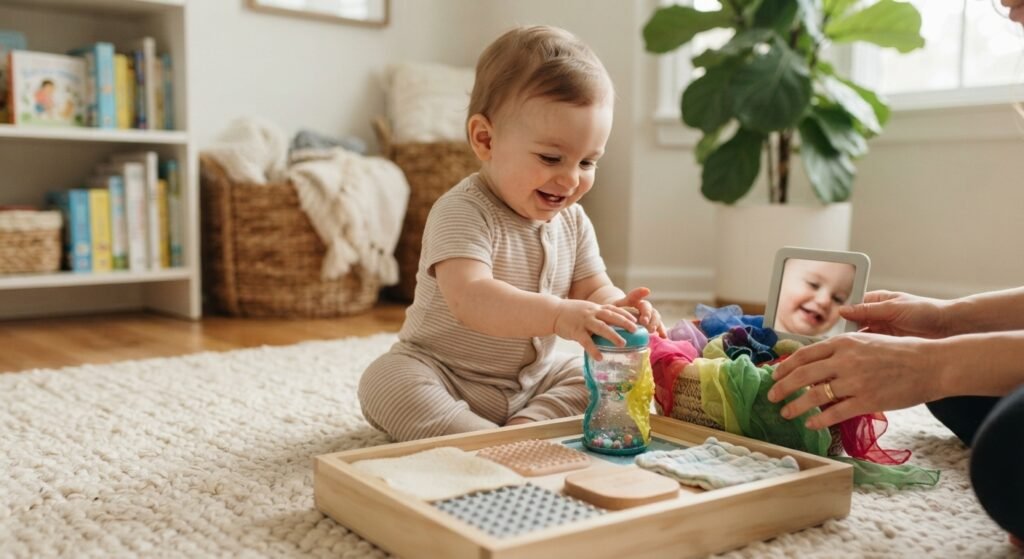

Joyful Baby Sensory Fun
Every parent loves watching their baby discover the world with wide eyes and happy giggles. When looking for ways to engage our little ones, many parents browse online baby shop to find colorful items and learning toys. However, you do not need an endless stream of deliveries to spark your baby’s curiosity and support their early brain development. Some of the most wonderful learning experiences happen right at home using simple items you already have around the house. From feeling soft fabrics to listening to gentle sounds, simple sensory play helps babies make sense of their surroundings while strengthening the loving bond they share with you.
Why Sensory Play is Wonderful for Babies
During the first year of life, a baby’s brain grows at an amazing speed. Every touch, sound, sight, and smell sends tiny sparks through their developing mind, building important pathways. Sensory play simply means any activity that stimulates your baby’s senses. When a baby feels a bumpy surface, hears a crinkling sound, or watches colorful water move, they are learning how to process information. This type of play helps build muscle strength, improves hand-eye coordination, and gives babies a wonderful sense of calm and happiness. Best of all, it requires zero preparation and costs nothing.
Easy and Safe Sensory Ideas at Home
You do not need fancy gadgets to create a magical sensory world for your baby. Your living room and kitchen are full of wonderful, safe everyday treasures.
The Magic Silk Scarf Pull
Babies love pulling things out of containers. Take an empty tissue box or a clean plastic container, and stuff it with colourful fabric scraps, lightweight scarves, or clean socks. Let your baby pull them out one by one. The bright colors, smooth textures, and the fun of discovering what comes next will keep your baby happily engaged for a long time.
Tummy Time with a Water Play Bag
Tummy time is essential for building neck and shoulder strength, but some babies find it hard at first. To make it more fun, take a strong ziplock bag, fill it with a little water, a few drops of food coloring, and some small floating items like glitter or foam shapes. Seal the bag tightly with strong tape, place it on the floor during tummy time, and let your baby gently pat the moving water and colorful shapes beneath their hands.
Exploring Sounds and Gentle Movement
Babies also learn a great deal through their ears and balance. Adding gentle sounds and movement makes playtime even more exciting.
-
DIY Shakers: Put some dry rice or pasta inside an empty, tightly sealed plastic water bottle. Shake it gently to make a fun rattling sound, and let your baby watch the movement and listen to the rhythm.
-
Kitchen Drum Circle: Give your baby a wooden spoon and let them gently tap on upside-down plastic bowls or pots to create wonderful musical noises.
-
Gentle Blanket Swings: Lay your baby safely on a soft blanket, and have two family members gently hold the corners and sway the blanket back and forth like a hammock.
Connecting Through Shared Playtime
At the end of the day, the best part of sensory play is sharing those sweet, giggly moments with your little one. While browsing digital platforms like toysuae is wonderful for finding helpful parenting advice, baby clothes, and occasional essentials when needed, no website or package can ever replace the warmth of a parent sitting on the floor, exploring and playing right alongside their child. When we take a few minutes each day to share these simple sensory moments, we help our babies grow into happy, confident, and curious little explorers.
Frequently Asked Questions
1. When can I start doing sensory activities with my baby? You can start right from birth with gentle touch, soft singing, and skin-to-skin cuddles. As your baby grows and starts sitting up or reaching for objects around three to six months old, you can introduce fun texture boxes, gentle water bags, and safe household shakers.
2. Are homemade sensory items safe for young babies? Yes, as long as you always supervise your baby closely during playtime. Ensure all items are clean, too large to be choking hazards, and free of sharp edges or broken pieces.
3. How long should a sensory play session last? Babies have short attention spans and get tired very quickly. A sensory activity can last anywhere from five to fifteen minutes. Always watch your baby’s cues; if they look fussy or turn away, it is time to take a cozy break.